Route Baku south to Lenkeran and the Hirkan forests, up to Lerik in the Talysh Mountains, north through Khizi and the Candy Cane Mountains, then Guba, Khinalig at 2,350 m, Shahdag and Laza, and back to Baku.
4x4 Self-Drive Expeditions
4x4 tours in Azerbaijan, driven by you
We run an 8-day self-drive 4x4 convoy across the Talysh Mountains and the Greater Caucasus: Toyota Land Cruisers with full recovery kit, a professional lead guide, and a support vehicle with a mechanic at the rear. You do the driving. We handle the permits, the hotels, and everything that goes wrong on a mountain track.
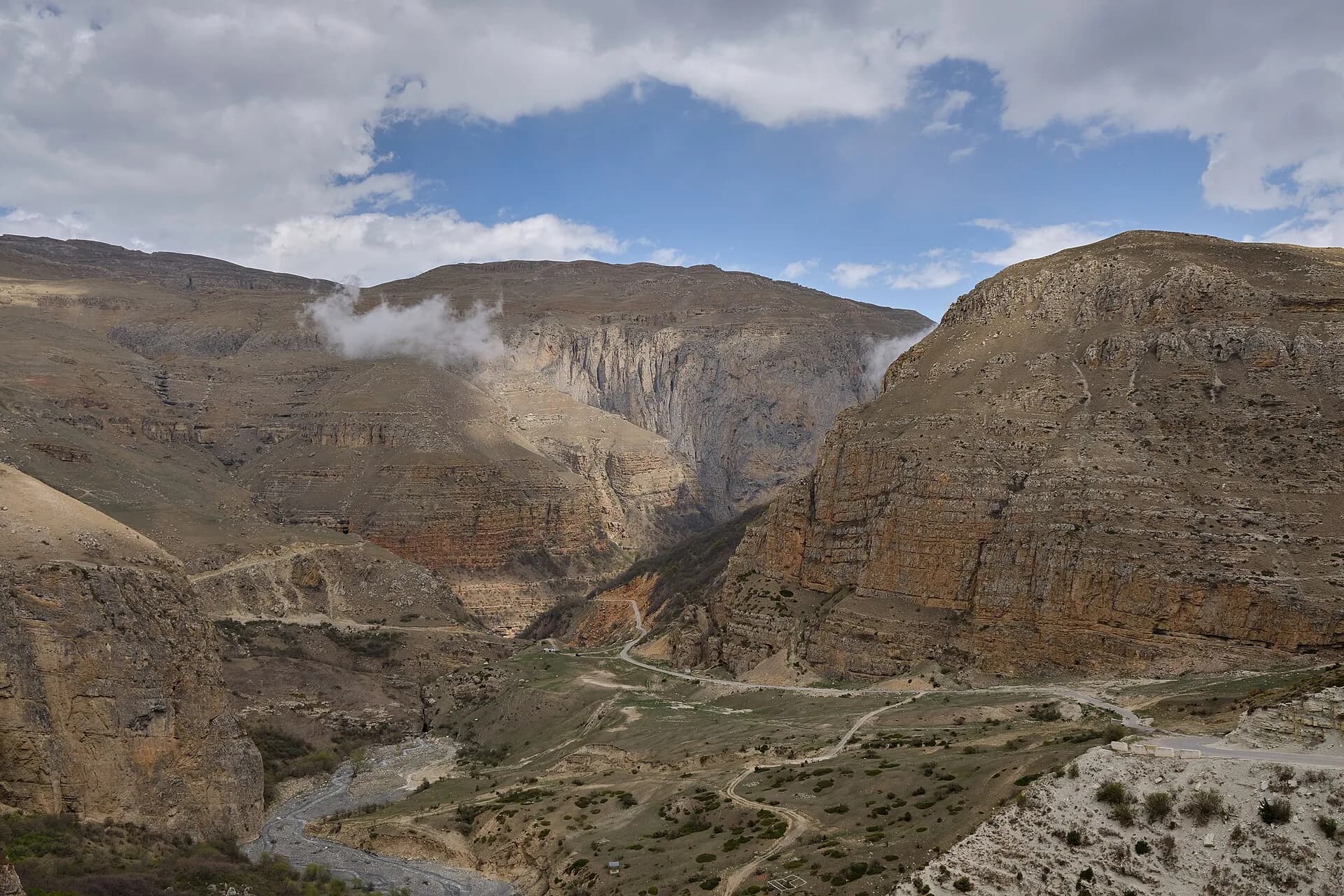
Photo: AlexFirstov · CC BY-SA 4.0 · Wikimedia Commons; resized, display crop · license
The format
You drive the 4x4. Our convoy carries everything else.
This is a self-drive expedition, not a jeep excursion. Each crew of up to 4 travellers gets an automatic Toyota Land Cruiser with all-terrain tyres, a VHF radio, and its own recovery kit. A professional local 4x4 guide leads the convoy and sets the pace and the line; a support vehicle with a mechanic, spares, extra fuel, and a trauma kit sweeps at the rear so no vehicle is ever alone on a track.
As of July 2026 we could not find another Azerbaijan-based operator selling a multi-day 4x4 self-drive product, on their own site or on any marketplace. The day-trip market is well served; the 8-day mountain crossing is not. That is the gap this program was built for.
Two buyers use it: international tour operators who resell the expedition under their own brand at our net rates, and private groups of 12 to 20 who book a departure directly. The convoy mechanics are identical either way. The format is fly and drive: crews land at Heydar Aliyev International, and the vehicles, permits and route are waiting in Baku.
At a glance
The 8-day expedition, in numbers
Eight days, seven nights, roughly 1,170 km of driving of which about 220 km is genuine off-road. Moderate to challenging: real mountain tracks, not an extreme rock course.
Group and vehicles 12 to 24 participants, with the client vehicle count confirmed for the selected occupancy, plus lead and support vehicles. Rates vary with room and vehicle configuration.
Off-road level Moderate to challenging. The biggest day is the Khinalig leg: about 90 km of tracks including the Atachay canyon approach and side valleys. Low range is needed in places on the Laza climb. Automatic transmission throughout; no prior off-road experience required.
Accommodation 4 and 5 star hotels and mountain resorts every night: Radisson Baku, Spring Hotel on Xanbulan lake, Relax Lerik, Cennet Bagi in Altiagac, Guba Palace, Park Qusar. No camping on the standard program.
Season May through October. We recommend late May to June and September to early October; July and August work well at altitude. High routes close November through April.
The terrain
What the driving actually looks like
The south is forest driving. In the Talysh Mountains around Lerik the tracks run through beech woodland on clay soil, which means deep ruts and standing water after rain and fog banks on the ridge lines even in summer. It is first-gear scenery: waterfalls at Qelebin, the fortress village of Kalakhan, tea country below.
The middle is desert badlands. The Candy Cane Mountains near Khizi are striped red and white ridges crossed on dry wadi beds, easy driving with the kind of views that stop the convoy every ten minutes. We picnic at the White Spring (Ag Bulaq).
The north is the high Caucasus. The Khinalig day climbs to 2,350 m through the Atachay canyon, with side tracks to the Griz waterfall and the Sucay valley. Khinalig itself is a UNESCO World Heritage cultural landscape, a stone village around 5,000 years old with its own language. The next day crosses to Qusar and climbs a rough track to Laza, an amphitheatre of cliffs and waterfalls under Mount Shahdag where low range earns its keep.
Convoy discipline
How the convoy runs
Convoy protocol is what makes a self-drive product safe enough to sell. Ours is fixed and briefed every morning.
Lead vehicle A professional local 4x4 guide drives the lead car, sets the pace and picks the line through technical sections. On the hardest segments the convoy stops and the guide walks crews through one at a time.
Sweep vehicle The support car runs last with a mechanic, the main recovery and medical kit, spare parts, extra fuel and water. If a client vehicle has a mechanical problem, the backup policy replaces it and the group keeps moving.
Radios and briefings Every vehicle carries a long-range VHF radio. Each morning covers channel discipline, spacing, hand signals, the day's route and its lower-altitude alternative if weather closes a pass.
Order and spacing Fixed driving order, defined spacing, radio check-ins at set points. No vehicle is ever out of contact between the lead and the sweep.
Fleet and equipment
The vehicles and what they carry
The convoy runs on Toyota Land Cruiser 200 and 300 series or Prado, automatic, low-mileage, with all-terrain tyres and factory recovery points. Every vehicle carries full comprehensive insurance (CDW).
In every client vehicle A recovery strap, rated shackles, tyre-repair plugs, a jack and basic tool kit, access to an air compressor, and the vehicle's own full-size spare wheel.
In the lead and support vehicles Electric winch, kinetic recovery ropes and rated snatch straps, bow and soft shackles, tree-trunk protector, hi-lift and bottle jacks, traction boards, air compressor, tyre-repair kits, full tool kit, tow bars, spare fluids and fuel, and a stocked first-aid and trauma kit.
Backup vehicle policy A mechanical failure does not end anyone's trip. The support vehicle or a replacement car keeps the group moving while the mechanic deals with the fault.
Safety and logistics
Permits, medical, weather
The parts of the program you cannot buy off a shelf. This is where a DMC earns its keep on a mountain product.
Border-zone permits Khinalig and parts of the high Caucasus sit inside a regulated border zone. We file the permits and passenger lists in advance; guests just carry their passports. Build in lead time: this is the one step that cannot be fixed on the day.
Medical and evacuation Guides are first-aid trained and the support vehicle carries a trauma kit. Route planning runs around the nearest hospitals in Baku, Lenkeran and Guba, with an evacuation protocol for the remote sections.
Weather alternatives The high roads at Khinalig, Shahdag and the Talysh passes are season-dependent. Every driving day has a planned lower-altitude alternative if snow, mud or high water make a track unsafe. Final routing is confirmed shortly before departure against the forecast.
Communications VHF between vehicles, mobile coverage on most of the route, and satellite messaging carried for the remote high-mountain sections.
Season windows
When to run it
The program operates May through October. Which window to pick depends on what the group wants from the mountains.
Late May to June Green season. Full rivers, flowering high pastures, mild temperatures. Forest tracks in the Talysh can be wet; that is a feature for drivers and a scheduling risk we plan around.
July to August Best access to the high routes and a cool escape from lowland heat. The mountain hotels book out around Baku holiday weekends, so these departures are confirmed furthest ahead.
September to early October Our favourite window and the one we recommend to operators first: stable weather, clear mountain views, autumn colour, dry tracks.
November to April High-altitude roads close with snowfall. We do not run the full expedition in this window; Shahdag ski programs and lowland touring cover the winter season instead.
For tour operators
A white-label convoy product for your catalogue
The expedition is sold B2B at net rates by group size: from $2,420 per person at 24 participants, double room and 4 travellers per vehicle, based on the updated source proposal. Your margin and your branding go on top; our team runs the ground operation, including a company team leader with every departure.
Include your preferred driving distances, hotel level and balance of road and off-road travel in the brief. Agree the route, proposal timing and supplier availability before confirming the programme.
If you already sell Georgia self-drive programs, this is the natural extension: same buyer, a harder and less crowded mountain range, and one operator handling everything from Land Cruisers to border-zone paperwork.
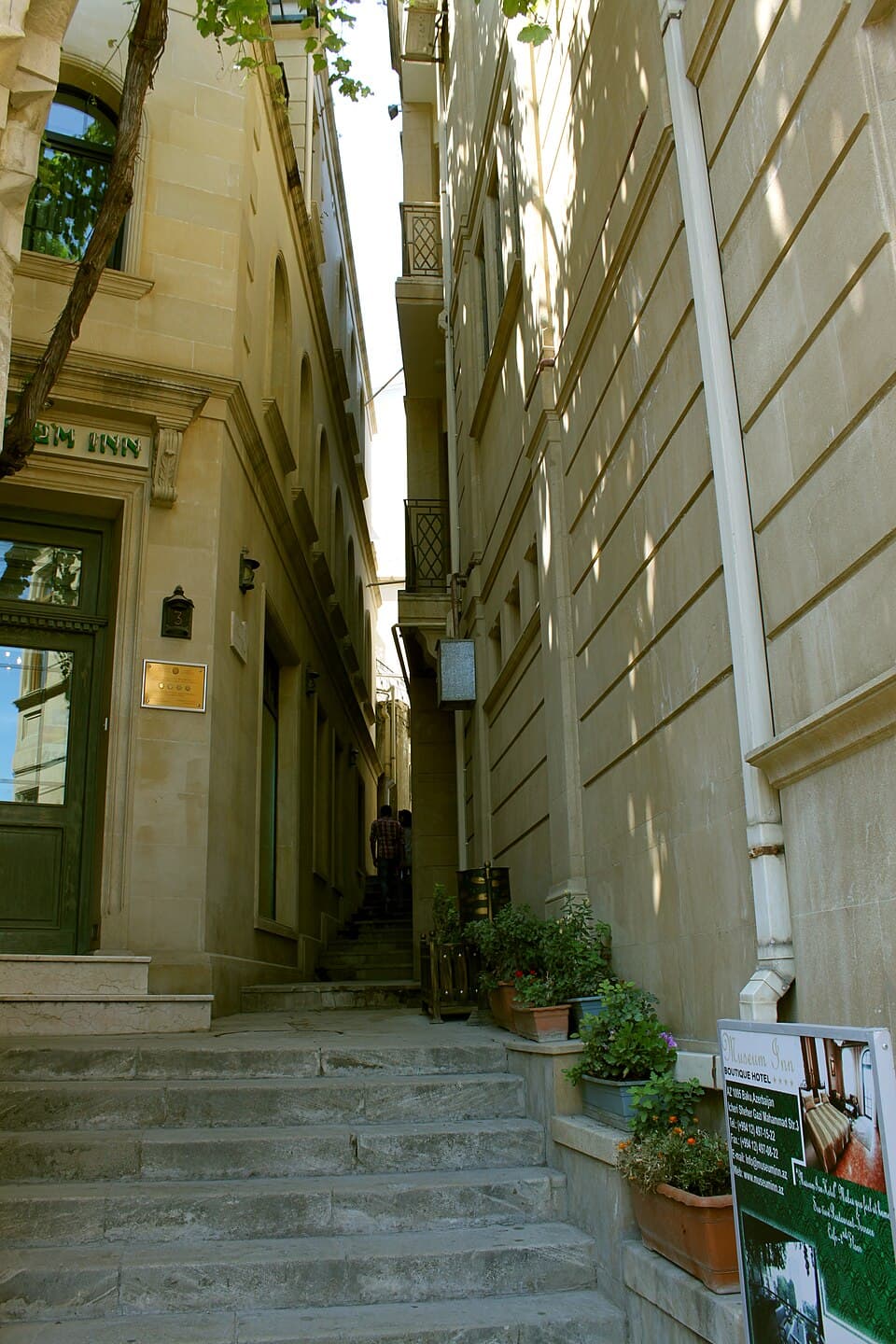
Baku, GMT+4Photo: Urek Meniashvili · Wikimedia Commons · CC BY-SA 3.0 · resized

What happens when you send an inquiry
From your brief to a confirmed programme.
Share your requirements, review the proposal and confirm the complete programme you want Birtour to manage and deliver.
- 01
Step 01
Agree who will manage your brief
Send your dates, group size and priorities. Include your decision deadline so we can discuss the proposal schedule with you.
- 02
Step 02
Tailored proposal arrives
Review the itinerary, prices, named suppliers and booking conditions. Ask for any changes before confirming.
- 03
Step 03
Operational handover
Before travel, confirm the supplier bookings, payment schedule and contact arrangements in writing.
Plan the expedition
The working documents
8-day itinerary, day by day
Distances, off-road kilometres, driving hours and difficulty for every day, plus hotels and meals.
Net rates by group size
Per-person rates at 12, 18 and 24 participants, room and vehicle configurations, and the included services.
Driving in Azerbaijan: the rules
Licences, the IDP question answered properly, speed cameras, fines, and why rental insurance usually excludes unpaved roads.
The Quba to Khinalig road
Surface conditions, seasonal windows, and when you genuinely need a 4x4 on Azerbaijan's most asked-about mountain road.
Khinalig border-zone permits
What is open, where permit territory begins, and how passenger lists are filed. The procedure every other source calls unclear.
Azerbaijan vs Georgia for self-drive
Terrain, seasons, crowding, permits and price compared side by side, with public Georgia rates as of July 2026.
FAQ
Questions operators and drivers ask first
Yes. Birtour runs an 8-day guided self-drive convoy across the Talysh Mountains and Greater Caucasus: you drive a provided Toyota Land Cruiser behind a professional lead guide, with a support vehicle and mechanic at the rear. Ask for the current route, departure format and vehicle specification for your dates.
No. The rate includes an automatic Toyota Land Cruiser (200 or 300 series or Prado) with all-terrain tyres, a VHF radio, a recovery kit and full comprehensive insurance (CDW). Overland travellers with their own vehicles can join by arrangement; the convoy protocol stays the same.
None, if you are a confident road driver. The route is moderate to challenging: real mountain tracks rather than an extreme course. The lead guide briefs every morning, sets the line through technical sections, and walks crews through the hardest segments one vehicle at a time.
The village itself is open, but it sits inside a regulated border zone and the side routes toward the high frontier need permits with passenger lists filed in advance. We arrange all of it before departure; guests carry passports and nothing else. Allow lead time, since this step cannot be fixed on the day.
A national licence in Latin script is accepted in practice for visitors; if your licence uses another script, carry an International Driving Permit alongside it. Minimum age and licence-holding requirements are confirmed per departure. The full rules, including cameras, fines and insurance, are in our driving-in-Azerbaijan guide.
Late May to June for green mountains and full rivers, or September to early October for stable weather, dry tracks and autumn colour. July and August give the best high-altitude access. High routes close with snow from November through April, so the full route does not run in winter.
The support vehicle carries a mechanic, spares, extra fuel and the main recovery kit, and a backup-vehicle policy applies: the support car or a replacement keeps the group moving while the fault is dealt with. Every client vehicle also carries its own strap, shackles, plugs, jack and full-size spare.
Yes, that is the primary format. The updated source NET rate starts at $2,420 per person for 24 participants, double room and 4 travellers per vehicle. Other configurations have separate rates. We supply the ground operation end to end, including a company team leader on every departure; your brand fronts the program.
A traveller
Plan your Azerbaijan trip
Tell us who is travelling and when. Our team will prepare a quote for your trip.