How Birtour runs ground operations for tour operators in Azerbaijan
how-to · 15 min read
A contracting guide for tour operators comparing Azerbaijan ground handling: component-level net quotes, room-option deadlines, named operating contacts, branding terms, regional scope and the items that need written confirmation.
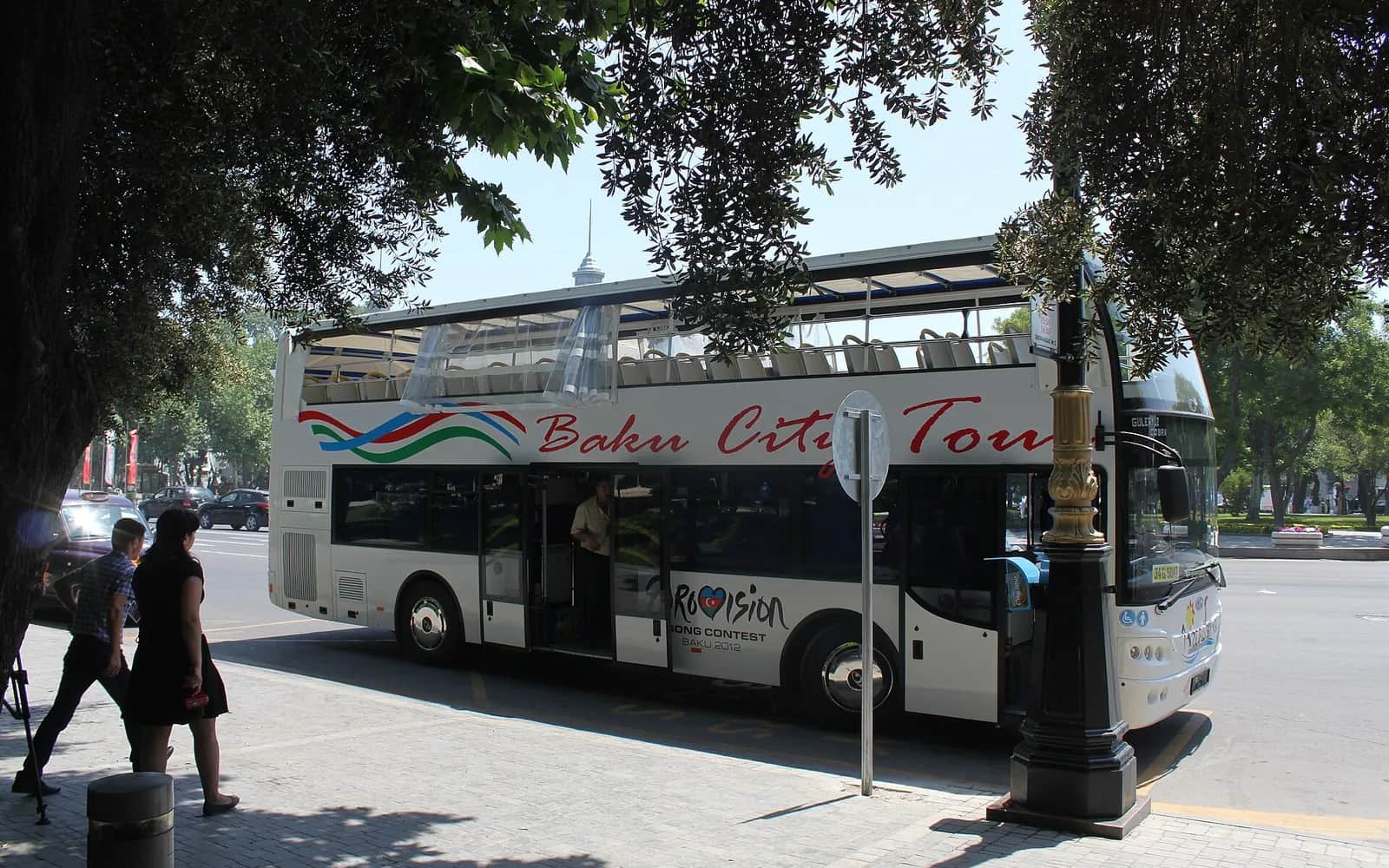

Birtour is a Baku-based DMC. This page is for tour operators and travel agencies that package Azerbaijan and need a ground partner, not for travellers booking a trip. If you sell Azerbaijan from London, Riyadh, Mumbai, Frankfurt, or anywhere else and want to know how we run the ground side, this is the operational answer.
The countrywide DMC service page outlines what Birtour can deliver. The dedicated travel-trade brief and proposal form are on our B2B partner page. This guide is the long answer for the person signing the contract.
The proposal should make the trade relationship explicit. State who owns the client communication, which entity contracts each service, whether prices are net or commissionable, whose brand appears on vouchers and who may contact travellers. Those terms vary by programme and belong in the written agreement rather than a blanket promise on a public page.
What do you actually contract when you contract an Azerbaijan DMC?
You contract a defined ground scope. The offer should identify the company invoicing the programme, the hotels and transport still awaiting confirmation, the guide arrangement, any permit dependency, and the person responsible for the live file. A supplier name or rate in a draft is not a reservation until the corresponding option or confirmation is documented.
Failure handling is the practical test. Ask who responds when a flight is late, a vehicle changes or a regional road becomes unavailable; then put that contact, coverage window, escalation route and alternative service into the operating plan. The answer must be specific to the booked programme. Birtour organises and manages the complete ground programme, with responsibilities and contacts set out in your proposal.
One correction to how this used to be written, ours included. Guide certification in Azerbaijan is voluntary, assessed by accredited conformity-assessment bodies with the certifying function sitting under the Azerbaijan Tourism Board. There is no guide licence you can look up on a public register, so "licensed guide" is a phrase that sounds like a check and is not one. Ask the operating file to name the proposed guide, working language and confirmation status before you confirm the group. If a pre-departure guide call matters to your product team, include it in the brief.
How do Birtour's net rates work for tour operators?
Request a net, component-level quote: room nights at each property, transfers by vehicle class, guide services by language, entrance fees and any permit costs as separate lines. The proposal should also state currency, tax basis, validity, option deadlines and the services that remain subject to supplier confirmation. Your retail price and margin remain your commercial decision.
A component-level sheet lets an operator see where the budget moves. A bundled “per person from X” figure hides the room, vehicle, guide and entrance assumptions, so it is harder to compare alternatives or set a retail margin. If a supplier provides only one total, ask for the commercial basis and exclusions before using it in a brochure. The full mechanics, with sample 2026 ground-cost ranges and the FIT-to-group break, are in our net rates and B2B pricing guide.
| What to request in the proposal | Basis to confirm | Why it helps you |
|---|---|---|
| Hotel line | Per room, per night, per named property | Compare properties and room options against the same dates |
| Transfer line | Per vehicle class, per route | Cost FIT and group movements separately |
| Guide line | Per day, language and confirmed availability | Quote multilingual groups against an identified scope |
| Entrance and permit line | Per site or activity, with source and tax treatment | Separate published fees from supplier handling costs |
| Passenger basis | Exact pax and room count in the brief | Vehicle, staffing and room assumptions stay visible |
Transfer and attraction inputs can change between a brochure draft and departure. Ask for current vehicle offers, site fees and ticket conditions on the quoted dates. The NET-rate comparison guide separates a dated planning example from a live supplier offer.
What does the e-visa line in your quote actually cost?
Separate the government application cost from any optional agency handling line. The official ASAN Visa information page, checked on 24 September 2026, publishes a USD 20 e-visa state fee plus a USD 9 portal service fee per application. That is USD 29 before any separately agreed DMC assistance; confirm the current checkout amount before quoting a departure. The official conditions limit e-visas to eligible nationalities and qualifying stateless residents, so first check each traveller's passport against the current eligible-country list.
The official portal was unavailable during our 10 August review, but it is readable in this check. A reseller's assistance fee is neither the state fee nor the portal service fee and should be a separate, optional line. For a visa-free traveller, remove the visa-application line; confirm any other requested documentation service independently.
Some clients may not need a visa for the actual journey, but a country name alone is not enough to decide. The State Migration Service's notice makes the Saudi, Omani, Bahraini and Kuwaiti ordinary-passport trial valid from 15 February 2026 to 15 February 2027 for tourism, up to three entries of 30 days; other purposes require the relevant visa. Other nationalities and temporary schemes have their own purpose, passport and expiry rules. Put those checks beside each traveller in the visa matrix before removing a government application fee from the quote. If the operator requests a separate documentation service, name and price it explicitly. The country-by-country detail sits in our GCC entry-rules guide.
How long does Birtour hold room blocks?
Request a written room option for each hotel, room category and night, including its expiry and deposit deadline. For multi-city programmes, confirm whether the supplier deadlines align; a quotation alone does not reserve inventory.
Holding inventory is where operator relationships are won or lost, and for multi-city itineraries the hold has to move together. A Baku, Gabala and Sheki programme needs all three blocks alive at once or the routing collapses. For an Azerbaijan–Georgia request, we check the Baku and Tbilisi scopes together and name the contracting and operating party for each country in the proposal. The two-country route has its own commercial page.
One thing the hold cannot fix is a hotel that has not been graded. Star classification is the one hard certification in this market: Article 9.1 of the Law on Tourism gives every hotel six months from opening to obtain a star category, and operating without one draws an administrative fine of AZN 2,000 to 5,000. If you sell a star rating in your brochure, ask which building was assessed and when.
The State Tourism Agency notice, published on 25 May 2023, describes hotel star-assessment criteria approved on 2 May 2023. Ask for the current certificate and assessment criteria for the specific property.
How does the land-border closure change your 2026 Caucasus routing?
Azerbaijan's special quarantine regime runs to 06:00 on 2 January 2027, and while it holds, road land borders stay shut to inbound passenger traffic. Plan air arrival as the default for an international group. The State Migration Service's rail notice identifies a separate Baku–Tbilisi train exception for Azerbaijani citizens and foreign nationals entitled to visa-free entry. A Baku–Tbilisi proposal therefore confirms the viable connection against each traveller's passport, purpose and dates before the route is sold.
The regime has been rolled forward repeatedly. Cabinet Decision No. 303, published in AZERTAC's official-documents section on 17 September 2026, replaced the 1 October deadline with 2 January 2027 at 06:00. Plan against that current date and confirm it again before printing or selling a departure after it.
The Baku–Tbilisi–Baku rail route has a separate eligibility rule. The State Migration Service notice says rail entry and exit resumed from 25 May 2026 for Azerbaijani citizens and foreign nationals who have the right to enter Azerbaijan visa-free. An e-visa does not itself establish visa-free entry. Check each passport's current eligibility, the railway's operating timetable and tickets before pricing a rail leg; a general train schedule or fare on this page would not confirm a departure.
For an Azerbaijan–Georgia programme, do not infer the connection from a regional map. Confirm the group's passports, the direction of travel and the operating method in writing before the route is sold. The proposal should name the handover and responsibility on both sides.
The road-exit question is not settled across official sources, so it needs a route-specific check.
By road, confirm the actual exit. The Azerbaijani MFA says foreigners may leave through land borders without permission, while UK FCDO advice says permission is required to leave by road. Published third-party itineraries do not resolve that conflict for your group. Before quoting a Georgia road exit, confirm passport eligibility, crossing status, any permission, vehicle handover and the party responsible for each border leg in writing.
By rail, check eligibility in both directions. The official rule covers the Baku–Tbilisi–Baku route and travellers with visa-free entry rights. Do not treat a valid e-visa, a ticket or a road-exit permission as proof that the passenger qualifies for that rail exception. Confirm the passport and itinerary against the published rule before issuing the programme.
The rail eligibility rule does not establish road-exit permission. Check the two modes separately; do not sell either border leg until the traveller and crossing are confirmed.
How should on-ground support be documented?
Ask the final operating file to name the responsible contact, mobile number, coverage hours, languages and escalation route for each travel day. If overnight or around-the-clock availability is required, state it in the brief and obtain it in the written offer. A general marketing page cannot establish the staffing pattern for a future programme.
Run the same test on every ground partner: ask who will answer during the actual arrival, what that person controls directly and whom they escalate to when a supplier fails. The useful answer is a named, dated operating plan. A shared inbox or an undefined “24/7 team” is not enough.
Does Birtour run FAM trips for tour operator staff?
For a product-team familiarisation trip, send the proposed dates, inspection goals and participant details. Request the available programme, price and inclusions in writing; no fixed FAM discount is confirmed here.
You can request current sample itineraries as a starting point. Confirm the usable dates, included services, price basis and any branding or adaptation rights in writing before placing one in your own catalogue.
If your team is bringing a drone to shoot brochure footage, tell us before they pack it. The civil UAV regime was rebuilt under Cabinet Decision No. 132 of 23 April 2025 and moved onto the mygov e-services platform in January 2026: a special permit precedes state registration, registration has to be applied for within 10 working days of bringing the aircraft into the country, and the certificate runs five years per airframe. Whether a visiting crew may fly its own drone with its own pilot is the question we cannot answer from a published rule, and the State Civil Aviation Agency on +994 12 497 07 98 is the right place to ask. We would rather make that call for you three weeks out than watch a drone get held at Heydar Aliyev.
What are Birtour's B2B contract and payment terms?
Agree the deposit amount, balance deadline, invoicing currency, cancellation and refund conditions, and any credit approval in the written programme agreement. Request any relevant insurance documents for review before signing. No fixed payment schedule or credit entitlement is established by this page.
Pay only against the contracting entity and bank details written in the programme agreement. Check whether the deposit matches the supplier commitments being made, and require a receipt or invoice for every payment. Our full vetting checklist for the trade is in the how-to-choose-an-Azerbaijan-DMC guide.
What is the Azerbaijan inbound market doing in 2026?
It is down, and unevenly. The State Statistical Committee recorded 1,092,600 foreign arrivals in January to June 2026, 10.3 percent below the same half of 2025, after a full year 2025 that was itself down 2.1 percent at 2,570,212. The fall is not spread evenly across source markets.
The table compares the same January–March period in the State Statistical Committee's 2025 inbound-tourism bulletin and 2026 inbound-tourism bulletin. These are border-arrival counts, not bookings or revenue for any particular tour operator.
| Source market | Q1 2025 arrivals | Q1 2026 arrivals | Change |
|---|---|---|---|
| Germany | 2,846 | 5,026 | +76.6% |
| Great Britain | 4,239 | 5,668 | +33.7% |
| Saudi Arabia | 10,671 | 12,126 | +13.6% |
| Türkiye | 92,751 | 105,241 | +13.5% |
| Russia | 125,272 | 125,470 | +0.2% |
| Kuwait | 6,344 | 4,751 | -25.1% |
| UAE | 10,431 | 4,750 | -54.5% |
| India | 54,840 | 17,373 | -68.3% |
| All markets | 508,080 | 484,388 | -4.7% |
The same-quarter comparison shows sharply different changes: India fell from 54,840 to 17,373 arrivals, while Germany rose from 2,846 to 5,026 and Great Britain from 4,239 to 5,668. The bulletins also classify 74,371 tourism-purpose visitors as travelling for business in Q1 2026, versus 72,485 in Q1 2025; total tourism-purpose visitors fell from 331,783 to 305,041. “Business purpose” is a statistical trip category, not a count of corporate-event, incentive or Birtour customers. Use these figures to decide which source markets merit a current supplier quote and sales test, not to infer hotel rates, group demand or guaranteed conversion.
Market occupancy does not establish a discount or a room block for your departure. Compare dated hotel offers for the same room mix and cancellation terms, and ask which options are actually held.
What we would not recommend
Three itinerary risks deserve an explicit check before sale: an overland Caucasus connection, a fixed-date Nakhchivan leg without a fallback, and a winter Khinalig route without a road alternative.
We would not sell an Azerbaijan–Georgia overland connection until the actual crossing, direction and each traveller's eligibility are confirmed in writing. An e-visa alone does not meet the published visa-free condition for the Baku–Tbilisi–Baku rail exception. A road exit is a separate question because the Azerbaijani MFA and UK FCDO describe its permission requirement differently.
We would not build a Nakhchivan leg into a fixed-date group programme without a flight contingency. It is an air connection with no direct road alternative from mainland Azerbaijan; price the onward schedule and a fallback before promising a fixed departure.
We would not quote a winter Khinalig product without naming the failure mode in your own terms. The roads agency itself describes frequent long-duration closures on the Quba to Khinalig road from avalanches, landslides and rockfall. Sell it in summer, or sell it with a written alternative. The trekking beyond the village is a different product again: it needs State Border Service, national park and emergency-ministry permissions, and operators there work to a 30-day advance rule.
What should you send Birtour to get a net quote?
Send the dates or season, passenger and room count, trip type, hotel level, traveller nationalities, fixed itinerary points and your decision deadline. The response should confirm an agreed delivery time, name the proposed hotels, show the price basis and label any alternative or supplier-pending line. No universal 72-hour response promise is made on this page.
If your agency already has those details, request a B2B Azerbaijan programme proposal. Birtour can manage the tours, events, hotels, transfers, guides and guest activities in one brief; the dated offer will state the agreed scope and commercial basis.
For the exact brief that gets a fast, accurate answer, our RFP guide has a copy-paste template, and if you are weighing us against other Baku handlers, our comparison of Azerbaijan DMCs lays out the criteria to score us on.
If you run corporate and incentive business, the per-person economics for MICE programmes sit in our 2026 Baku MICE cost benchmarks, how we run groups and MICE on the ground is in our Baku ground handling guide, and the planning inputs for a comparable brief are in the GCC incentive programme blueprint.
If you are contracting from Japan, the same relationship is written out separately, including the currency and payment questions we have not settled for that market yet, on our land operator page for Japanese travel agencies.
If you sell from a specific market, we now write the terms out market by market rather than making you generalise from this page: Türkiye, Russia, Kazakhstan, Uzbekistan, Korea, China, the United Kingdom, Germany, Poland, Italy, Spain, Israel and US luxury advisors. Which of those markets can be sold what, including the rail question, is set out in the source-market matrix. The commercial terms themselves, from onboarding to cancellation, are on the partner programme page.
For operator partners planning 2027 departures, request a new passport-by-passport border and visa check before committing a brochure or client booking. The dated rules on this page are not a future entry guarantee.
- What does a DMC do for a tour operator in Azerbaijan?
- An Azerbaijan DMC can cost accommodation, transport, guides, visits and operational support under one local programme. Ask the proposal to name the contracting party, each included service, supplier-confirmation status, room-option deadline, on-ground contact and escalation route. Branding, channel protection and net-rate treatment belong in the written agreement.
- Do you sell direct to my clients?
- Agree the commercial channel in writing before launch. The programme agreement should state who owns the client relationship, whether vouchers use the operator or Birtour brand, who may contact travellers, and whether any market or account exclusivity applies. This public page does not create blanket exclusivity.
- How fast do you turn around an operator RFP?
- Include your decision deadline in the brief and agree proposal timing with our team.
- Which areas of Azerbaijan do you cover directly?
- The proposed route may include Baku, Absheron, Gabala, Sheki, Quba, Ganja, Lahij, Shamakhi and the Caspian coast. Ask the offer to name the contracting and operating party, vehicle, guide language and current access for every region. A cross-border proposal should identify responsibility in each country.
- What group sizes do you handle?
- Capacity depends on dates, route, vehicle inventory, room blocks, guide languages and the number of arrival waves. State the exact passenger and room count in the brief. The returned proposal should name vehicle capacities, staffing, luggage assumptions and any split-transfer plan instead of relying on a universal group-size ceiling.
- Can I sell a three-country Caucasus overland loop for 2026?
- For an Azerbaijan–Georgia programme, do not assume road entry is available. Air is the practical default; the Baku–Tbilisi railway has a separate visa-free eligibility rule. Confirm every passport, trip purpose, direction and operating connection before selling the route.
- Does my quote need to carry a visa line for GCC groups?
- Decide passport by passport and by trip purpose. The 15 February 2026–15 February 2027 trial lets ordinary-passport citizens of Saudi Arabia, Oman, Bahrain and Kuwait visit visa-free for tourism, up to three entries of 30 days; the State Migration Service says other purposes require the relevant visa. UAE and Qatar have separate arrangements. Confirm the applicable rule and current fee before quoting a group.