Church of Kish: the Caucasian Albanian temple near Sheki
Kish village · about 4.5 hours to Sheki on the M2, then 15 minutes up to Kish from Baku
The Church of Kish is a small round-apse stone church in Kish village, about 5 km north of Sheki in northern Azerbaijan, tied to Caucasian Albania, an ancient Christian kingdom of the eastern Caucasus. The standing building is radiocarbon-dated to roughly the 12th century, on a site sacred far earlier, with a cult use near 3000 BC found under the altar. It runs as a museum today, ticketed at 15 AZN for foreign adults and open daily from 09:00 to 19:00 on the state ticketing channel.
- Region
- Sheki
- From Baku
- 305 km · about 4.5 hours to Sheki on the M2, then 15 minutes up to Kish
- Best season
- Late spring to autumn
- Time to spend
- About 30 minutes
- Entry
- Checked on 11 August 2026: 15 AZN for a foreign adult, raised from 9 AZN on 1 January 2026 by the State Tourism Agency's Reserves Management Center. Local and student rates sit inside a published 1 to 15 AZN band and are not broken out. Sold as a dated session on iTicket.az or at the gate.
- Hours
- Daily 09:00 to 19:00, with no day off in the published session calendar as read on iTicket.az on 11 August 2026. The 'closed Mondays, 10:00 to 18:00' line repeated across travel sites is not supported by the ticketing channel.
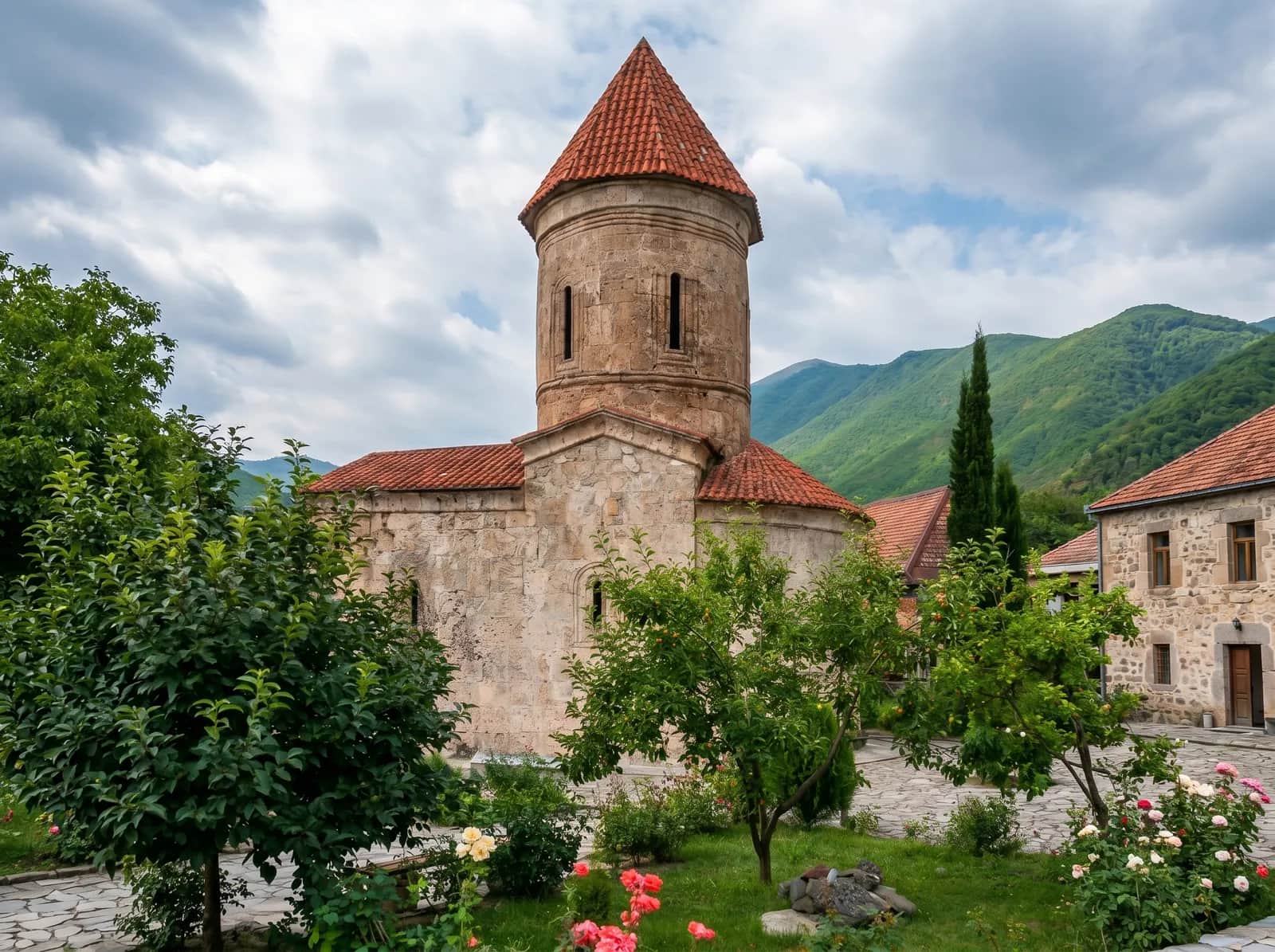
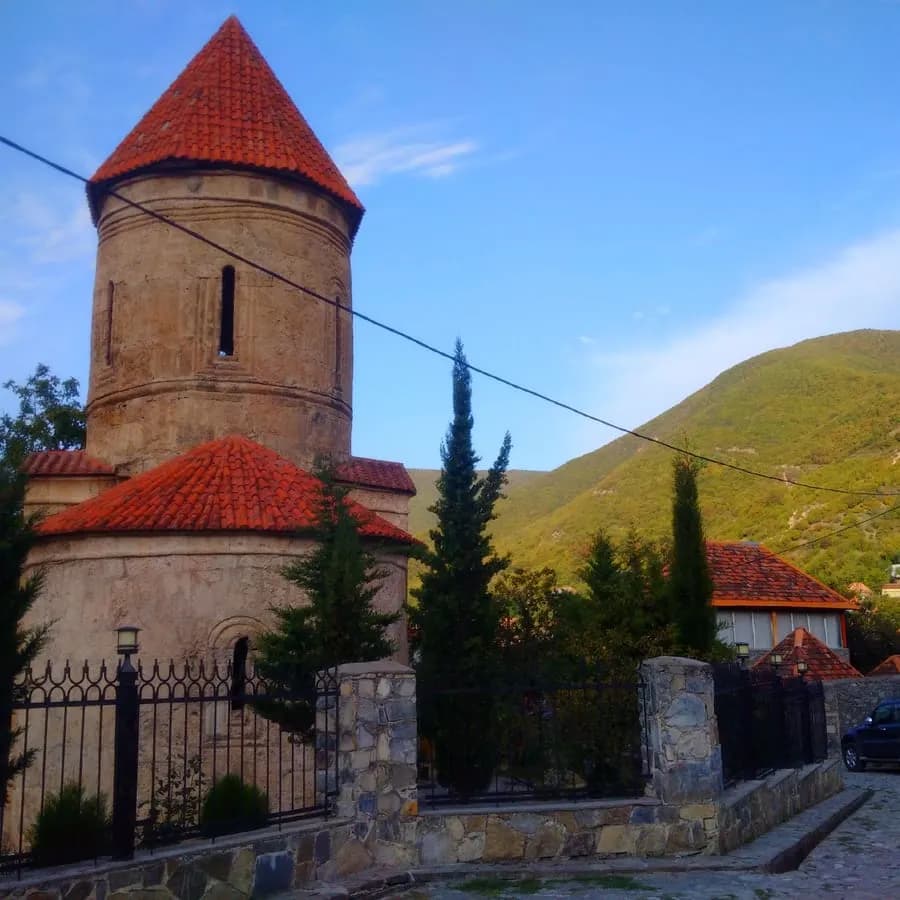
- The compact stone church with its round drum, one of the oldest standing in the Caucasus
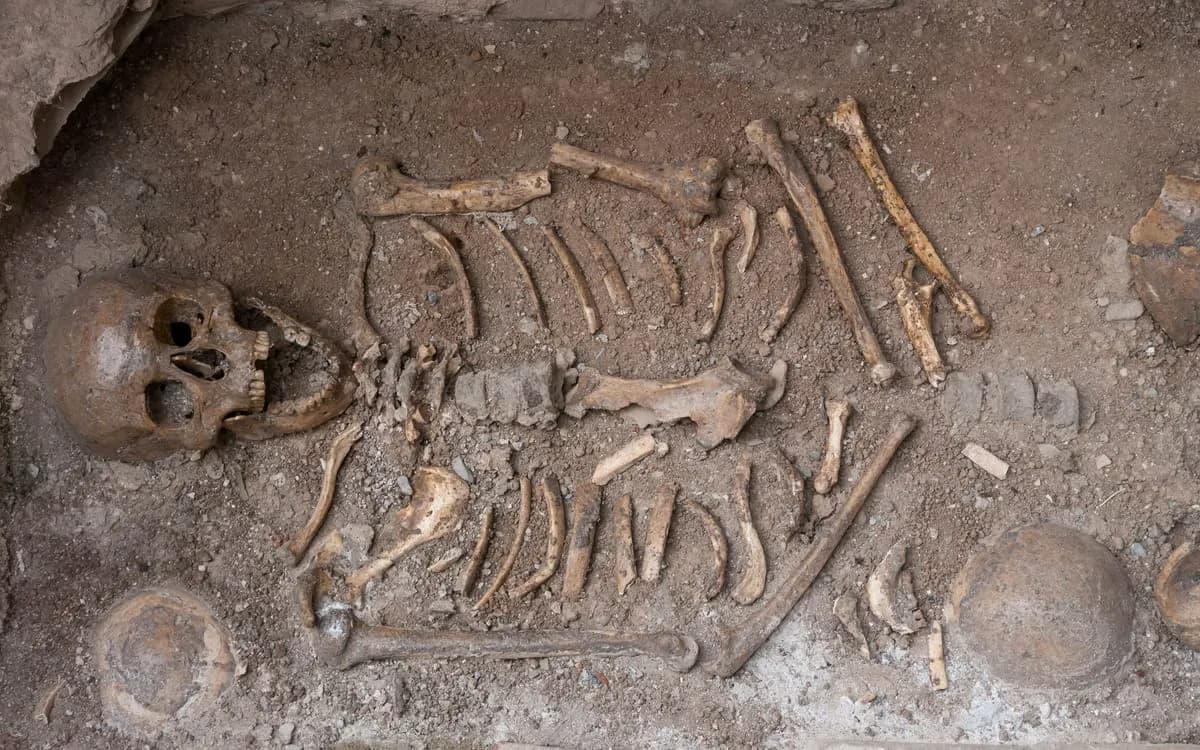
- Excavated burials visible under glass floor panels inside the building
- Exhibits on Caucasian Albania and early Christianity in the eastern Caucasus
- The hillside village setting in the Greater Caucasus foothills above Sheki
A short drive up from Sheki, in the village of Kish, stands a small stone church that people keep calling the oldest in the Caucasus. The building is modest, a single round-apsed hall under a low drum, and you can walk it in half an hour. What gives it weight is the layered history under the floor and the museum that now explains it. Birtour is a Baku-based DMC and Kish sits on the Sheki leg of the trips we run. Here is what the place actually is, what it costs to get in this year, how old it really is, and how to fit it into a Sheki trip.
What is the Church of Kish?
A compact stone church in Kish village, about 5 km north of Sheki in northern Azerbaijan, linked to Caucasian Albania. That was an ancient Christian kingdom of the eastern Caucasus centred on what is now northern Azerbaijan, with no link to the modern country of Albania in the Balkans. It runs as a museum today.
It is no longer a place of worship. Finds from the excavations are on display inside, and graves are left visible beneath the floor. The church is one of the better-known relics of that lost culture, and it is small enough that the ground under it carries more of the story than the walls do.
How much is entry to the Church of Kish, and when is it open?
15 AZN for a foreign adult, and daily from 09:00 to 19:00. We re-read the state ticketing channel on 11 August 2026: Kish sells dated sessions on iTicket.az across that window with no day off in the published calendar, and the price rose from 9 AZN on 1 January 2026. Local prices did not move.
| August 2026 | What most pages still say | |
|---|---|---|
| Foreign adult | 15 AZN | 9 AZN |
| Local and student | Inside a published 1 to 15 AZN band, not broken out | Various figures, none sourced |
| Hours | 09:00 to 19:00 | 10:00 to 18:00 |
| Day off | None in the published calendar | Closed Mondays |
| Channel | Dated session on iTicket.az, or the gate | Cash at the door |
That increase came from the State Tourism Agency's Reserves Management Center and landed on five sites at once, Kish among them, alongside Ateshgah, Yanar Dag, Diri Baba and the Sheki Khan's Palace. It is the correction worth carrying into your day: a couple who budgeted 18 AZN for the two of them at Kish and another 18 at the palace are 24 AZN short on the pair. Not a large sum, but it is exactly the sort of gap that gets argued about at a gate in a village with no ATM.
One thing we cannot break out for you is the local and student tariff. Only the 15 AZN foreign-adult figure was decreed; everything else sits inside a 1 to 15 AZN band that nobody publishes per category. If you hold Azerbaijani residency or a student card, take it to the window rather than to the internet.
How old is the church, really?
Roughly 12th century. Radiocarbon work from the 2000 to 2003 excavations put construction between about 990 and 1160 AD, so the church standing today is medieval rather than ancient. The confusion comes from the ground beneath it, where diggers found a cult site near 3000 BC under the altar.
You will see the phrase "world's first church" attached to Kish, on signage and in tour patter. It traces to a legend recorded by the 7th-century historian Movses Kaghankatvatsi and is not borne out by the archaeology. We would rather say that here than have a guest read it on a board and quietly discount everything else the guide says. Among the oldest standing churches in the Caucasus is the accurate claim, and it is still a strong one.
What did the 2000 to 2003 excavation find?
A Norwegian and Azerbaijani team led by the archaeologist J. Bjornar Storfjell dated the building, uncovered burials, and recovered ceramics and metalwork that traced a religious use of the site running back millennia. The results are what turned Kish from a quiet village church into a museum worth the fifteen-minute detour from Sheki.
The Heyerdahl part of the story needs handling carefully, because it is the part that gets overstated. Thor Heyerdahl visited in September 2000 and his name drew international attention to the project. He did not lead the dig and he did not date the building. His own interest in Azerbaijan came from a hypothesis of his own about Norse origins in the Caspian region, which is his hypothesis and not a finding of this excavation; Norwegian archaeologists did not accept it. Kish is genuinely interesting without it, and the excavation's real result, a firm medieval date over a Bronze Age cult layer, is more useful than the legend that gets told over it.
Kish also gains from where it sits. Sheki, fifteen minutes down the hill, is the one Azerbaijani location named among the eight where the second season of the TBS drama VIVANT filmed, so a trip built around the season already puts you within reach of the church. Our VIVANT in Azerbaijan page covers who has named which places, on whose authority, and what such a trip involves.
What do you see inside?
The interior is the reason to come. Several excavated graves sit under glass floor panels, so you look straight down on burials in place, which is an unexpected sight in a building this small. The displays cover Caucasian Albania and the early spread of Christianity through the eastern Caucasus, with objects recovered from the digs.
Outside, the church reads as a plain cruciform of grey stone with a round drum, set on a slope among village houses with the Greater Caucasus rising behind. Thirty minutes covers it. The building is not big and we would rather tell you that in advance than have you plan a morning around it.
How do you get to Kish, and when should you go?
Kish is an add-on to Sheki, not a standalone trip from Baku. Sheki is about four and a half hours by road from the capital on the M2, and Kish lies roughly 15 minutes further north, up into the foothills. The usual way in is a taxi or private car from Sheki, or a guided day that pairs the two.
Our 6-day Azerbaijan cultural tour folds Kish into the Sheki leg for that reason. Late spring through autumn is the easy window, and October around Sheki is the best of it, when the foliage in the foothills turns. The village road is a mountain road, so winter is an access question rather than a comfort one.
For the shape of a Sheki day: half an hour at Kish, then downhill to the Khan's Palace and the lanes of the old city, finishing in the courtyard of the Sheki Caravanserai, which takes no ticket at all. Both ticketed sites now run to 19:00, which is later than most itineraries assume and gives you room to put Kish first thing rather than squeezing it in.
What we would not recommend
Two things. Do not build a day around Kish on its own, because half an hour inside a small church does not justify nine hours of driving from Baku. And do not arrive with only large notes, because the village has no ATM within easy reach of the gate.
The first is the honest version of this page and we would rather write it than sell you a detour twice over. On the second, the ticket now sells as a dated session online, which is the cleaner route; a gate purchase in a village is simply easier with small notes in hand.
- How much is entry to the Church of Kish?
- 15 AZN for a foreign adult as of August 2026, raised from 9 AZN on 1 January 2026 by the State Tourism Agency's Reserves Management Center. Local prices did not change in that decree, and only a 1 to 15 AZN band is published, so the local and student rates are not broken out. Tickets are dated sessions on iTicket.az, or bought at the gate.
- What are the opening hours of the Church of Kish?
- Daily 09:00 to 19:00. The state ticketing channel was publishing fifty consecutive daily sessions in that window when we checked on 11 August 2026, with no day off in the calendar. The widely repeated 'closed Mondays, 10:00 to 18:00' comes from older pages and does not match what is on sale.
- How old is the Kish church?
- The standing building is radiocarbon-dated to roughly the 12th century, with construction estimates landing between about 990 and 1160 AD. The site beneath it is far older. Excavators found evidence of a cult site near 3000 BC under the altar, so worship here long predates the church you see.
- Who were the Caucasian Albanians?
- Caucasian Albania was an ancient kingdom of the eastern Caucasus, in what is now northern Azerbaijan, with no link to the modern country of Albania in the Balkans. Its people adopted Christianity early and built a distinct church tradition. Kish is one of the relics tied to that vanished Christian culture.
- Did Thor Heyerdahl excavate the Church of Kish?
- No. The 2000 to 2003 dig was a Norwegian and Azerbaijani project led by the archaeologist J. Bjornar Storfjell. Heyerdahl visited in September 2000 and his name drew attention to the work, which is a real contribution and a different one. His own reason for looking at Azerbaijan was a hypothesis of his about Norse origins in the Caspian region; that hypothesis is his, not a finding of this excavation, and Norwegian archaeologists did not accept it.
- How do you get to Kish from Sheki?
- Kish village sits about 5 km north of Sheki, roughly 15 minutes by car up into the foothills. Most visitors come by taxi, private car, or on a guided trip while staying in Sheki. The drive from Baku to Sheki itself is about four and a half hours on the M2, so Kish is an add-on to a Sheki visit rather than a day trip from the capital.
- What's inside the museum?
- The interior holds excavated graves shown under glass floor panels, so you look down on burials in place. Displays cover Caucasian Albania and the spread of Christianity in the eastern Caucasus, with finds from the digs. The compact stone hall and its round drum are the main draw.
- Is it really the world's first church?
- No. That claim comes from a legend tied to the 7th-century historian Movses Kaghankatvatsi and is not confirmed by archaeology. The standing building dates to roughly the 12th century, not the 1st. It is among the oldest churches in the Caucasus, which is the accurate and still notable point.
- Is the Church of Kish a UNESCO World Heritage Site?
- No. Kish is not inscribed and is not on Azerbaijan's tentative list. The UNESCO property in this area is the Historic Centre of Sheki with the Khan's Palace, inscribed in 2019, which covers the town 5 km down the hill and not the church. Kish is worth the detour on its own merits; it does not need a listing it does not hold.
Tour package
6-Day Azerbaijan Cultural Tour from Baku
Tour package
VIVANT2 Filming Locations & Azerbaijan Highlights: 4 Days
Destination
Sheki Khan's Palace: shebeke glass, frescoes, and how to visit
Destination
Things to do in Sheki: the UNESCO old town, fortress and caravanserais
Destination
Sheki Caravanserai: the silk-road merchants' inn, and how to visit