Sheki Khan's Palace: shebeke glass, frescoes, and how to visit
Sheki · about 4.5 hours via the M2 from Baku
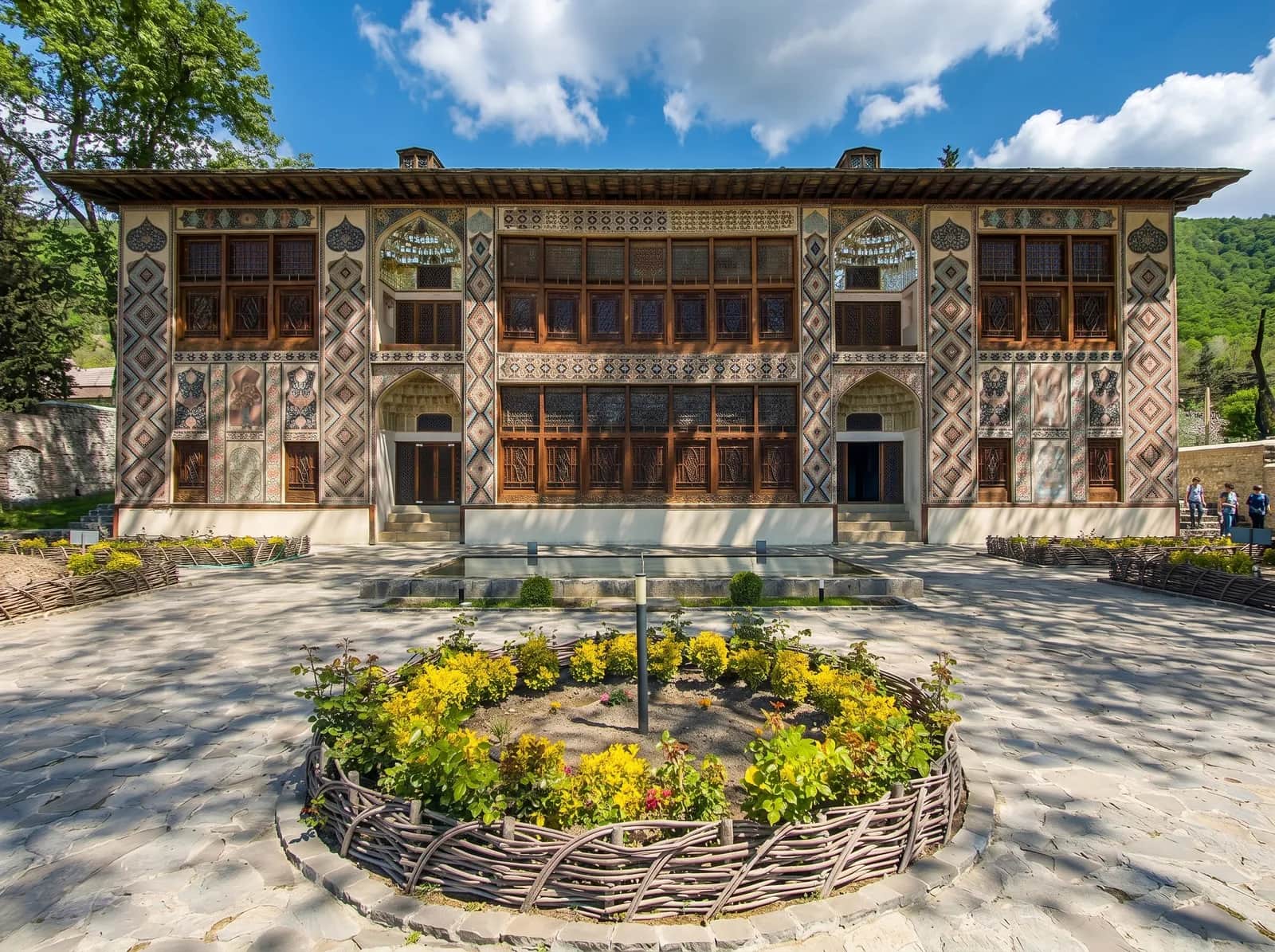
Sheki Khan's Palace is a late-18th-century two-story summer residence of the Sheki khans in northwestern Azerbaijan, the only surviving building of a larger palace complex. It is known for its shebeke windows, latticed stained glass assembled from wood and coloured glass without nails or glue, and its painted interiors. It was inscribed by UNESCO in 2019 as part of the Historic Centre of Sheki with the Khan's Palace.
- Region
- Sheki
- From Baku
- 300 km · about 4.5 hours via the M2
- Status
- UNESCO World Heritage (2019)
- Best season
- Late spring to autumn
- Time to spend
- 30 to 45 minutes
- Entry
- 15 AZN for foreign adults since 1 January 2026, up from 9 AZN. Sold as a dated day ticket on iTicket.az or at the gate; local and student rates sit inside a published 1 to 15 AZN band.
- Hours
- Daily 09:00 to 19:00 on the published ticketing calendar, with no weekly closing day.
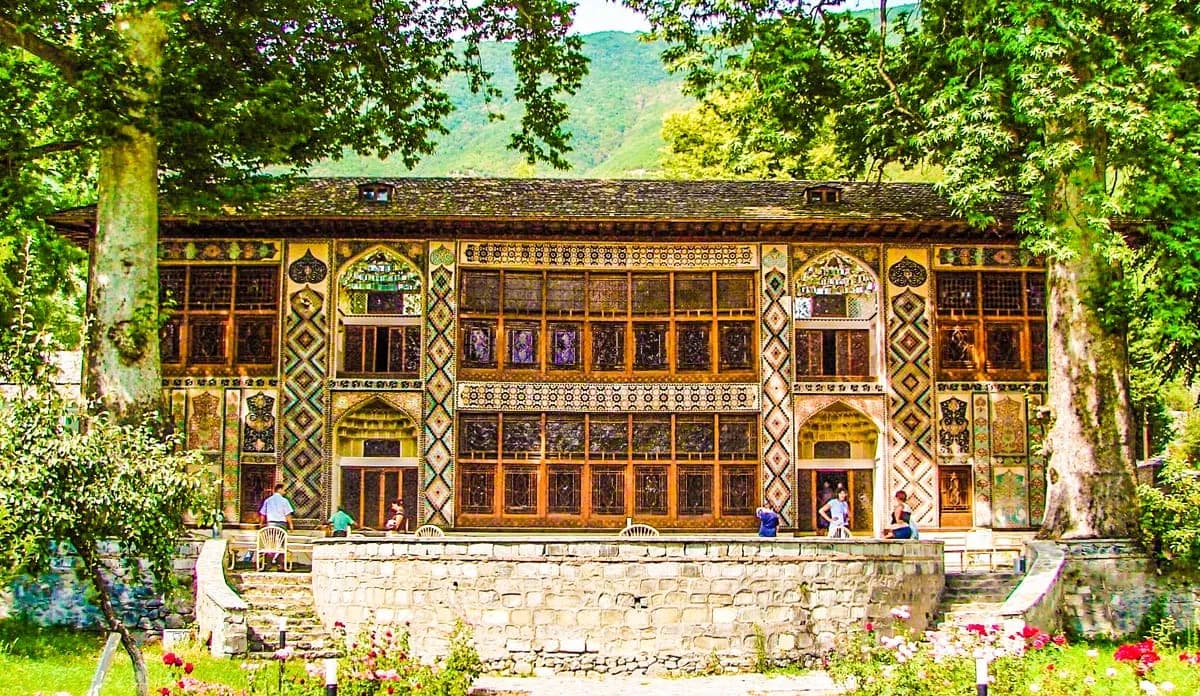
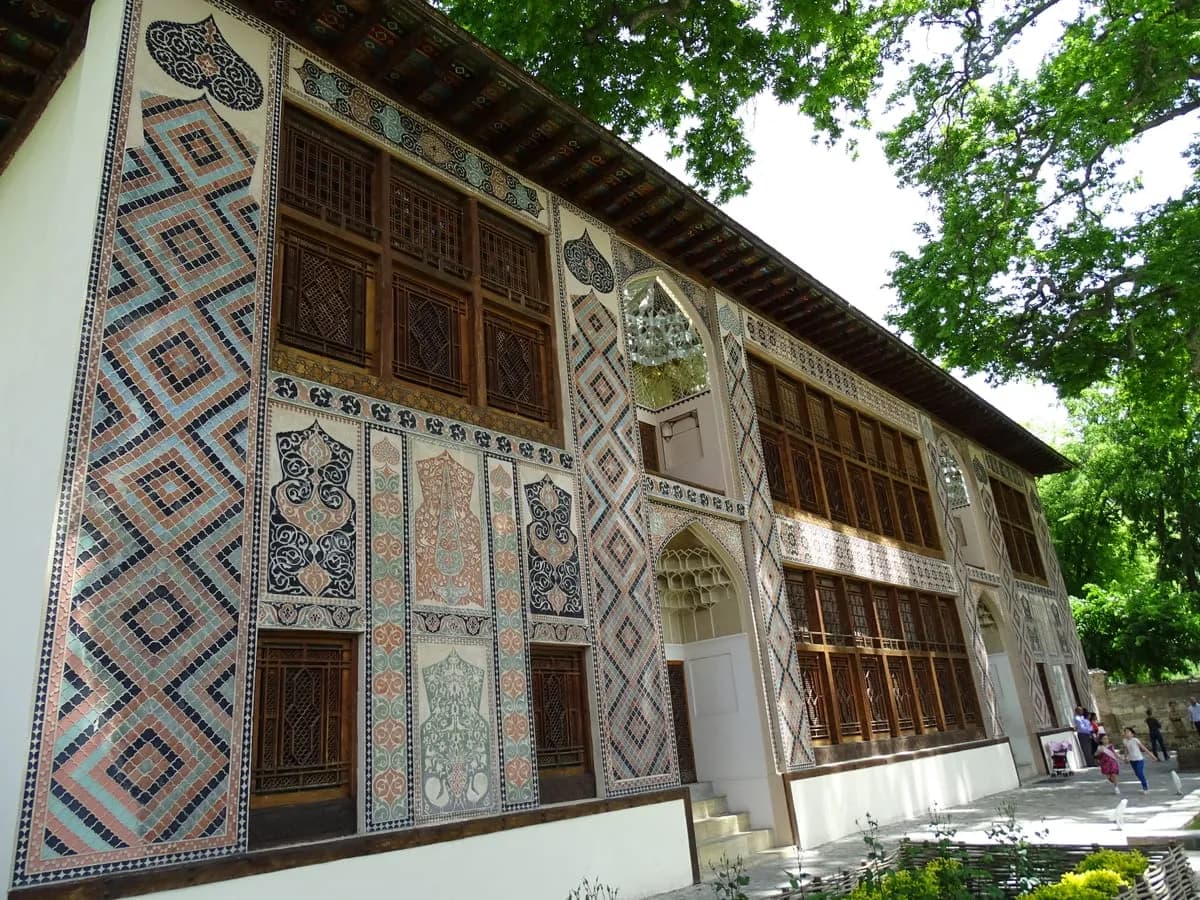
- The large shebeke window wall, coloured glass set into wooden lattice without a single nail or drop of glue
- Painted interior rooms with 18th-century frescoes of hunting, battle and floral scenes
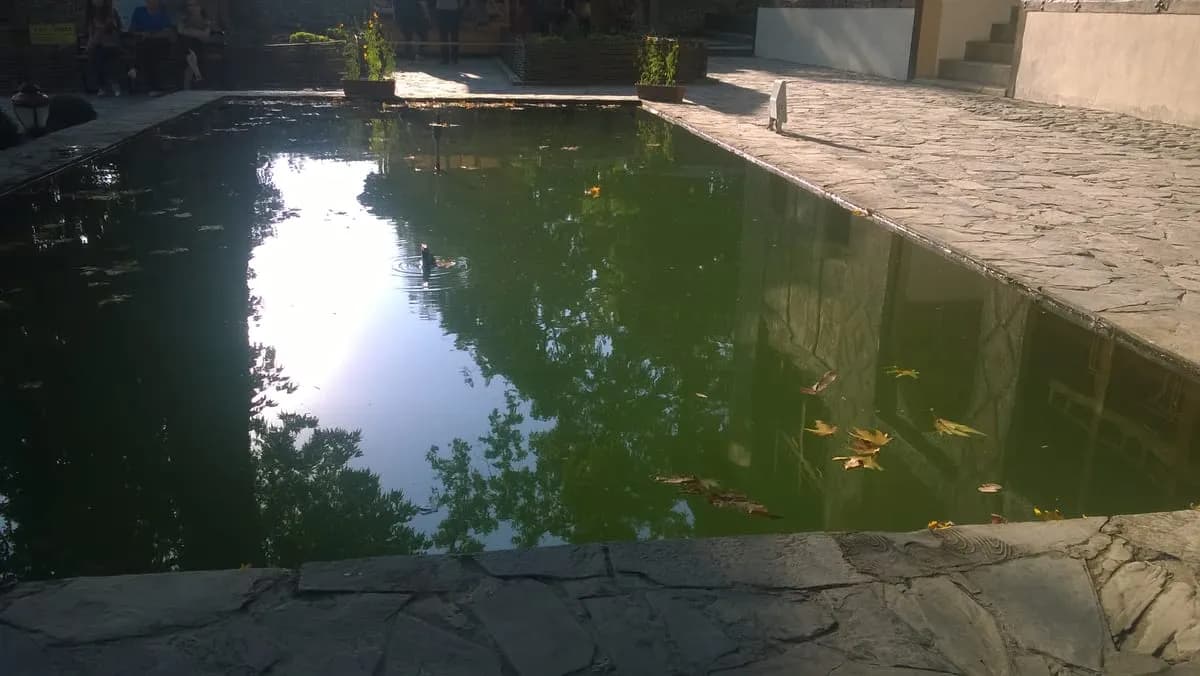
- Centuries-old plane trees and the pool in the courtyard
- The setting inside the old Sheki fortress, the walled enclosure that holds the palace
- A gate that opens at 09:00, an hour before the first coaches from Baku and Gabala reach the town
Sheki Khan's Palace is the late-18th-century summer residence of the khans who ruled Sheki, and it stands inside the fortress at the top of the town in northwestern Azerbaijan. Entry for foreign adults went from 9 to 15 AZN on 1 January 2026, and the ticket is now a dated day session sold through iTicket.az. Birtour has been driving the Baku to Sheki road as a licensed DMC since 2014. This page covers what the building is, what it costs at the gate in August 2026, and how to fit it into a trip north.
What is Sheki Khan's Palace?
It is the summer residence of the khans who ruled the Sheki khanate, a two-storey building inside the old Sheki fortress in northwestern Azerbaijan. One structure survives from what was a larger palace complex. Silk money paid for the decoration: a façade of shebeke glass and interiors painted wall to ceiling.
The fortress is the walled enclosure around it. So the palace is the building and the fortress is the wall, two different things that guidebooks routinely blur into one. You pass through the fortress gate for free and pay at the palace door.
How much are Sheki Khan's Palace tickets in 2026?
Fifteen manat for a foreign adult, up from nine, since the State Tourism Agency's reserves raised foreign entry on 1 January 2026. iTicket.az publishes a 1 to 15 AZN band and does not break out the local and student tiers. Buy online or at the gate; the ticket is dated to a day.
| Detail | Published position, August 2026 |
|---|---|
| Foreign adult | 15 AZN, raised from 9 AZN on 1 January 2026 |
| Local and student tiers | Inside a published 1 to 15 AZN band; not broken out per category |
| Ticket channel | iTicket.az online, or the ticket office at the gate |
| Entry type | One dated session per calendar day, not an hour slot |
| Hours | 09:00 to 19:00 |
| Closing day | None in the published calendar |
| Interior photography | No official charge published anywhere; ask at the desk |
The 9 AZN figure is the single most-copied wrong fact about this palace, and it is on more travel pages today than the correct one. The same 1 January 2026 rise hit the Church of Kish, Ateshgah, Yanar Dag and Diri Baba, all under the same agency. Local prices did not move.
What are the opening hours, and is there a closing day?
Daily 09:00 to 19:00, with no weekly closing day. The published ticketing calendar for 12 August to 30 September 2026 runs fifty consecutive dated sessions, one per day, none skipped. That contradicts the "Tuesday to Sunday, 10:00 to 18:00" line that still dominates search results for this palace.
We would rather flag that than have a guest plan around it. A traveller who moves Sheki off a Monday to dodge a closure that does not exist has spent a day of a short trip on a rumour.
Can you photograph the shebeke and the frescoes?
Ask at the desk. An interior photography surcharge circulates on travel sites and forums, but no official channel publishes one, so we will not quote a figure. What is consistent on the ground is that staff accompany every group through the upper rooms and stop flash. Exterior and courtyard photography is not an issue.
When was Sheki Khan's Palace built?
Late 18th century. Sources give dates from 1762 to 1797 and none of them settles it, so a single year is a guess dressed as a fact. It went up while Sheki's silk trade was at its height, which is why a provincial summer house carries decoration on this scale.
The palace has been restored more than once and conservation work continues, which is part of why interior access is managed the way it is.
Why is the Khan's Palace famous?
For shebeke and for frescoes, both inside one small building. Shebeke is latticework where pieces of coloured glass sit in a carved wooden frame held by no nails and no glue, the wood slotted so the pieces lock. The frescoes are 18th-century hunting, battle and floral scenes covering the upper rooms.
The no-nails-no-glue detail is the solid, well-documented fact about the craft. The figure you will hear from guides, several thousand glass pieces per square metre in the largest window, is an estimate rather than a measurement, and we say so. The palace anchors the UNESCO listing it shares with the Sheki old city around it.
A third reason has arrived more recently, and it only applies in one market. Sheki is the one Azerbaijani location named among the eight where the second season of the TBS drama VIVANT filmed, and the palace stands inside the fortress at the centre of that town. Hankyu Travel's Japanese itinerary lists the palace inside the Sheki block it labels a filming location, on its own authority. Our VIVANT in Azerbaijan page sets out who has named which places, and on whose authority.
Is Sheki Khan's Palace a UNESCO site?
Yes. UNESCO inscribed the Historic Centre of Sheki with the Khan's Palace in 2019 under criteria (ii) and (v), at the 43rd session of the World Heritage Committee, which was held in Baku. The listing covers the palace, the fortress and the old quarter below it, not the palace alone.
How do you get to Sheki from Baku?
Two roads, and the shorter one is slower. The M2 runs about 360 km and takes roughly four and a half hours. The Shamakhi and Gabala road is about 304 km but nearer five hours, with Diri Baba and Shamakhi on it. Both are too far for a comfortable day trip.
The 300 km figure quoted on most pages, including the quick facts above, is the Shamakhi road. It is the better drive if you want stops; the M2 is the better drive if you want to arrive. We put Sheki on an overnight either way, which is how it sits on our 6-day Azerbaijan cultural tour.
When is the best time of day to visit?
First thing. The gate opens at 09:00 and coach groups out of Baku and Gabala reach the town between 11:00 and 14:00. The painted rooms are small and visitors move through in staff-led batches, so an hour's difference in arrival decides whether you read a wall or queue behind it.
What else is nearby?
The old quarter below the fortress, two caravanserais on Akhundzade Avenue, and the Church of Kish about fifteen minutes north. Kish also went to 15 AZN on 1 January 2026 and sells daily 09:00 to 19:00 sessions, so the palace and the church fit comfortably into one morning.
The fortress grounds themselves hold centuries-old plane trees and a courtyard pool, and the Sheki old city spreads downhill from the gate. The Upper Caravanserai is a working hotel you can walk into; the Lower one has been under restoration and we would not build a stop around it.
What we would not recommend
Three things. Do not run Sheki as a day trip from Baku; nine hours of driving for a 45-minute building is a bad trade. Do not shift your day off a Monday for a closure the ticket calendar says does not exist. And do not pay in advance for an interior photo permit, because no official channel sells one.
On the day trip in particular, the arithmetic is worse than it looks: you also land in the town during the coach window, so the queue is at its longest exactly when you have the least time.
For travellers planning the northwest as a two-day loop rather than a single stop, the Sheki old city page covers the fortress, the caravanserais and what the town costs once you are past the palace door.
- How much are Sheki Khan's Palace tickets in 2026?
- 15 AZN for a foreign adult, up from 9 AZN on 1 January 2026, when the State Tourism Agency raised foreign entry across the reserves it manages. iTicket.az publishes a 1 to 15 AZN band and does not break out the local and student tiers. Buy online or at the gate.
- What are the opening hours, and is the palace closed on Mondays?
- Daily 09:00 to 19:00, and no. The published ticketing calendar runs fifty consecutive dated sessions from 12 August to 30 September 2026 with no day skipped, so there is no weekly closing day. The Tuesday-to-Sunday, 10:00-to-18:00 line still repeated across travel sites is not supported by the ticket channel.
- Is entry to Sheki Khan's Palace timed?
- It is dated rather than timed. iTicket sells one session per calendar day, so the ticket ties you to a day and not to an hour. Inside the palace, staff move visitors through in small groups, which is what produces the queue at busy times rather than any booked entry slot.
- Why is Sheki Khan's Palace famous?
- It is famous for its shebeke windows, panels of coloured glass held in carved wooden lattices with no nails or glue, and for the 18th-century frescoes covering its interior walls. It is the one surviving building of a once-larger palace complex built on Sheki's silk wealth.
- Is Sheki Khan's Palace a UNESCO site?
- Yes. In 2019 UNESCO inscribed the Historic Centre of Sheki with the Khan's Palace under criteria (ii) and (v), at the 43rd session of the World Heritage Committee, which was held in Baku. The listing covers the palace, the fortress and the old quarter below, not the palace on its own.
- Can you take photos inside?
- Ask at the desk. An interior photography surcharge is widely repeated online, but no official channel publishes one, so we will not quote a figure. Staff accompany every group through the upper rooms and stop flash. Photographing the exterior, the courtyard and the plane trees is not an issue.
- How long does a visit take?
- The palace itself is small and visits run on guided rotations, so the building takes roughly 30 to 45 minutes. Add time for the courtyard, the plane trees and the fortress grounds, and budget a few hours if you also walk the surrounding old town of Sheki.
Tour package
6-Day Azerbaijan Cultural Tour from Baku
Tour package
VIVANT2 Filming Locations & Azerbaijan Highlights: 4 Days
Destination
Things to do in Sheki: the UNESCO old town, fortress and caravanserais
Destination
Sheki Caravanserai: the silk-road merchants' inn, and how to visit
Destination
Church of Kish: the Caucasian Albanian temple near Sheki