Things to Do in Ganja, Azerbaijan: a one-day city guide
Ganja · about 4 hours by car, 5 by coach from Baku
Ganja is Azerbaijan's second city, in the west of the country about 360 km from Baku. Its landmarks include the Shah Abbas (Juma) Mosque of 1606, the Bottle House clad in 48,000 glass bottles, and the 450-hectare Heydar Aliyev Park. The poet Nizami Ganjavi was born here in the 12th century, and Lake Goygol lies just to the south.
- Region
- Ganja
- From Baku
- 360 km · about 4 hours by car, 5 by coach
- Best season
- Spring to autumn
- Time to spend
- 1 day
- Entry
- The mosque, the parks and Javad Khan Street are free. The Bottle House is a private home with no ticket and no interior visit. Lake Goygol charges 2 AZN per person, the same for foreign and local visitors.
- Hours
- Ganja State Historical-Cultural Reserve sites: 09:00 to 18:00, all days of the week, per the Ministry of Culture. Goygol National Park admits ecotourists 09:00 to 18:00. The streets and parks have no gate.
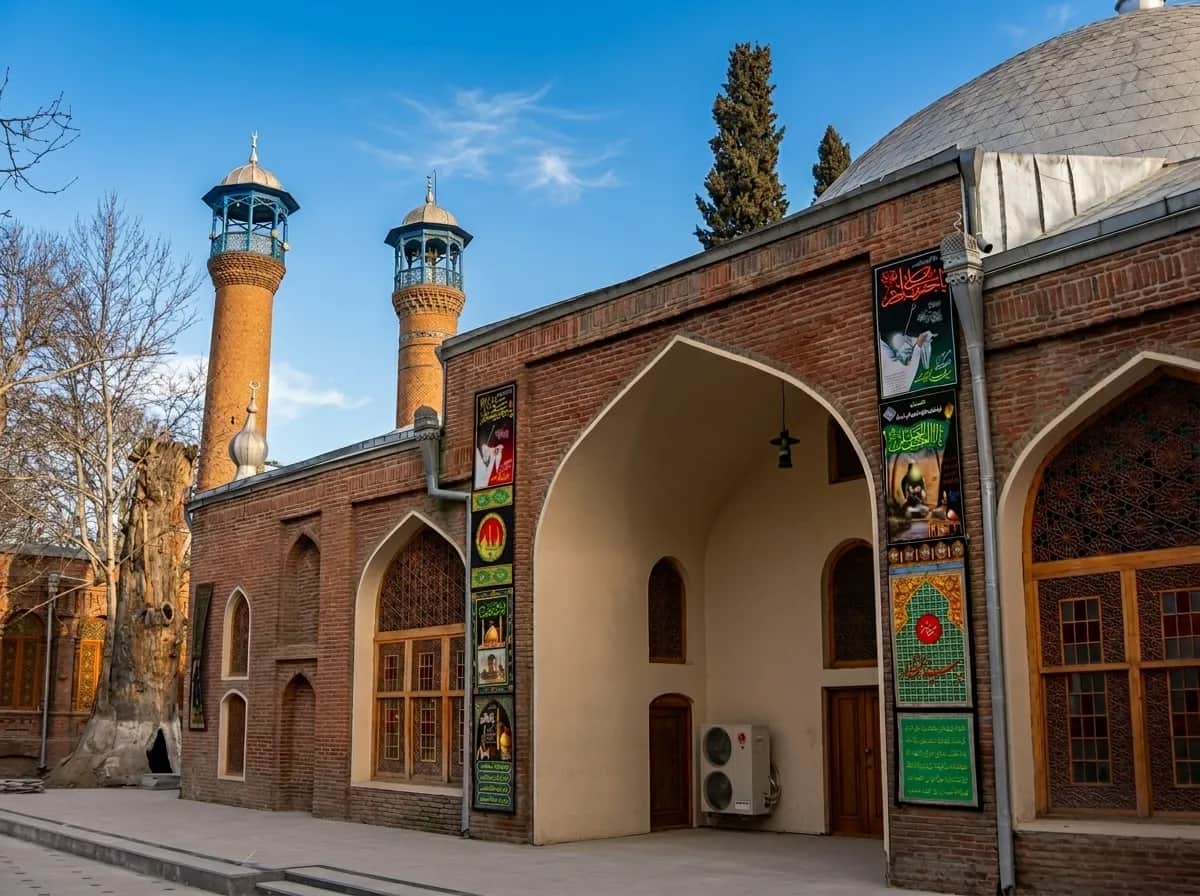
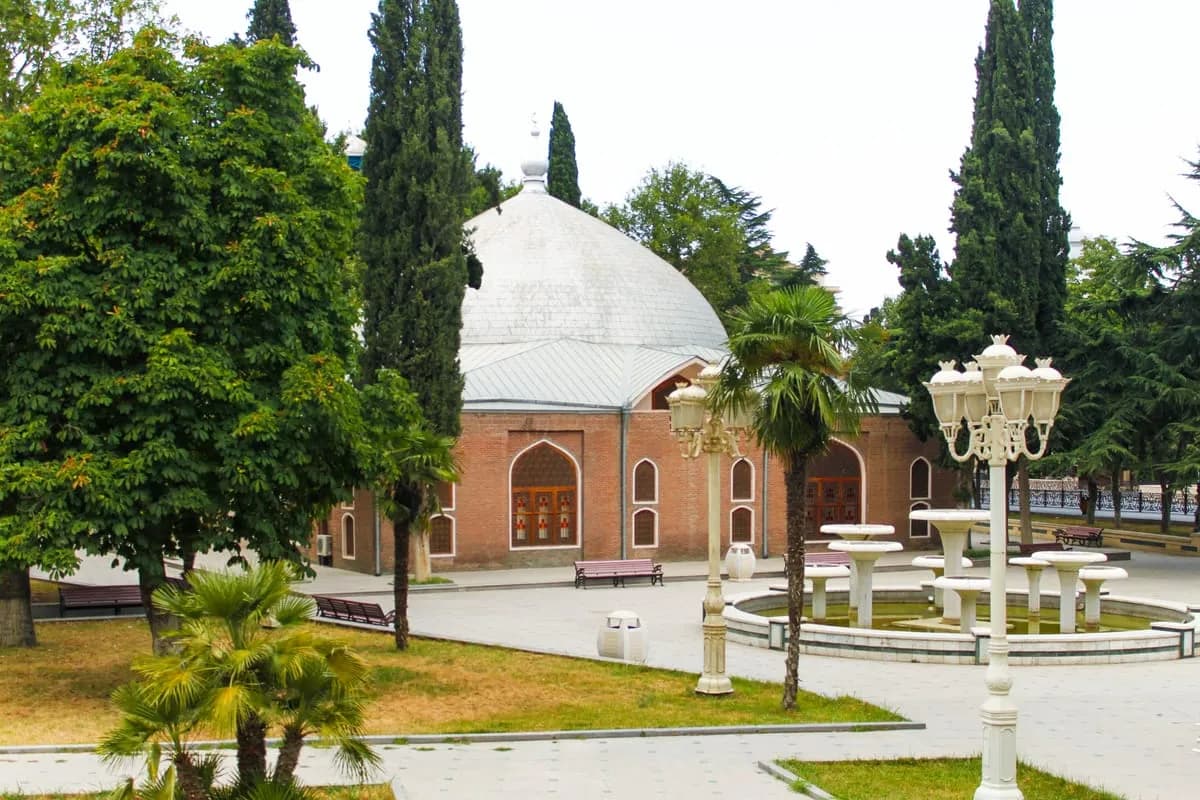
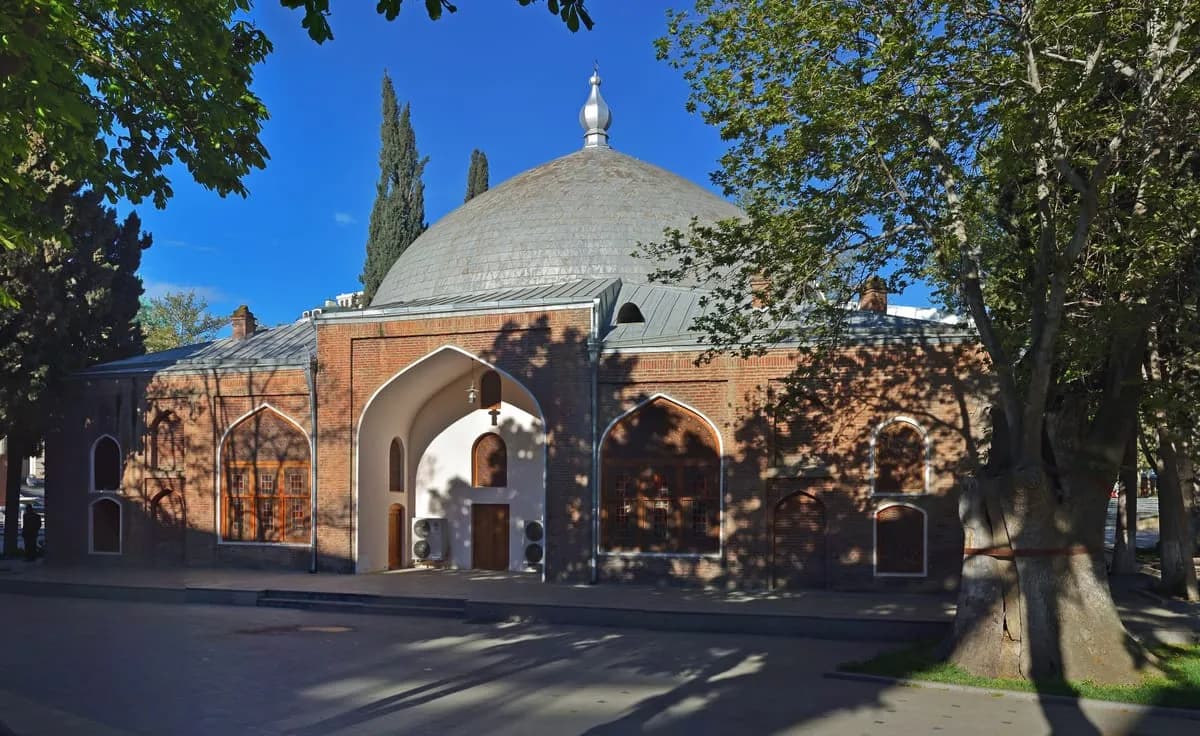
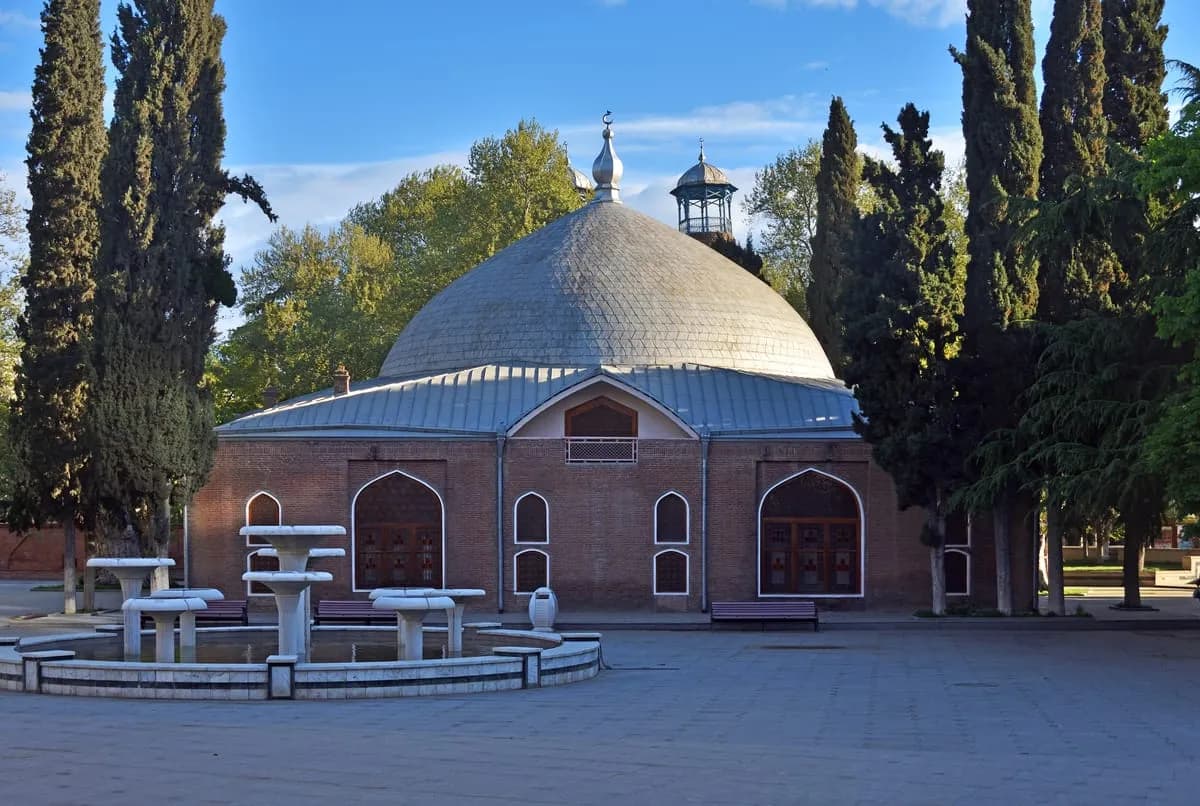
- The Shah Abbas (Juma) Mosque of 1606, with its red-brick Aran-school design
- Javad Khan Street, a free 2.3 km pedestrian spine through the old centre
- The Bottle House, a private home faced with 48,000 glass bottles, seen from the street
- Heydar Aliyev Park and its Triumphal Arch on the city's edge
- The Imamzadeh complex 7 km north, with a 14th-century domed mausoleum
- Nizami's mausoleum on the approach and Lake Goygol a short drive south
Ganja is Azerbaijan's second city, 360 km west of Baku on the M2, and it is the point where a western circuit stops being a day trip and starts needing a bed. The old centre holds the Shah Abbas Mosque of 1606, the Bottle House, and the 2.3 km pedestrian run of Javad Khan Street. Lake Goygol lies 15 to 30 minutes south inside its national park; Naftalan is about 50 km away and has no coach of its own from Baku, so it is reached through here. Birtour, a Baku-based DMC operating since 2014, runs groups through Ganja on both its cultural circuits. This page covers what fills a day, how to reach the city by road, rail and air in 2026, and what the gates actually charge.
What is there to do in Ganja?
One full day covers it. The 1606 Shah Abbas Mosque anchors a square of old hammams and a caravanserai; Javad Khan Street runs 2.3 km as a free pedestrian spine through the centre; the Bottle House is a street-view curiosity; and Heydar Aliyev Park with its Triumphal Arch closes the eastern edge.
The mosque, also called the Juma Mosque, was built in 1606 by order of Shah Abbas and designed by Sheikh Bahaeddin (Baha al-Din al-Amili), in the red-brick Aran architectural style. It still functions as a mosque, so keep the camera down at prayer times. Javad Khan Street, named for the last khan of Ganja, is a pedestrian street with no gate and no hours: 2.3 km of tea houses, sweet shops and the Ganja baklava that people actually come back for. Heydar Aliyev Park opened in 2014 on the eastern edge and the city promotes it as the largest park in the Caucasus.
One stop most English-language itineraries leave out sits 7 km north of town. The Imamzadeh complex grew up around the tomb of Imamzadeh Ibrahim, son of the fifth Shia Imam; the earliest structure there is 8th century, the domed mausoleum 14th, and it was restored between 2010 and 2016. Coming in by road from the Baku direction, it is a natural stop before the city rather than after it. We put it on day 8 of our 10-day grand tour.
A newer reason to come applies mostly in one market. Ganja is one of the eight regions that Baku Media Center, the production partner that handled permits and logistics, named when the second season of the TBS drama VIVANT finished filming in November 2025. The statement named regions, not buildings, so no specific Ganja site has been confirmed on screen. Seven of the eight can be reached by road, and Ganja is the farthest of them, which is why it takes day 8 of our ten-day route. Who has named which places, and on whose authority, is set out on our VIVANT in Azerbaijan page.
How do you get from Baku to Ganja in 2026?
By road. Ganja is 360 km west of Baku on the M2, about four hours by car and five by coach with stops. Trains run on the main line and coaches leave the Baku terminal at 13.10 to 13.50 AZN. Do not count on a domestic flight: Baku's departures board showed none on 11 and 12 August 2026.
The M2 is good asphalt the whole way across the central plain, and the four-hour figure is a clear-conditions car estimate. A coach carrying a group takes closer to five with a comfort stop, which is the number in our filming regions table and the number we quote operators.
Scheduled coaches run from the Baku International Bus Terminal at 13.10 to 13.50 AZN for the 360 km, roughly half-hourly through the afternoon and evening. Ticket offices there open 07:00 to 00:30 and there is online sale through Biletim.az. One warning about that source: the terminal's own site prints the Baku to Ganja journey time as 2 hours 5 minutes, which is not physically possible over 360 km. Trust its fares and its distances, not its clock.
Rail exists and we use it less than you would expect. Azerbaijan Railways sells the Baku to Ganja main line through its site and app, but its ticketing portal was unreachable to us on 10 and 11 August 2026, so we are not publishing a departure time or a fare we could not read from ADY itself. What is new and confirmable is the Ganja to Gabala service launched on 12 January 2026, the first regular passenger train on that route: 139 km in 1 hour 50 minutes, leaving Ganja at 10:10 and Gabala at 18:00, stopping at Goran, Yevlakh, Laki and Agdash, with fares from 4.30 AZN. It also opens a Baku to Gabala day via a connection at Laki.
Air is the part that has changed against what is written online. Ganja has an international airport and AZAL has flown there. But the Heydar Aliyev departures board listed Nakhchivan as its only domestic destination on both 11 and 12 August 2026, and the Baku to Ganja schedule that keeps surfacing in search results traces back to a January 2017 press release. Two days is not proof a route is gone. It is enough that we will not sell a connection on it without the airline confirming the date.
Is Ganja the right base for Goygol and Naftalan?
Yes, and that is the stronger reason to come. Lake Goygol is 15 to 30 minutes south inside its national park; Naftalan is about 50 km away and has no direct coach from Baku, so it is reached through Ganja or through Goran station. One Ganja hotel covers both.
The Naftalan point is the one that decides itineraries. The Baku International Bus Terminal's own route list carries no Baku to Naftalan service at all, so anyone travelling independently to a Naftalan course arrives either by road through Ganja or off Goran railway station, which the hotels put at about 20 km from town and which is a stop on both the Baku main line and the new Ganja to Gabala train. For a group, that means one westbound transfer and one hotel base rather than two. The connections are laid out in our guide to reaching Naftalan and Gabala from Baku, and what the oil courses themselves involve is covered in Naftalan oil therapy.
On our 6-day Azerbaijan cultural tour from Baku the west comes late: Sheki, then Naftalan, then Ganja and Goygol together on day six before the run back to Baku. That order exists because Goygol stops admitting visitors at 18:00. Ganja and the lake only fit the same day if the day starts 50 km away in Naftalan rather than 360 km away in Baku.
What does entry cost, and when is everything open?
Most of Ganja is free. The Ganja State Historical-Cultural Reserve publishes 09:00 to 18:00 across the week for the sites it manages, the mosque and the parks charge nothing, and Javad Khan Street has no gate at all. Lake Goygol's national park charges 2 AZN a head, the same for foreigners as for citizens.
| Site | Published tariff, August 2026 | Published hours |
|---|---|---|
| Shah Abbas (Juma) Mosque | Free; working mosque | Daily, access limited around prayer times |
| Javad Khan Street | Free, 2.3 km pedestrian street | No gate, any hour |
| Bottle House | No ticket published; private home, exterior only | None published |
| Heydar Aliyev Park | Free | Open park |
| Ganja State Historical-Cultural Reserve sites | Not published per site | 09:00 to 18:00, all days of the week |
| Nizami Ganjavi Mausoleum and plaza | Free; the site museum charges separately | Reserve hours, 09:00 to 18:00 |
| Goygol National Park | 2 AZN per person; a quarter of that for university students and visitors with disabilities | 09:00 to 18:00 for ecotourists |
Two corrections are worth carrying into the car. First, Goygol does not need a permit. The Ministry of Ecology's own ecotourism page sets a flat 2 AZN fee for everyone, paid by bank transfer, with the receipt and an ID document presented at the park entry point; an online route now exists at e-xidmet.eco.gov.az. The seasonal-permit story that circulates online describes a payment procedure, not a barrier. A per-car charge is widely reported at the gate and the ministry publishes none, so carry small cash for it and do not budget a figure.
Second, the price rise that took foreign-adult entry from 9 to 15 AZN on 1 January 2026 does not apply here. That decree covers the State Tourism Agency's reserves, which is Ateshgah, Yanar Dag, Kish, Diri Baba and the Sheki Khan's Palace. Ganja's reserve sits under the Ministry of Culture and was not part of it. If a quote for a western circuit has gone up on the Ganja leg, it is the diesel, not the gates.
What is the Bottle House, and can you go inside?
It is a two-storey private home built between 1966 and 1967 by Ibrahim Jafarov and faced with about 48,000 glass bottles set in patterns with coloured stone. You cannot go inside. It is still somebody's house, with no ticket, no published opening hour, and no interior visit any operator can book for you.
Jafarov built it in memory of a brother who went missing in the Second World War and worked the bottle walls by hand over nearly two years. We used to describe it here as charging a small fee, which was wrong and is now corrected: no gate, no fee, nothing sold. Ten minutes from the pavement is the whole visit, and it is best in strong light, when the bottle walls throw colour back at the street.
Where are the famous Ganja Gates?
Not in Ganja. The medieval iron gates were cast in 1063, carried off as war booty after the 1139 earthquake, and have hung at Gelati Monastery in Georgia ever since. What stands in the city today is a tribute, not the original, and no guide can show you otherwise.
Guidebooks keep the confusion alive by listing the gates among Ganja's sights without saying where they now are. It is a small thing, but it is the kind of small thing a guest notices, and we would rather say it before the guide has to.
Can you combine Ganja with Lake Goygol and Nizami's tomb?
Easily, in one day. The Nizami Ganjavi Mausoleum sits on the eastern approach and takes 20 to 40 minutes. Lake Goygol is 15 to 30 minutes south of the city, open 09:00 to 18:00 to ecotourists at 2 AZN a head. City in the morning, lake after lunch, tomb on the way in or out.
The lake was formed when the 1139 earthquake dammed a river below Mount Kapaz, and the park around it runs to 12,755 hectares across three districts. The 18:00 cut-off is the only hard constraint in the day. A group arriving off the Baku road in mid-afternoon should go to the lake first and keep the mosque square for the following morning, because the square is open and the park is not.
When is the best time to visit Ganja?
Mid-April to early June and early September to late October. The plain runs hot in July and August, while the higher ground around Goygol stays 10 to 15 degrees cooler in the same weeks. Winter works for the city itself, though the mountain add-ons thin out. Give the city a full day.
On the time of day: a car leaving Baku at 07:00 reaches the mosque square around 11:00, which is when the first coaches off the M2 arrive. Leaving at 06:00 buys the square an hour with almost nobody in it, and the red brick reads better in that light than at noon. For operators sequencing departures across a whole year, our month-by-month planner's calendar covers the hotel-squeeze weeks.
What we would not recommend
Three things. Do not book a Baku to Ganja domestic flight without the airline confirming your date. Do not plan a Naftalan course around a coach from Baku, because there is not one. And do not run Ganja as a day trip out of Baku and back.
The last one is the one clients push hardest on. Eight hours of driving for six hours on the ground is a bad trade and we do not sell it. Ganja earns an overnight, and it is the overnight that makes Goygol and Naftalan reachable at a civilised hour instead of at the end of a 14-hour day. Our ten-day route sleeps in Ganja itself; the six-day one sleeps 50 km away in Naftalan and reaches the city fresh the next morning. Neither drives out from Baku and back inside a day.
For operators building a western circuit rather than a single city day, Ganja is day six of our 6-day Azerbaijan cultural tour from Baku, and day eight of the ten-day route.
- What is Ganja famous for?
- Ganja is Azerbaijan's second city and the birthplace of the 12th-century poet Nizami Ganjavi. Visitors come for the 1606 Shah Abbas Mosque, the pedestrian run of Javad Khan Street, the Bottle House faced with 48,000 glass bottles, the large Heydar Aliyev Park, and nearby Lake Goygol in the Lesser Caucasus.
- How do you get from Baku to Ganja in 2026?
- By road, almost always. Ganja is 360 km west of Baku on the M2: about four hours by car, five by coach, which is the figure we plan against. Scheduled coaches leave the Baku International Bus Terminal roughly half-hourly through the afternoon at 13.10 to 13.50 AZN. Trains run on the main line. Do not assume a domestic flight: Baku's departures board listed Nakhchivan as its only domestic destination on 11 and 12 August 2026.
- Is there a flight from Baku to Ganja?
- Ganja has an international airport, but we would not build a plan around a Baku to Ganja flight in August 2026. The Heydar Aliyev departures board showed no Ganja service on either 11 or 12 August 2026, and the schedule that keeps surfacing in search results traces back to a January 2017 press release. Confirm with the airline before you count on it.
- Is Ganja worth visiting?
- Yes, as an overnight inside a wider western route rather than a day trip out of Baku. The city fills a comfortable day, and it is the practical base for Lake Goygol and for Naftalan, which has no direct coach from Baku. If you only have a few days near Baku, the closer Absheron and Gobustan sites give more for less driving.
- What is the Bottle House in Ganja?
- The Bottle House is a two-storey private home in Ganja, built in 1966-67 by Ibrahim Jafarov and faced with 48,000 glass bottles set in patterns. He built it in memory of a brother lost in the Second World War. It is still somebody's house: there is no ticket, no published opening hour and no interior visit to book.
- Do you need a permit for Lake Goygol?
- No. The Ministry of Ecology publishes a flat 2 AZN ecotourism fee per person, identical for citizens and foreigners, with university students and visitors with disabilities at a quarter of that. The fee is paid by bank transfer and the receipt is shown with an ID document at the park entry point, or bought online through e-xidmet.eco.gov.az. The park admits ecotourists 09:00 to 18:00.
- Can you visit Ganja and Lake Goygol together?
- Yes, and many do. Lake Goygol sits roughly 15 to 30 minutes south of Ganja in the Lesser Caucasus, inside Goygol National Park. City in the morning, lake in the afternoon is the usual shape, with one caveat: the park stops admitting ecotourists at 18:00, so a late arrival should take the lake first.
- How far is Naftalan from Ganja?
- About 50 km, by the Naftalan hotels' own reckoning. That matters because the Baku International Bus Terminal publishes no direct Baku to Naftalan coach at all. Naftalan is reached through Ganja by road, or off Goran railway station about 20 km away, which is a stop on both the Baku main line and the Ganja to Gabala service launched in January 2026.
- Where are the famous Ganja Gates?
- Not in Ganja. The medieval iron Ganja Gates, cast in 1063, were carried off as war booty after the 1139 earthquake and have been at Gelati Monastery in Georgia ever since. What you see in Ganja today are references and replicas, not the originals.
Tour package
6-Day Azerbaijan Cultural Tour from Baku
Destination
Nizami Ganjavi Mausoleum near Ganja: visitor guide
Destination
Lake Goygol & National Park: the earthquake-formed alpine lake near Ganja
Destination
Naftalan: Azerbaijan's medicinal crude-oil spa town
Guide
Naftalan Oil Therapy in Azerbaijan: What It Treats, the Evidence, and Who Should Avoid It (2026)
Guide
How to Get to Naftalan and Chenot Gabala from Baku (2026)
Guide
The eight VIVANT filming regions: distances, drive times and how they connect