Planning a GCC corporate offsite in Baku and the Caucasus
A procurement checklist for GCC corporate offsites in Baku: entry purpose, venue layout, dietary requirements, production, guest transfers and a matched proposal.
- trends
- GCC
- MICE
- Caucasus
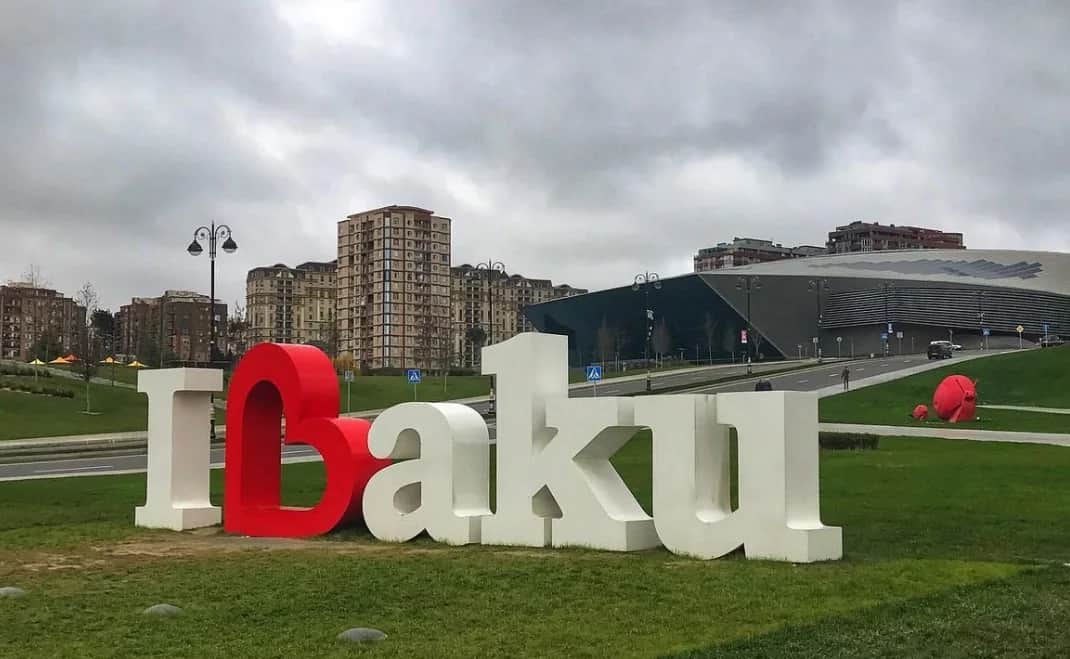

Birtour is a Baku-based DMC serving GCC procurement and corporate travel teams. This page compares the planning questions behind a Baku or Baku–Tbilisi offsite: entry purpose, hotel and production scope, halal catering, rooming and the operating party in each country. Pipeline anecdotes and unsupported regional growth multipliers are not used as market data.
Why the Caucasus is now on the GCC offsite shortlist
Three questions move together. Entry requirements may differ by nationality and travel purpose, so a corporate programme needs a separate visa check. Hotel kitchens must confirm the menu and handling standard in writing. Production and room rates must be quoted for the actual dates instead of inferred from a regional percentage.
The official arrival figures below describe visitors to Azerbaijan; they do not measure Birtour's corporate bookings or prove a shift in GCC offsite demand. Use them as market context, then build the actual programme from the delegate brief and dated supplier offers.
Which GCC offsite briefs can Baku accommodate?
Incentives, team offsites, board meetings and larger launches call for different room layouts, delegate services and production plans. The examples below are brief types to test against published venue capacities, not measured market segments or a claim that a particular group size is moving between destinations.
| Example brief | Planning question | | --- | --- | --- | | Private banking incentive | Can the hotel, guide and guest-activity plan support the group and its arrival waves? | | Corporate offsite | Which meeting, breakout, gala and hotel spaces are available on the same dates? | | Executive education or board retreat | Does the venue provide privacy, suitable rooms and a workable transfer plan? | | Product launch or large gala | Which layout, production suppliers and transport plan can be confirmed for the actual attendance? |
Our GCC incentive programme blueprint shows a planning shape for 120 guests, with Baku as the base and any regional extension confirmed against season and road time. It is an example programme, not evidence that one category is growing faster or spending more than another.
What changed on GCC entry rules in February 2026?
The four-country pilot for Saudi, Omani, Kuwaiti and Bahraini ordinary passports is for tourism, up to three entries of 30 days between 15 February 2026 and 15 February 2027. The State Migration Service says non-tourism visitors need the appropriate visa. Confirm a corporate event's purpose with the embassy; do not classify it as tourism from the programme title alone. UAE and Qatar have separate arrangements. Official notice, checked on 19 September 2026.
A reward trip, conference and paid assignment can have different purposes; get the appropriate category confirmed before ticketing. Each traveller's earlier entries and residence status matter as well.
The GCC group entry guide sets out the separate workflows. A mixed Gulf and European group needs a document deadline for everyone, even if some guests ultimately qualify for visa-free travel.
What should a GCC buyer test in the RFP?
Four planning factors recur: entry paperwork, property-level dietary capability, production cost, and cultural fit. Each belongs in the RFP rather than being assumed from a destination label. The entry rules are the factor that changed most recently.
1. Entry rules eased for eligible Gulf tourists
For procurement, the useful change is the tourism option for qualifying guests. Keep a visa workstream for a corporate list until each passport and purpose has been checked. Georgia has its own entry regime, so an Azerbaijan–Georgia programme checks each passport against both countries rather than assuming the region moves as one.
2. Confirm halal and dietary controls property by property
Azerbaijan adopted a national halal-tourism standard in 2026, but that does not prove certification or kitchen controls at every five-star property in Baku or elsewhere in the Caucasus. For a GCC programme, ask the shortlisted venue to confirm certification where claimed, ingredient sourcing, preparation, alcohol separation and cross-contact controls in writing. Keep the dietary manifest in the programme file even when the venue describes its kitchen as halal.
3. Compare production and hotel costs separately
Compare AV, lighting, staging, catering, gala venue and hotel rooms as separate lines. A single total can hide different inclusions or supplier-confirmation status. Our 50-person corporate offsite checklist sets out the Baku scope to quote; it does not establish a percentage saving against a European destination.
Specify the quotation and payment currencies, the exchange-rate basis, taxes and the validity period in each proposal. A historical central-bank rate is not a supplier's future contract term.
4. Ask about guest experience
Ask delegates and the buyer what kind of guest programme they want outside the meeting room. For a GCC group, specify dietary handling, prayer-time scheduling, guide languages, privacy needs and any family extension in the brief. Do not treat a destination's broad cultural label as a substitute for those written requirements.
What can official arrivals data tell a corporate buyer?
The categories need to be read literally. Azerbaijan's H1 2026 release shows the "Gulf countries" bloc down 31.4%. That grouping includes Iran and Iraq, so it is not a GCC number. Inside Q1 2026, where both years publish absolutes, Saudi Arabia rose 13.6% while the UAE fell 54.5%. Across all origin markets, business-purpose arrivals rose 2.6% while tourism-purpose arrivals fell 8.1%.
| Line | Period | Change |
|---|---|---|
| "Gulf countries" bloc, includes Iran and Iraq | H1 2026 | down 31.4% |
| Saudi Arabia arrivals | Q1 2026 | up 13.6% |
| UAE arrivals | Q1 2026 | down 54.5% |
| Business-purpose arrivals, all markets | Q1 2026 | up 2.6% |
| Tourism-purpose arrivals, all markets | Q1 2026 | down 8.1% |
These series have different definitions and cannot establish how many GCC corporate offsites were contracted in Azerbaijan. The country-level business-purpose change covers all origin markets, while the Gulf-country group includes non-GCC countries. Read the Q1 2026 inbound trends note for the source and calculation boundaries before citing a figure in a procurement paper.
Where can Baku actually seat a plenary?
Published capacity depends on the setup. Fairmont's summary advertises up to 1,000 for Nizami Ganjavi, while its chart gives 840 theatre / 720 banquet; JW Marriott publishes a 1,000-theatre layout for Sharq Zali. Hilton and Four Seasons publish smaller theatre layouts, while the Baku Convention Center has an auditorium above 3,000. None of these figures is a dated room hold.
| Venue | Largest published space | Published capacity |
|---|---|---|
| Baku Convention Center, auditorium | 46,000 sq m building | 3,428 seats |
| JW Marriott Absheron Baku | 1,957 sq m over 13 rooms | 1,000 |
| Hilton Baku, Sevda Ballroom A+B+C | 675 sq m | 650 theatre, 320 banquet, 600 reception |
| Four Seasons Baku, Segah Grand Ballroom | 640 sq m | 450 theatre, 300 banquet, 500 reception |
| Fairmont Baku, Nizami Ganjavi | 1,014 sq m | 840 theatre / 720 banquet in room chart; separate summary says up to 1,000 |
| Fairmont Baku, Uzeyir Hajibeyov | 203 sq m in room chart | 180 theatre / 144 banquet in chart; separate summary says 150 |
| Hyatt Regency Baku, largest space | about 163 sq m | 120 banquet |
Every figure in that table is read off the operator's own published meetings page, checked on 10 August 2026, not off an aggregator listing. One caveat we will pass on rather than paper over: the Convention Center's about page and its individual hall pages disagree with each other on room count and combined capacity, so we quote the hall pages and confirm with the venue before printing anything for a client.
Fairmont's current official meetings page summarises the Nizami Ganjavi ballroom at 1,014 m² and up to 1,000 guests, but its chart lists 840 theatre and 720 banquet. Uzeyir Hajibeyov is a separate, smaller room. For a 200-person general session, compare the exact Fairmont ballroom layout with JW Marriott, Hilton and other candidates; the Baku venue shortlist links to their source pages.
What does this mean for procurement?
For a 2026 or 2027 offsite, compare Baku with other destinations on the same dates, attendance and programme scope. Price hotel and production separately, then assess the written responsibilities of the event and destination teams.
- Include Baku in a matched RFP when the programme fits. Verify each delegate's entry requirements for their passport and trip purpose.
- Compare complete supplier scopes. Separate rooms, event production, catering, transport and guest activities before comparing totals.
- Check the operating plan. Ask who contracts each service, leads the event on site and handles dietary, prayer-time and family-room requirements.
For the Birtour cost shape on a 50-pax GCC offsite in Baku, see the cost breakdown. For a 100-pax conference build, the MICE conference pricing page carries the line items. For a destination-versus-destination comparison, we set Baku against its EMEA peers in this guide.
What we would not recommend
Three checks belong before a GCC venue shortlist becomes a proposal: use current venue sources, get a layout-specific Baku Expo Center offer, and distinguish a published Heydar Aliyev Center auditorium figure from bookable event inventory.
- Do not build a venue shortlist off the old convention bureau directory. meetinazerbaijan.com now redirects to the national tourism portal. The business-events function was absorbed into the tourism board and the venue capacity data that used to live there is no longer citable.
- Check Baku Expo Center with the event organiser and venue. The ADEX 2026 organiser page names the Expo Center as its active venue and publishes event logistics. That does not establish a usable hall layout, hold or private-event price for your dates.
- Treat the Heydar Aliyev Center's 1,000-seat figure as directional. An Azerbaijan Tourism Board business-events resource gives that auditorium size, but the buyer still needs a current venue layout, access conditions and written offer for the proposed event.
What we are watching for the rest of 2026
The visa-free pilot expires in February 2027, so future briefs need a fresh entry check. Flight options, venue space and the feasibility of a Baku–Tbilisi extension also depend on the actual dates and delegates.
- The 15 February 2027 pilot expiry. The four-country visa-free arrangement is dated. Anything quoted for spring 2027 needs the register re-checked before contract, and we diary it at the quote stage.
- Baku plus Tbilisi. Check each nationality's entry and cross-border routing separately before treating the two-country circuit as one programme. The operator framework is in our Caucasus circuit guide.
- Flight options. Compare bookable schedules for the actual origin cities and count the usable programme hours after arrivals and departures.
- Programme design. Ask the buyer about privacy, accessibility, dietary and any gender-specific requirements rather than inferring them from a market segment.
For procurement teams pricing a GCC programme in Baku, the starting artefact is the 50-person corporate offsite scope checklist. Send the actual brief for a dated proposal.
- Do GCC citizens need a visa for Azerbaijan in 2026?
- The four-country pilot for Saudi, Omani, Kuwaiti and Bahraini ordinary passports is for tourism, up to three entries of 30 days between 15 February 2026 and 15 February 2027. The State Migration Service says non-tourism visitors need the appropriate visa. Confirm a corporate event's purpose with the embassy; do not classify it as tourism from the programme title alone. UAE and Qatar have separate arrangements.
- How many people can a Baku hotel seat for a plenary session?
- JW Marriott Absheron Baku publishes a 1,000-theatre layout for its Sharg Zali ballroom. Fairmont Baku's room chart lists 840 theatre and 720 banquet for Nizami Ganjavi, while its summary says up to 1,000. Baku Convention Center publishes 3,428 full seats for its auditorium. Confirm the exact layout and date with each venue; these are not room holds.
- Is a Baku corporate offsite cheaper than a European one?
- That depends on dates and the complete brief. Request matched proposals for hotel rooms, meeting space, AV, food, gala, transfers, taxes and change terms in each destination. Birtour has no retained like-for-like supplier offers that establish a public percentage saving against Lisbon or another city.
- Why do official Azerbaijan statistics show Gulf arrivals falling in 2026?
- Because the official 'Gulf countries' grouping includes Iran and Iraq, so the H1 2026 fall of 31.4% is not a GCC number. Inside Q1 2026, Saudi arrivals rose 13.6% while UAE fell 54.5%. Business-purpose arrivals across all markets rose 2.6% while tourism-purpose arrivals fell 8.1%.
- Is Baku suitable for a large GCC offsite?
- There is no verified headcount threshold at which a GCC offsite becomes unsuitable for Baku. For a large gala or launch, compare dated venue layouts, room blocks, production suppliers, transport capacity and total cost before choosing a destination.
- Does the Azerbaijan visa-free window for GCC groups have an expiry date?
- Yes. The four-country pilot covering Saudi Arabia, Oman, Kuwait and Bahrain runs to 15 February 2027 on the Ministry of Foreign Affairs register. Anything contracted for travel near or after that date has to be re-checked. The UAE and Qatar regimes are standing and are not on the pilot clock.
- Is there currency risk on a USD-denominated Baku offsite budget?
- Ask which currency each supplier quotes and invoices in, what conversion basis applies and how long the written quote is valid. Two historical Central Bank bulletins cannot guarantee the rate or supplier terms for a future event.
case study
Luxury Azerbaijan incentive blueprint for 120 GCC guests
guide
Azerbaijan entry rules for GCC groups (2026): the visa-free pilot, the fourth-entry catch, and registration
pricing
Corporate offsite in Baku: cost components for a 50-person programme
blog
Azerbaijan inbound trends: Q1 and H1 2026 official data