Duzdag Salt Cave, Nakhchivan: Speleotherapy for Asthma and Allergies (2026)
explainer · 12 min read
Duzdag is a working rock-salt mine 12 km outside Nakhchivan City, Azerbaijan, that runs supervised overnight speleotherapy sessions in its underground galleries for people with bronchial asthma, chronic bronchitis, and allergic rhinitis. This guide covers what the venue treats, what the evidence actually shows, how to reach this Azerbaijani exclave in 2026, and what a course involves.
.JPG)
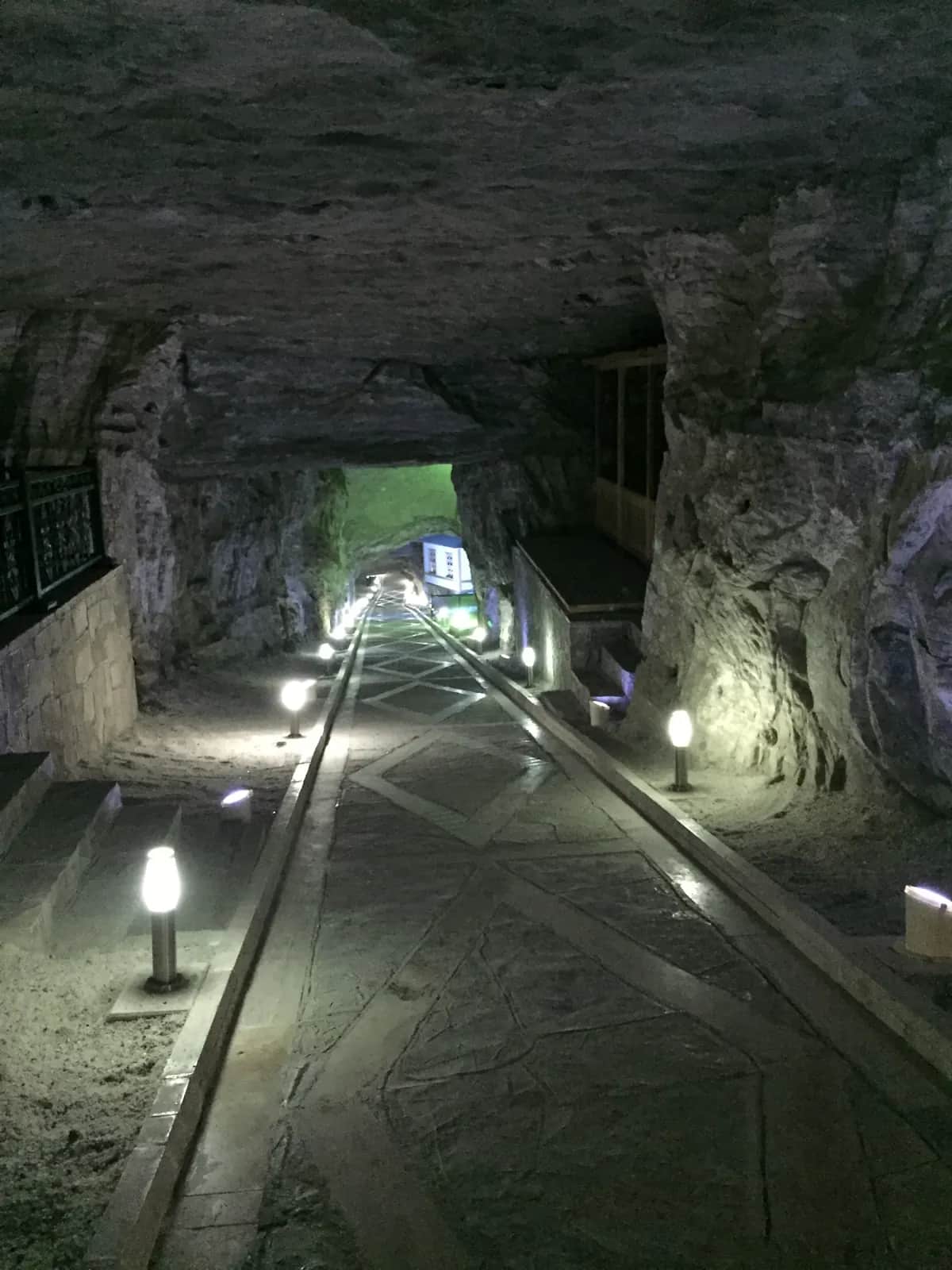
Duzdag is an active rock-salt mine 12 kilometres outside Nakhchivan City, Azerbaijan, run as a licensed speleotherapy center: patients with bronchial asthma, chronic bronchitis, and allergic rhinitis sleep overnight in galleries about 110 meters underground, under medical supervision. The attached Physiotherapy Center reports having treated around 50,000 guests since 1979, with improvement in a majority of cases, but those figures come from the venue itself, not from an independent clinical trial.
BIRTOUR organises the complete travel programme: accommodation, transfers, guides and guest activities for individuals and groups. Clinical suitability, admission requirements and treatment decisions are assessed by the treating facility and your clinician. Discuss the proposed programme with your clinician and the facility before booking; confirm the Nakhchivan travel arrangements for your dates.
Last reviewed: 11 August 2026. This pass re-checked access, ownership and facility status. The clinical framing is unchanged from July.
Why people travel to Duzdag rather than a city salt room
Duzdag sells a format city salt rooms cannot: a multi-night course inside a working mine, sleeping roughly 110 metres down, rather than an hour in a surface room lined with salt panels. That is a difference in setting and duration, not a proven difference in outcome, and we would rather say so plainly than sell the distinction as clinical.
The trade-off is the trip. A salt room is twenty minutes from your house. Duzdag is a flight into an exclave, a road transfer, and a course measured in weeks rather than sessions. Guests who book it are usually not choosing between Duzdag and a spa; they are people who have already tried the local option, want the longer format, and are willing to build a fortnight around it.
What is the Duzdag salt cave?
Duzdag, "salt mountain" in Azerbaijani, is a working rock-salt mine 12 kilometres outside Nakhchivan City that doubles as a speleotherapy center. Guests stay in galleries about 110 metres underground at the Physiotherapy Center, next to the Duzdag Hotel. Azerbaijan's State Tourism Agency lists the site's season as year-round.
Two things share the Duzdag name, and separating them saves confusion later. The hotel is a trade-union asset: AHIK, the Azerbaijan Trade Unions Confederation, lists "Hotel Duzdag of the Council of Trade Unions of the Nakhchivan Autonomous Republic" among its properties and describes it as offering the comfort of a five-star hotel. That is a description, not a classification. The hotel does not appear on Azerbaijan's state register of star-classified hotels, where the only Nakhchivan entries are the Naxchivan Palace and the Tebriz, both 3-star, and where classification is compulsory within six months of a hotel opening. AHIK also gives the hotel 144 rooms and then itemises 100 standard, 35 junior suites, 8 suites, 1 royal suite and 7 villas, which adds to 151. We report the discrepancy rather than pick a side. The complex publishes a 474-bed figure across hotel and center on undated pages; we could not corroborate it and treat it as the venue's own claim.
Salt-mine speleotherapy is not an Azerbaijani invention; similar underground centers built from old salt workings operate elsewhere in the world. Duzdag itself takes bookings directly (info@duzdag.com) and through the wider Nakhchivan tourism infrastructure.
Does salt-cave speleotherapy help asthma?
The center reports improvement in about 65 to 70% of adults and 80 to 85% of children who complete a course. Those are the venue's own figures, published on its own site, not the result of an independent controlled trial. Published reviews of speleotherapy describe the evidence base as weak and inconsistent.
A Cochrane review of speleotherapy for asthma, published in 2001 with a literature search through April 2006, included three small studies involving 124 children. It could not draw a reliable conclusion about effectiveness. This is an older review, not a new Duzdag trial. Resort improvement figures do not resolve that gap; discuss a visit with a respiratory clinician and continue prescribed care.
| Condition | Duzdag's claim | Evidence status |
|---|---|---|
| Bronchial asthma | Improvement reported in ~65-70% of adults, ~80-85% of children | Venue-reported; independent trial data not identified |
| Chronic bronchitis | Included in the same venue-reported improvement figures | Venue-reported; independent trial data not identified |
| Allergic rhinitis / pollinosis | Included in the same venue-reported improvement figures | Venue-reported; independent trial data not identified |
One housekeeping note, and it matters if you are checking our sources. The State Tourism Agency still publishes duzdag.nakhchivan.az as the center's official website. On 11 August 2026 that address did not respond for us at all, over either HTTP or HTTPS. The hotel's own site, duzdag.com, was up and carrying the same improvement figures, so we have re-pointed this page's citations there and are naming the dead official URL rather than quietly dropping it. If you are researching Duzdag and hitting a blank page, that is why.
What does Duzdag treat?
Duzdag's Physiotherapy Center lists bronchial asthma, chronic bronchitis, pollinosis and allergic rhinitis. Azerbaijan's State Tourism Agency records the same four. It is a respiratory and allergy center rather than a general wellness resort, and the intake process is built around confirming a guest actually has one of those conditions.
Three questions worth putting to your own doctor before you pay for flights, none of which we can answer for you. Whether an overnight course is reasonable given how your asthma has behaved over the last twelve months. What your plan is if you have a flare in a territory served by one air route and reachable from the mainland only by air. And which of your prescribed medicines you must keep taking underground, in what quantity, for a stay of two or three weeks. Duzdag's clinical team runs its own assessment on arrival. Your own doctor knows your history; they do not.
How do you get to Duzdag in Nakhchivan?
You fly. Nakhchivan is an Azerbaijani exclave with no land border to the rest of the country, and Azerbaijan's land borders are in any case shut to inbound passenger traffic to at least 2 January 2027. AZAL runs the Baku to Nakhchivan hop, roughly ninety minutes, then a short road transfer to the caves.
On 11 August 2026 we read the departures board at Heydar Aliyev International. Nakhchivan was the only domestic destination on it, with roughly thirteen J2 departures spread across the day from Terminal 2 South, first at 05:00 and last at 22:30, one of which (J2 285, 12:30) was cancelled. The same pattern was scheduled for the 12th. That frequency is the practical reason a Duzdag course is straightforward to build a return around: miss one, and the next is usually within two or three hours.
Two things make this route different from a routine domestic hop, and we would rather you heard them from us. On 5 March 2026 a one-way attack drone struck the terminal building at Nakhchivan International Airport; flights were suspended and southern airspace closed, with traffic rerouted via Iğdir in Türkiye plus a bus transfer at the time. AZAL resumed the Baku route later that month and it was running to schedule through the summer. Separately, Baku to Nakhchivan was suspended and resumed twice in 2026 for weather, most recently reported on 7 July. We now price this route with a contingency day built in rather than stacking it against a same-day international connection.
| Route | Practical for visitors? | Note |
|---|---|---|
| Fly Baku (GYD) to Nakhchivan (NAJ) | Yes | AZAL, roughly 1.5 hours; about 13 departures on the day we checked the board |
| Fly Ganja (KVD) to Nakhchivan | Sometimes | AZAL has run this four times weekly per a carrier release; press-sourced, so confirm before building on it |
| Drive via Armenia | No | Direct land route; closed to through traffic |
| Cross via Iran (Julfa) | No | Separate Iranian visa, plus Azerbaijan's inbound land-border closure to at least 2 January 2027 |
| Cross via Türkiye (Sadarak/Dilucu) | No | Frontier of roughly 15 km; the same inbound land-border closure applies |
For a cross-border extension, confirm the passport, purpose and direction. Road entry is restricted, and official advice differs on road-exit permission. The visa-free rail exception is separate. Confirm the actual crossing before booking; see the entry and rail rules.
What documents does a Duzdag booking need?
Separate the entry documents from the facility's medical admission requirements. Duzdag's visa-information page concerns travel documents; it does not establish whether a referral, assessment or medical record is needed for the proposed programme.
Ask the treating facility to confirm the admission documents and programme arrangements for the guest before booking. Check any insurer's document requirements separately. BIRTOUR organises accommodation, transport, guides and activities around the agreed stay.
The entry rules themselves are simple enough. The State Tourism Agency tells applicants to file the e-visa at least three working days before travel and to hold a passport valid at least three months beyond the e-visa's expiry. Several markets do not need one at all right now. Saudi, Omani, Bahraini and Kuwaiti ordinary passports entered a visa-free window on 15 February 2026; Japanese and South Korean passports on 1 July 2026. Both are one-year unilateral trials of three entries at up to 30 days each, and both expire in 2027. Quote them to a guest with the expiry date attached, or you will strand somebody on entry four. Country-by-country detail sits in our GCC entry-rules guide.
How long is a Duzdag speleotherapy course?
Sessions run overnight, roughly 8pm to 8am, with guests sleeping inside the underground galleries rather than making brief daytime visits. Press coverage reports courses of about 20 to 24 sessions for adults and 14 to 18 for children. We could not find those counts published on duzdag.com itself, so we treat them as reported rather than official.
The reporting includes Euronews and other outlets. We checked duzdag.com directly and found no session counts on the operator's own site, which is why we flag them as secondary. If exact course length matters for your travel dates, we confirm it with the center before you book rather than repeating an unconfirmed figure.
For scale, comparable Azerbaijani facilities do publish theirs. The AHIK-run Gunashli center near Baku states an 18-day course. Naftalan's Karvan sanatorium offers 7, 10, 14 or 21 days. Confirm Duzdag’s proposed course length directly for the guest before fixing flights and time away; another facility’s programme duration is not a substitute.
What we wouldn't recommend
Align the travel dates with the facility’s programme, admission decision and proposed course length. The final itinerary should identify the stay and transport arrangements together.
- A same-day international connection on the Nakhchivan leg. The route has real cancellation history in 2026, from weather and from the March airport incident. Build in a Baku night on the way in.
- Booking flights against the 20 to 24 session figure. It is press-sourced. Get the course length in writing from the center first, then buy tickets, not the other way round.
- Any land routing. Not via Armenia, not via Iran, not via Türkiye. The exclave has one practical door and it is the airport.
- Medical admission: discuss the proposed programme with the guest’s clinician and treating facility. The facility determines suitability and admission requirements; confirm these before booking the travel programme.
What we don't claim
- We don't call Duzdag a cure. The evidence supports "reported to help" language for some patients, not "treats" or "cures" in any clinical sense.
- We don't quote the session count as confirmed. The 20-24 and 14-18 figures come from press coverage, not from duzdag.com; we say so rather than presenting them as official.
- We don't call the hotel five-star. Its owner describes it that way. Azerbaijan's state star register does not list it, and we would rather you knew which of those two things is a classification.
- We don't handle the clinical side. Screening, diagnosis, and whether speleotherapy is right for your asthma are the center's clinical call; we handle the flights, transfers, and hotel booking.
For families weighing Duzdag against the mainland options, our Absheron sanatoriums guide covers the union-owned facilities within an hour of Baku, and our medical tourism in Azerbaijan guide puts the whole cluster in one place. If you already have dates, our DMC quote request guide lists what we need to price the flights and the transfer.
- What is the Duzdag salt cave?
- Duzdag is a working rock-salt mine 12 km outside Nakhchivan City, Azerbaijan, run as a speleotherapy center. Patients take supervised sessions in galleries about 110 meters underground at the attached Duzdag Physiotherapy Center, next to the Duzdag Hotel, a trade-union property that publishes a 474-bed figure for the complex we could not corroborate. Azerbaijan's state hotel star register does not list the hotel at all.
- Does salt-cave speleotherapy help asthma?
- Duzdag publishes its own improvement figures, which are not an independent estimate. The Cochrane review could not establish reliable effectiveness for asthma. This does not support a cure claim or replacing prescribed asthma treatment.
- What does Duzdag treat?
- Duzdag's Physiotherapy Center treats bronchial asthma, chronic bronchitis, pollinosis (hay fever), and allergic rhinitis. Azerbaijan's State Tourism Agency records the same four conditions. The center reports having treated around 50,000 patients since 1979. Whether speleotherapy suits a specific patient, and any contraindications, are decided by the venue's own clinical team during intake, not by Birtour.
- How do you get to Duzdag in Nakhchivan?
- You fly. Nakhchivan is an exclave of Azerbaijan with no land border to the rest of the country, and Azerbaijan's land borders are shut to inbound passenger traffic to at least 2 January 2027. AZAL runs the domestic route from Baku's Heydar Aliyev International Airport to Nakhchivan, roughly 1.5 hours, then a short road transfer to Duzdag. On 11 August 2026 the Baku departures board showed about 13 Nakhchivan departures across the day.
- Do you need a doctor's referral to book Duzdag?
- No page we could read asks for one. Duzdag's own visa page lists only standard entry documents, and no Azerbaijani state portal or facility site sets out a referral, medical certificate or vaccination record as a booking condition. Read that as an absence of a stated requirement rather than a rule, ask your own physician before you commit to flights, and expect the center to run its own intake assessment on arrival.
- Is the Duzdag Hotel a five-star hotel?
- Not on paper. AHIK, the Azerbaijan Trade Unions Confederation that owns it, describes the property as offering the comfort of a five-star hotel, but it does not appear on Azerbaijan's state register of star-classified hotels. The only star-classified hotels listed for Nakhchivan are the Naxchivan Palace and the Tebriz, both 3-star. Star classification is compulsory for hotels under Azerbaijani law, so the gap is worth noticing before you book on a star rating.
- How long is a Duzdag speleotherapy course?
- Sessions run overnight, roughly 8pm to 8am, inside the underground galleries. Press coverage, not Duzdag's own site, reports courses of about 20 to 24 sessions for adults and 14 to 18 for children. We could not confirm those exact counts on duzdag.com itself, so treat them as reported by secondary sources, not officially published.