Which Azerbaijan product your passports allow: the 2026 source-market matrix
catalogue · 12 min read
A dated source-market checklist for Azerbaijan tour operators: entry regime, pilot expiry, Baku–Tbilisi rail eligibility, air access, guide-language requirements and historical arrivals. Confirm traveller eligibility and programme services for the actual dates.
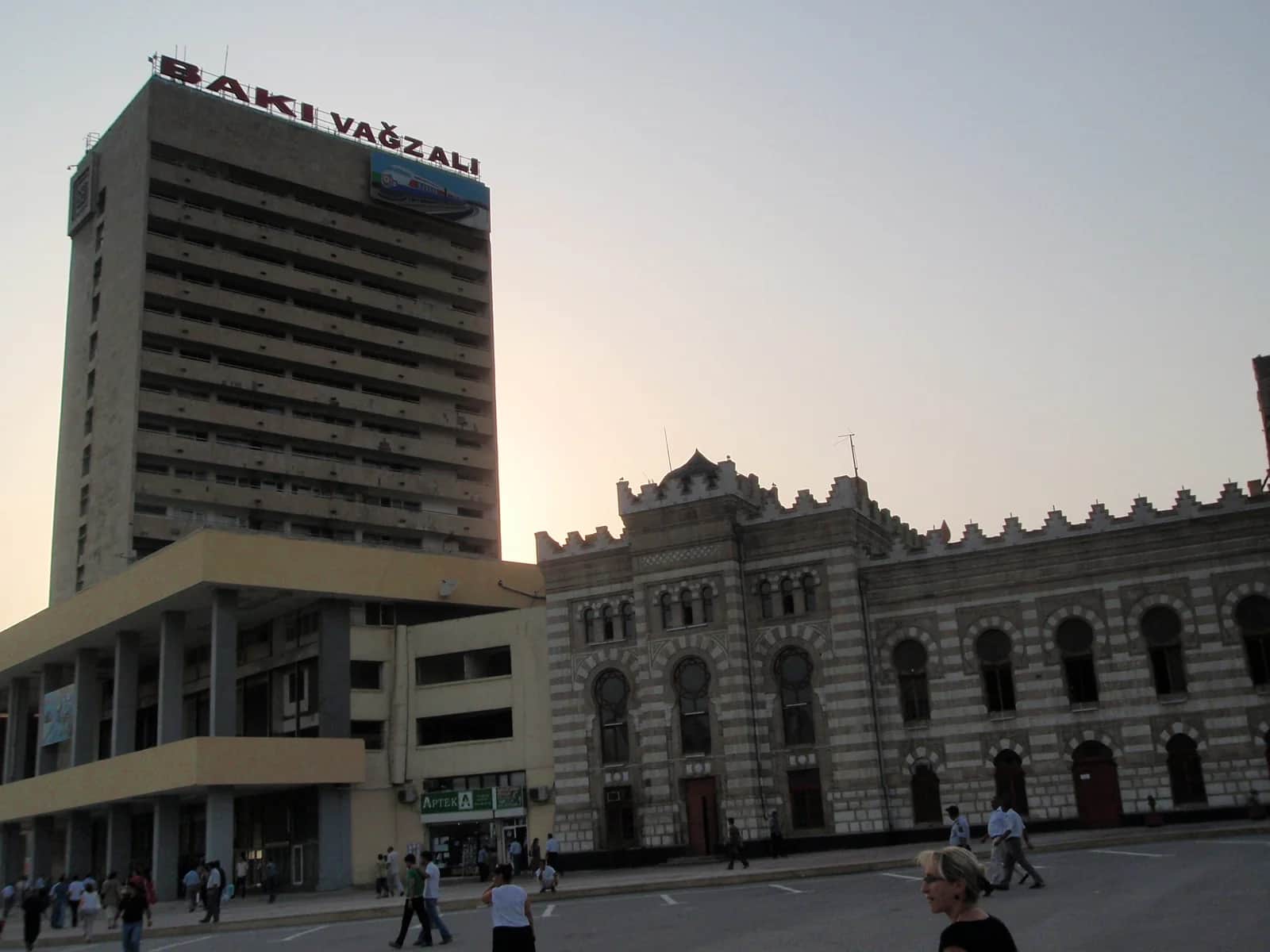

Birtour is a Baku-based DMC delivering Azerbaijan programmes for international tour operators. This dated matrix brings entry regimes, pilot expiry dates, potential rail eligibility, air access, guide-language requirements and historical arrivals into one planning reference. It does not confirm seats, guide availability or a traveller's individual entry permission.
Why entry and transport checks belong in the same brief
A visa route and a transport route are separate checks. The State Migration Service notice, reviewed on 28 September 2026, covers the restored Baku–Tbilisi rail crossing for Azerbaijani citizens and foreign citizens entitled to visa-free entry. Confirm carrier acceptance, the traveller's documents and the selected journey before selling the rail sector.
The Azerbaijani MFA guidance says foreign nationals may leave by land without permission, while UK FCDO advice for British passport holders, checked on 19 September 2026, says road exit requires permission. These statements disagree. Obtain confirmation for the traveller, crossing and direction before selling a road transfer. Neither statement overrides the separate rail eligibility notice.
The 2026 source-market matrix
Read entry, purpose and transport together. The historical air-access and arrival columns provide context; they do not confirm availability or future demand.
| Market | Entry regime | Expires | Rail leg sellable | Direct to Baku | Guide language to request | 2025 arrivals |
|---|---|---|---|---|---|---|
| Russia | Visa-free, 90 days per calendar year | Standing | Yes | Moscow, St Petersburg, regional | Russian, English | 614,904 |
| Türkiye | Visa-free 90 days, ID card on direct travel only | Standing | Yes | 9 Turkish points incl. Kars | Turkish, English | 455,771 |
| Iran | ASAN e-visa | n/a | No | Tehran, Tabriz | English, Russian | 208,476 |
| India | ASAN e-visa | n/a | No | Delhi, Mumbai, Ahmedabad | English, Hindi on request | 166,944 |
| Georgia | Visa-free 90 days | Standing | Yes | Tbilisi | Russian, English | 110,538 |
| Saudi Arabia | Tourist visa-free pilot, 3 × 30 days | 15 Feb 2027 | Yes | Riyadh, Jeddah | Arabic on request, English | 104,364 |
| Kazakhstan | Visa-free 90 days | Standing | Yes | Almaty, Astana, Aktau, Shymkent | Russian, English | ~103,000 |
| Pakistan | ASAN e-visa | n/a | No | Via Gulf hubs | English | 91,026 |
| Israel | ASAN e-visa | n/a | No | Tel Aviv, daily | Hebrew, English, Russian | 69,122 |
| China | Mutual exemption, 30 days per entry | No stated sunset; recheck | Yes | Beijing, Urumqi | Mandarin on request, English | 63,496 |
| Uzbekistan | Visa-free 90 days | Standing | Yes | Tashkent, plus Ganja | Russian, English | ~61,700 |
| UAE | Visa-free 90 days, standing bilateral | Standing | Yes | Dubai, resumed 15 May 2026 | Arabic on request, English | — |
| Qatar | Visa-free 30 days, standing bilateral | Standing | Yes | Doha | Arabic on request, English | — |
| Germany | ASAN e-visa | n/a | No | Via IST, DXB, VIE | German on request, English | 1.1% of H1 2026 |
| United Kingdom | ASAN e-visa | n/a | No | Via IST, DXB | English | 1.1% of H1 2026 |
| Japan | Visa-free pilot, 3 × 30 days, tourism only | 1 Jul 2027 | Yes | No nonstop; via IST, DOH, DXB | Japanese, English | — |
| South Korea | Visa-free pilot, 3 × 30 days, tourism only | 1 Jul 2027 | Yes | No nonstop found | English (see below) | — |
| Hong Kong SAR | Visa-free pilot, 3 × 30 days | 2 Feb 2027 | Yes | Via Gulf hubs | English, Mandarin on request | — |
| Macao SAR | Visa-free pilot, 3 × 30 days | 2 Feb 2027 | Yes | Via Gulf hubs | English, Mandarin on request | — |
| Singapore | Visa-free pilot, 3 × 30 days, tourism only | 1 Aug 2027 | Yes | Via IST, DXB | English | — |
| Bosnia and Herzegovina | Visa-free pilot, 3 × 30 days, tourism only | 1 Aug 2027 | Yes | Via IST | English | — |
| Oman, Bahrain, Kuwait | Tourist visa-free pilot, 3 × 30 days | 15 Feb 2027 | Yes | Gulf hubs | Arabic on request, English | — |
| Serbia | Visa-free 90 days | Standing | Yes | Belgrade, from 3 May 2026 | English, Russian | — |
| Albania | Visa-free 90 days | Standing | Yes | Via IST | English | — |
| Morocco | Visa-free 90 days | Standing | Yes | Via IST, DOH | Arabic on request, English | — |
| Maldives | Visa-free 90 days | Standing | Yes | Via DXB, DOH | English | — |
| Kyrgyzstan, Tajikistan | Visa-free 90 days | Standing | Yes | Regional | Russian, English | — |
| Belarus, Ukraine, Moldova | Visa-free 90 days | Standing | Yes | Chișinău from 16 Jul 2026 | Russian, English | — |
| Poland, Italy, Spain, France | ASAN e-visa | n/a | No | Via IST, WAW, VIE | English, others on request | Inside EU +9.3% H1 2026 |
| United States, Canada, Australia, New Zealand | ASAN e-visa | n/a | No | Via IST, DOH, DXB | English | — |
Dashes are honest. Where the State Statistical Committee publishes only a percentage share for a market, we do not back-calculate a five-digit number and print it as though it were counted.
How to read a row
Use each row to prepare the questions for a dated programme proposal. Arrival counts alone do not establish whether a product will sell.
- Entry regime plus expiry together. A regime with a date in bold is a pilot, not a treaty. It caps entries at three in the window and requires a visa on the fourth, and the pilots are tourism-only, so a corporate or MICE group on a Japanese, Korean, Bosnian or Singaporean passport still needs a visa. That last point catches people.
- Rail leg sellable. Yes means potential eligibility, subject to passport, purpose, remaining pilot entries and carrier confirmation. No means an e-visa does not authorize that rail leg; air is the planning fallback, while road exit requires separate confirmation.
- Direct to Baku. Check operating days, arrival times, connection times and group-seat availability. The usable programme length follows the actual flights, not the route label alone.
- Guide language to request. The listed languages are requirements to include in the brief. Confirm the named guide, language and coverage dates in the proposal; this column does not establish a permanent language desk or current guide availability.
The rail rule, stated once and precisely
From 00:00 on 25 May 2026, the State Migration Service says rail entry to and exit from Azerbaijan across the Georgian border is permitted to Azerbaijani citizens and foreign citizens entitled to visa-free entry. Check carrier ticketing and the traveller's documents separately before treating a seat as usable.
Two distinctions matter for an operator's quote:
- It is symmetric. The decision covers entry and exit. An e-visa alone does not meet the published eligibility rule for either rail direction. The widely repeated "arrive by air, leave overland" workaround does not apply to the train.
- Road exit needs separate confirmation. The MFA and UK guidance differ, as explained above; do not infer road permission from a rail restriction.
The service runs daily both ways, train 38 Baku 23:10 to Tbilisi 08:41 and train 37 Tbilisi 21:00 to Baku 06:24, on Stadler stock of roughly 200 berths, from about 81 AZN one-way. ADY prices international fares off the Swiss franc, so budget 85 to 190 AZN by class and date rather than quoting a fixed figure. Confirm with the carrier before you sell it; ADY's own portal would not serve us a page to verify against.
What each column changes about the product you can build
A visa-free, rail-eligible market can be sold the widest product in this market: a genuine multi-country Caucasus circuit with a surface sector, no visa lead time, and no per-passenger visa line in the quote. Russia, Türkiye, Kazakhstan, Uzbekistan, China, Japan and Korea all sit here. Most of them are also markets where nobody has built the trade content, which is not a coincidence.
An e-visa market requires the visa cost and processing time in the planning budget: USD 29 per passenger, and a three-working-day lead time that pins your latest sale date. On routing it is more open than most people think. The train is not available to these passports under the published visa-free rail exception. A Baku-first road exit may be possible, but the traveller, crossing and permission rules need written confirmation before a Madrid or Warsaw circuit is sold. Do not sell the reverse road-entry route without traveller-specific authority confirmation.
A pilot market carries a clock. The commercial consequence is not that the window closes; it is that a brochure printed for a 2027 season may outlive the regime it assumes. Print the expiry date next to the claim, or write the claim so it survives.
A market with no nonstop is not a market to skip. It is a market where trip length has to absorb two connection days, which usually argues for a longer product rather than a cheaper one.
What the demand data actually says
Arrivals fell in the first half of 2026: 1,092,600, down 10.3% on the same half of 2025, after a 2025 that was itself down 2.1% at 2,570,212. These are historical destination-arrival figures, not Birtour booking performance or a forecast.
Underneath it the picture is not uniform, and the exceptions are where the opportunity is:
| Block | H1 2026 | Direction |
|---|---|---|
| CIS | 430,400 | up 1.8% |
| Gulf states | 127,700 | down 31.4% |
| European Union | 54,400 | up 9.3% |
| Uzbekistan | ~35,000 | up 49% |
| Kazakhstan | >50,000 | up 11% |
Two markets moved the other way hard enough to mention. India fell more than two thirds, with Q1 2026 at 17,373 against 54,840 a year earlier, so assess the actual client brief and current sales evidence alongside the historical totals. Germany and the UK each reached 1.1% of arrivals and entered the top fifteen for the first time, from below the reporting threshold a year ago.
One measurement note, because it changes how you read the table. The Statistical Committee splits arrivals by purpose, and the split is dramatic. Saudi Arabia is 97.7% tourism purpose. India is 93.9%. Türkiye is 47.7% and Iran is 8.7%. A headline arrival count badly overstates the addressable leisure volume in the two largest non-Russian markets, so separate travel purpose from total arrivals before drawing a product-demand conclusion.
What we deliberately left out
- The visa detail itself. Entry caps, the fourth-entry rule, the tourism-only restriction and the Gulf resident visa-on-arrival route are held on our Azerbaijan visa rules for group travel page, which owns that layer and its review cadence. This page reproduces status at a glance and links out rather than keeping two copies that can drift apart.
- The urgent e-visa fee. The portal publishes the USD 20 state fee and the USD 9 service fee and does not differentiate the three-hour track. Reseller sites quote USD 108 to 148, which is their markup rather than the government rate. We are not printing a number we cannot source.
- Astana to Baku frequency. Aggregators disagree between twice weekly and near daily, and the near-daily listings look like a codeshare rather than capacity. Ask us at quote and we will read the live timetable.
- Jordan. Azerbaijan and Jordan signed an ordinary-passport visa exemption on 8 July 2026, but it has not entered into force. Jordan is an e-visa nationality today, and we will move the row when the agreement does.
- Any claim that a pilot will renew. None of the four has been extended yet. Treat the dates as dates.
What to confirm before selling the programme
Check the current entry regime, travel purpose, pilot expiry and traveller history against official guidance. Confirm the selected transport route with the carrier and any relevant border authority. Then obtain a dated proposal for hotels, transfers, guides, activities and any corporate-event production.
Send an Azerbaijan programme brief to Birtour, including the client market, passport mix, travel dates, group size, route, hotel category, guide language and required NET breakdown.
Air access is the column that goes stale fastest. Baku to Shymkent went from twice weekly to three times weekly within a fortnight of launch, and FlyArystan's Aktau season ends on 23 October 2026. Treat frequencies here as of August 2026 and ask at quote.
The following markets have dedicated programme-planning pages, because the rail column is only one of the things that differs: Türkiye, Russia, Kazakhstan, Uzbekistan, South Korea, China, Japan, Israel, the United Kingdom, Germany, Poland, Italy, Spain and US luxury advisors.
For operators pricing a specific circuit against these constraints, the routing consequences are worked through on the Caucasus circuit operator guide. For an agency ready to contract the Azerbaijan leg, the commercial terms are on the partner programme page.
- Which nationalities can buy a Baku to Tbilisi train ticket in 2026?
- The State Migration Service notice restores the rail crossing for Azerbaijani citizens and foreign citizens entitled to visa-free entry. That is an eligibility rule, not a seat or ticket guarantee. Confirm the traveller's documents, purpose, applicable entry conditions and carrier acceptance before including the rail leg; an e-visa alone does not establish eligibility.
- Does an Azerbaijan e-visa let my client take the train to Tbilisi?
- An e-visa alone does not establish eligibility for the restored Georgia rail crossing. The State Migration Service notice covers Azerbaijani citizens and nationals entitled to visa-free entry. Plan air travel unless the carrier confirms eligibility; road exit is a separate question with conflicting official guidance.
- How much does an Azerbaijan e-visa cost and how long does it take?
- USD 29 in total: a USD 20 non-refundable state fee plus a USD 9 service fee. The standard track is three working days, and the portal requires the application at least three working days before arrival because the visa's validity start date is pinned to that. A three-hour urgent track exists, including on weekends and holidays. The portal does not publish the urgent fee, so we do not quote one.
- Which visa-free windows for Azerbaijan expire in the next year?
- Four, and all of them are tourism-only pilots rather than treaties. Hong Kong and Macao SAR expire on 2 February 2027. Saudi Arabia, Oman, Bahrain and Kuwait expire on 15 February 2027. Japan and South Korea expire on 1 July 2027. Bosnia and Singapore expire on 1 August 2027. Each allows three entries of up to 30 days, with a visa required on the fourth.
- Is the Azerbaijan GCC visa-free scheme the same for all six Gulf states?
- No, and this is the most commonly repeated error about it. Saudi Arabia, Oman, Bahrain and Kuwait are on a time-limited unilateral pilot that expires 15 February 2027 and caps entries at three. The UAE at 90 days and Qatar at 30 days sit on standing bilateral agreements with no expiry and no entry cap. They are different regimes on different clocks.
- Can Gulf residents who are not Gulf nationals still enter Azerbaijan easily?
- The five-state Gulf-resident pilot covers residence permits with at least six months remaining in Saudi Arabia, Oman, Bahrain, Qatar or Kuwait: a single-entry 30-day tourist visa at an international airport during 15 February 2026–15 February 2027. UAE residence has separate terms. Check the individual passport and residence document before travel.
- Which source markets grew into 2026 while Azerbaijan's total arrivals fell?
- Total arrivals were 1,092,600 in January to June 2026, down 10.3%. Inside that, EU arrivals rose 9.3% to 54,400 and CIS arrivals rose 1.8% to 430,400, while Gulf arrivals fell 31.4% to 127,700. Uzbekistan rose 49% and Kazakhstan 11%. Germany and the UK entered the top fifteen for the first time.
Guide
Azerbaijan entry rules for GCC groups (2026): the visa-free pilot, the fourth-entry catch, and registration
Guide
Birtour partner programme: how the trade contracts an Azerbaijan DMC
Guide
Azerbaijan DMC NET rates: how to read and request a B2B quote
Guide
How Birtour runs ground operations for tour operators in Azerbaijan