The synagogues of Azerbaijan: Baku, Quba and Oghuz
explainer · 5 min read
A synagogue heritage route through Baku, Krasnaya Sloboda near Quba and Oghuz, with published historical dates, addresses and access considerations for working houses of worship.
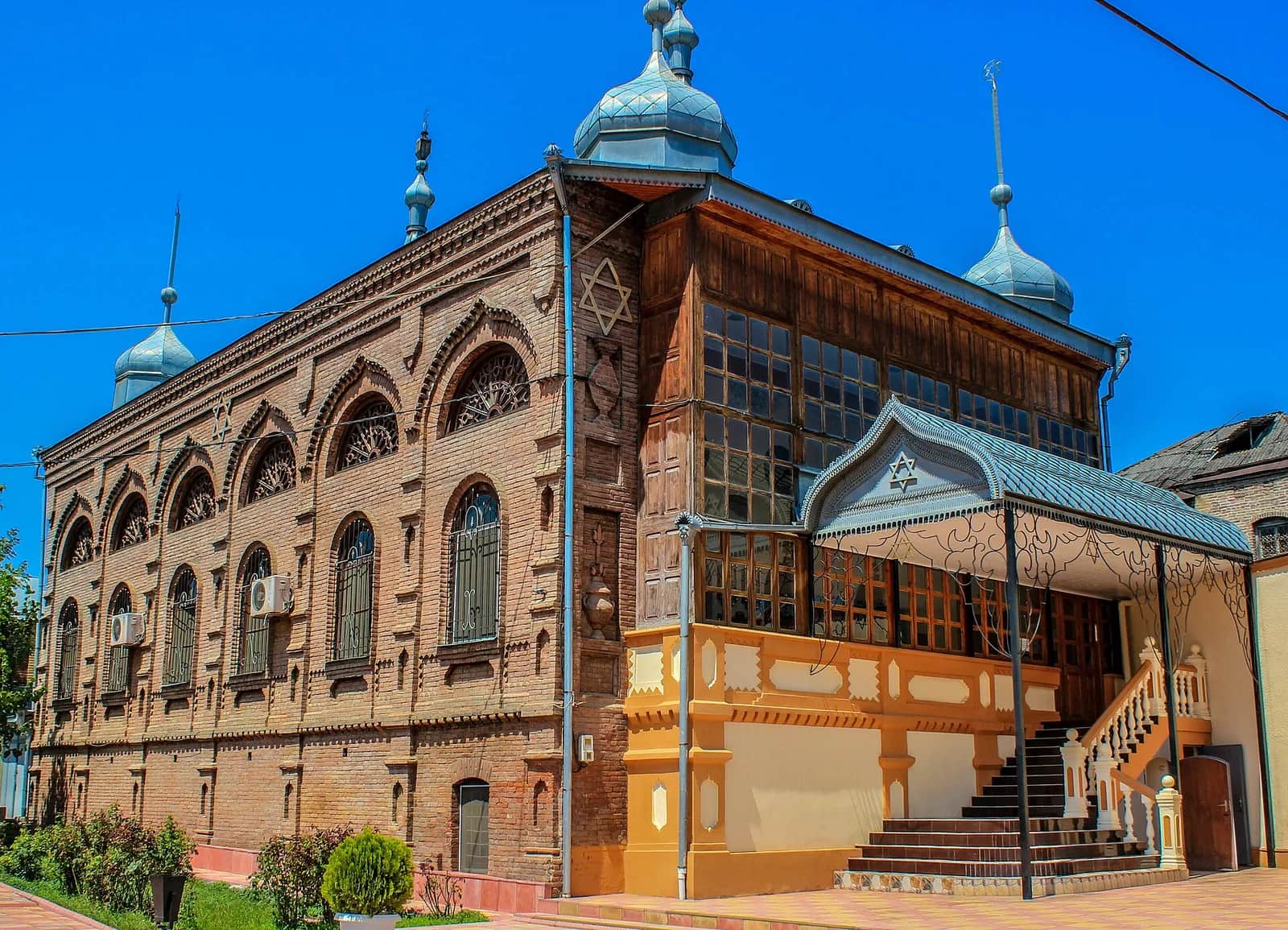

Baku, Krasnaya Sloboda near Quba and Oghuz offer three distinct stops for a Jewish heritage itinerary. This guide draws on the state's synagogue register and identifies differences between published historical dates. Arrange access to these working houses of worship before finalising the route.
Baku: three congregations, two buildings
The Ashkenazi and Georgian synagogue
171 Dilara Aliyeva street. Opened 9 March 2003.
The present building was funded by donations from Azerbaijani Jews and is counted among the largest synagogues in Europe. Two congregations use it, Ashkenazi and Georgian, and the Chabad house of Baku operates from the same address under Rabbi Shneur Segal.
That single address holding prayer, the rabbi and the kosher supply is the most useful operational fact about Jewish Baku, and it is why almost every visiting group's Friday runs through this street.
It is frequently miscalled the Choir Synagogue. It is not. Baku's first choir synagogue opened in 1910 and belongs to a different chapter.
The Mountain Jews synagogue
72 Ali Mardan Topchubashov street, Nasimi district. Congregation from 1945, present building opened 2011.
The state register says this one "differs from other Jewish temples not only in Azerbaijan, but in the entire region", and it is right. This is the urban face of the same community that lives in Krasnaya Sloboda, and the liturgy in the room is not the liturgy in the Dilara Aliyeva building.
A group that visits only the 2003 synagogue has seen the larger half of Jewish Baku and missed the older one.
The 1910 choir synagogue
Historic, not a stop. Worth naming because the confusion around it is the reason so many pages date the 2003 building wrong.
Baku's Jewish building history runs deeper than either current building suggests: a religious meeting-house in 1832, reorganised as a synagogue in 1896, and more built across the city and its suburbs through the late 19th century as oil money pulled people in from across the empire. Almost none of that survives in use. A walking programme with a community historian is how you reach it, because the buildings will not tell you themselves.
Krasnaya Sloboda: three buildings, one town
The Six-Dome Synagogue, Altı Günbəz
Isaac Khanukov street. Built 1888. Seats about sixty.
The Aron Kodesh stands roughly seven metres, which the state register calls the tallest in Europe. Closed under Soviet rule, reopened as a synagogue in 1991, and restored in stages since. Published sources put the main works at 1995, 2000 and 2005 respectively, so we give the range.
It runs mainly through the warm months. That is not a scheduling preference, it is arithmetic: the town holds roughly 500 people through the winter and over 3,000 in summer.
Sixty seats is the number that matters for planning. Above it, a group visit stops being a visit.
The Gilaki Synagogue
Built 1896, though a plaque on the building reads 1857 and both dates circulate.
Named for the Gileki quarter, settled by families who came north from Gilan. Smaller than the Six-Dome, renovated in the 2010s, and the right room for a bar or bat mitzvah, where the Six-Dome is the wrong scale.
Bet Knesset
A newer building, put up with money sent by residents' relatives in Israel. It says something about how this community works that its most recent synagogue was funded from the country its children moved to.
Oghuz: two synagogues on a wider heritage route
Lower Quarter synagogue, Gudrat Agakishiyev street, 1849. Upper Quarter synagogue, Arzu Aliyeva street, 1897.
Oghuz sits in the north-west, on the road that also carries Sheki, and it had a Mountain Jewish community long before the Soviet period. Two synagogues, one of them older than anything standing in Krasnaya Sloboda.
We have not found an English-language heritage itinerary that includes them. That is an opportunity and also a warning: there is no visitor infrastructure, the community is smaller than Quba's, and access needs more notice rather than less.
For an operator building a differentiated product, this is where the differentiation is. For a first trip, Baku and Quba are the right two stops and Oghuz is the third visit, not the first.
What "access" actually means
None of these buildings is a museum. None keeps posted visitor hours. None has a ticket window.
What that means in practice:
- The gabbai is the gate, in Krasnaya Sloboda and in Baku both. Arrangements are made before you travel, not on the morning.
- Photography inside is a permission, granted case by case and much more readily to somebody who asked first.
- Dress and conduct follow the congregation's practice, not the visitor's. Mountain Jewish custom is neither Ashkenazi nor Sephardi, and where a group's own practice differs, the community's answer is the one that applies in their building.
- Winter changes everything in Quba and nothing in Baku. The Baku congregations run year-round.
- A service is not a performance. Groups arriving during one are guests at it.
None of this is difficult. It is just arranged rather than turned up to, which is the whole reason a relationship on the ground is worth anything.
The corrections, collected
If you are updating your own material, these are the four errors most likely to be in it:
| Commonly published | Correct |
|---|---|
| "Choir Synagogue, opened 2003, one of Europe's largest" | That is the Ashkenazi and Georgian synagogue. The choir synagogue is 1910 |
| "Ashkenazi-Georgian synagogue, opened 1945" | 1945 is the Mountain Jews congregation; its building is 2011 |
| "Six-Dome, restored 2000" | Reopened 1991, restored in stages, sources give 1995, 2000 and 2005 |
| Azerbaijan's Jewish community "around 16,000" | The 2019 census says 5,094; the World Jewish Congress says about 7,200 |
For how the kosher and Shabbat side works around these buildings, see the kosher and Shabbat guide. For what we can arrange inside them, the Jewish heritage programmes page.
- How many synagogues are there in Azerbaijan?
- Seven buildings that the state register lists, holding a smaller number of active congregations. Baku has three congregations across two buildings. Krasnaya Sloboda near Quba has the Six-Dome of 1888, the Gilaki of 1896, and a newer building funded by residents' relatives in Israel. Oghuz, in the north-west, has two: the Lower Quarter synagogue of 1849 and the Upper Quarter of 1897.
- Which is the largest synagogue in Baku?
- The Ashkenazi and Georgian synagogue at 171 Dilara Aliyeva street, which opened on 9 March 2003 and is counted among the largest in Europe. It was paid for by donations from Azerbaijani Jews and houses two congregations plus the Chabad house. It is often miscalled the Choir Synagogue; Baku's first choir synagogue opened in 1910 and is a separate part of the city's history.
- How many people does the Six-Dome Synagogue hold?
- About sixty. That number decides how a group visit runs: above it, the visit becomes a procession and is better split across two passes. The Aron Kodesh inside stands roughly seven metres, which the state register describes as the tallest in Europe.
- Can you just walk into a synagogue in Azerbaijan?
- Not usefully. These are working houses of worship with small congregations, not ticketed sites, and none of them keeps posted visitor hours. Access is arranged in advance through the gabbai. Arriving unannounced gets you the outside of a building and, in Krasnaya Sloboda in winter, possibly a locked door.
- Are there synagogues outside Baku and Quba?
- Yes, in Oghuz in the north-west. The Lower Quarter synagogue on Gudrat Agakishiyev street dates to 1849 and the Upper Quarter synagogue on Arzu Aliyeva street to 1897. Oghuz had a Mountain Jewish community long before the Soviet period. Adding it turns a two-stop heritage route into a three-stop one, at the cost of a long drive.
- When did Jewish Baku start building?
- The first religious meeting-house went up in 1832 and was reorganised as a synagogue in 1896, with more built in Baku and its suburbs through the late 19th century as the oil boom pulled people in. The first choir synagogue opened in 1910. Almost none of that fabric survives as working synagogues, which is why the current circuit is two buildings and not ten.