Kosher and Shabbat in Baku and Quba: what is available, what needs notice
explainer · 7 min read
Plan kosher meals and Shabbat-observant travel in Baku and Quba using the Chabad house’s published services and a date-specific brief. Community visits, catering, hotel arrangements and Quba hosting require separate confirmation.

Most pages about kosher travel in Azerbaijan answer the wrong question. They tell you that kosher food exists in Baku, which is true and not useful. What a planner needs is the shape of the supply: who provides it, how far ahead they need to know, what breaks when the group leaves the city, and what time Friday actually starts.
Birtour organises hotels, airport and regional transfers, guides and the local itinerary around your stated kosher and Shabbat requirements. For a complete route, see the Azerbaijan Jewish heritage programme. Include meal dates, required certification, hotel walking requirements and community visits in the brief; the named provider and community confirm their own services for those dates.
Baku has three congregations in two buildings
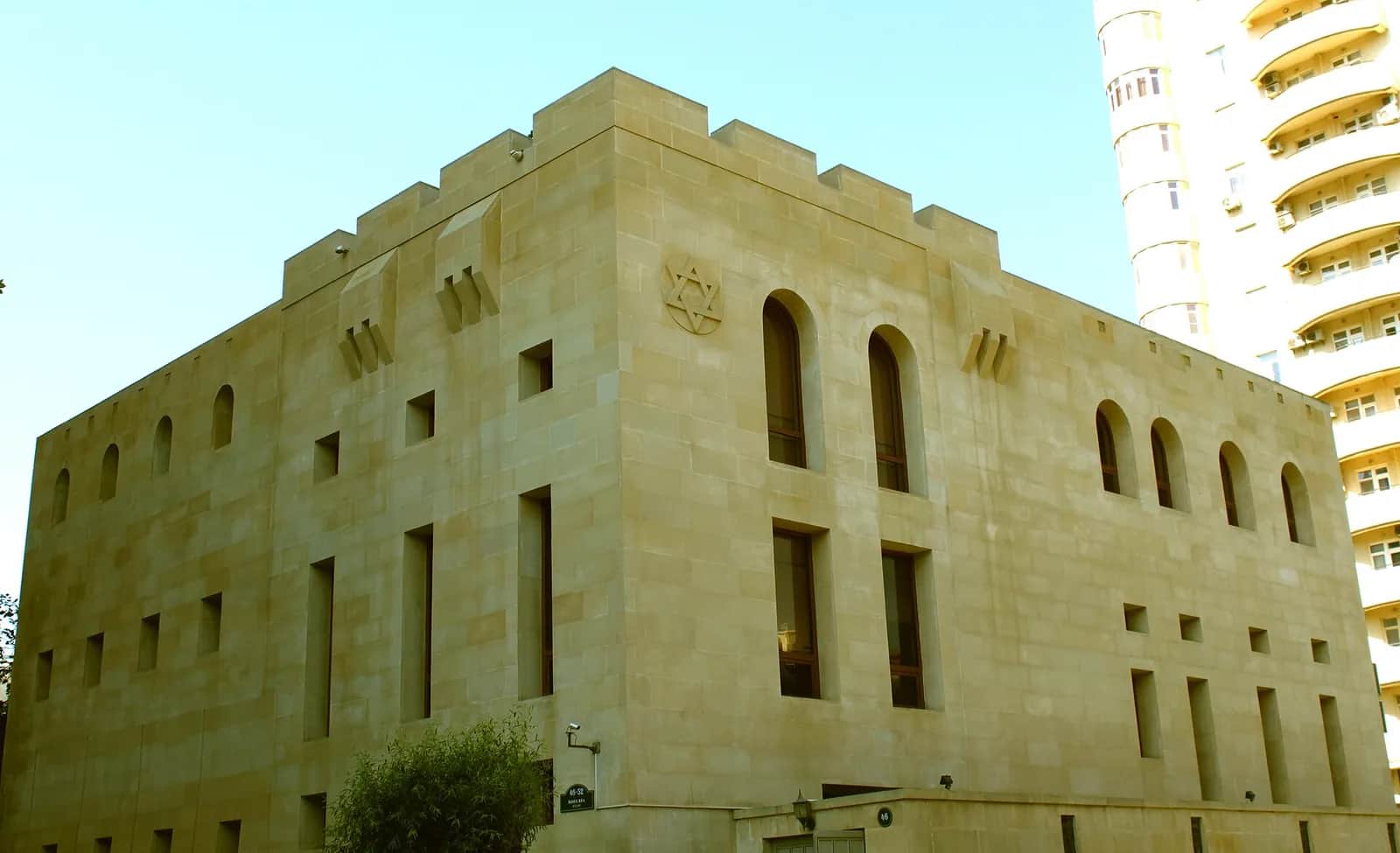
The Ashkenazi and Georgian synagogue is at 171 Dilara Aliyeva street. The present building opened on 9 March 2003, was paid for by donations from Azerbaijani Jews, and is counted among the largest synagogues in Europe. Two congregations use it, and the Chabad house of Baku operates from the same address under Rabbi Shneur Segal. For a visiting group this is the single most useful fact on the page: prayer, the rabbi, and the food supply are at one address.
The Mountain Jews synagogue is at 72 Ali Mardan Topchubashov street, in the Nasimi district. That congregation dates from 1945 and moved into its current building in 2011. It is a different liturgical world from the Dilara Aliyeva building and a group that visits only one has seen half of Jewish Baku.
Baku's first choir synagogue opened in 1910. It belongs to the city's history and to a walking route, not to your Friday night plan. The full list, including the two synagogues in Oghuz that no itinerary includes, is in the synagogues guide.
What the community actually supplies
The Chabad of Baku website currently lists:
- Shabbat meals, eaten there on registration, or taken away
- Weekday kosher prepared food, ordered ahead
- Catering, meat and pareve, which is the channel a group uses
Azerbaijan's first kosher restaurant opened in Baku in late April 2019 under Rabbi Segal's supervision, with the Chief Rabbi of Russia at the opening. We are not going to tell you it is open on the Tuesday you arrive, because restaurant trading status is not something we can verify from a page, and neither can anyone else writing one of these guides. Ask when you book.
For a group, confirm the certification standard, menus, meal count, delivery address, service time and cancellation terms with the provider. The public listing is not a group allocation and does not establish a universal notice period.
Quba is a supply problem, not a supply source
Krasnaya Sloboda has synagogues, a community and a museum. Public visitor information does not establish a standing kosher-catering allocation for a visiting group. Discuss supervised food from Baku and any local host or caterer as separate requests; neither is included until a named provider accepts the brief.
The M1 drive from Baku adds transport and temperature-control questions to any meal plan. Ask the provider to confirm whether supervised preparation and delivery are available for the group’s dates. A family meal is a private invitation, not standard tour inventory; request host consent, dietary arrangements, group size and privacy terms, and retain a confirmed alternative meal.
Shabbat times: do not use Israeli times
This one catches Israeli groups in particular, because the instinct is to read the times you always read.
Azerbaijan cancelled daylight saving on 17 March 2016 and has been on permanent UTC+4 since. Israel still moves its clocks, so the gap changes twice a year. Baku is also nearly eight degrees of latitude north of Tel Aviv, which widens the seasonal swing on both ends. The two effects stack.
Computed sunsets, Baku against Tel Aviv:
| Friday | Baku sunset | Tel Aviv sunset | Baku is later by |
|---|---|---|---|
| 19 June 2026 | 20:13 | 19:49 | 24 min |
| 25 September 2026 | 18:32 | 18:33 | about the same |
| 18 December 2026 | 17:15 | 16:38 | 37 min |
| 19 March 2027 | 18:50 | 17:51 | 59 min |
| 23 April 2027 | 19:27 | 19:15 | 12 min |
Read that table for what it does to a programme rather than as trivia.
Around the example September date the two sunsets are nearly identical. In the December example, Baku's sunset is later; in the March example the difference is close to an hour. Neither sunset alone determines whether an arriving group has enough time for transfer, check-in and preparation.
Candle lighting is set against these sunsets by the community's own practice, and you should take the minutes from the community rather than from a table on a supplier's website, including this one.
What a Shabbat-observant itinerary looks like here
The old city, Icherisheher, is the reason this works. It is walkable, it is close to the Dilara Aliyeva building, and a Saturday inside it needs no vehicle at all. A possible shape, subject to the community, hotel and provider confirming it:
- Walking-only routes inside the old city for the whole of Shabbat
- Meals arranged before the group lands, not ordered on the Friday
- Rooms on low floors, with a manual key alternative where a guest needs one
- Ask the relevant rabbinic authority about carrying rules and any eruv rather than assuming one exists
- Havdalah timed against the local sunset, and the Saturday-night departure built backwards from that rather than from a flight schedule
Do not assume a hotel has a certified kosher kitchen, manual-key option or Shabbat-compatible lift arrangements. Check each requirement with the hotel and the kosher provider before confirming the itinerary.
Guiding language
Request the required guide language for the dates. A specific guide or interpreter is included only when named and confirmed in the proposal.
The published sales-desk languages and a guide language are different matters. Confirm the language of written replies and the assigned guide separately.
Notice periods, collected
| What | Notice |
|---|---|
| Kosher meals in Baku | Confirm provider, certification, group size and order deadline |
| Supervised meals for Quba | Confirm preparation, transport, temperature control and delivery time |
| Family hosting in Krasnaya Sloboda | Request host consent and retain an alternative meal |
| Bar or bat mitzvah | Agree ceremony, community access, meals and accommodation before promising dates |
| Private synagogue access | Obtain the congregation’s date-specific consent before travel |
One more scheduling note
Israeli arrivals to Azerbaijan grew in 2025, but a historical arrival total or an August 2026 flight timetable does not establish a seat, meal or guide for a future holiday week. Recheck flights and supplier capacity for the actual dates.
If a programme falls during a Jewish holiday, ask the community and kosher provider about their actual service calendar before fixing flights or a group meal. Do not treat a general lead-time estimate as a reservation.
For a full brief on what we can and cannot arrange, see the Jewish heritage programmes page, or read how Krasnaya Sloboda works season by season.
- Is there kosher food in Baku?
- Chabad of Baku lists weekday prepared food, Shabbat meals, takeaway meals and meat or pareve catering at 171 Dilara Aliyeva. A public listing does not reserve meals for a group: confirm certification, capacity, menu, deadline and delivery with the provider for your dates.
- When does Shabbat start in Baku compared with Israel?
- Later, almost all year, and by a margin that changes with the season. Azerbaijan has been on permanent UTC+4 since 17 March 2016 and does not shift for summer, while Israel does. Around Sukkot the two are within a minute of each other. In mid-December Baku's sunset is about 37 minutes later than Tel Aviv's, and in the days before Israel's clocks go forward in March the gap approaches an hour. Never plan a Friday from Israeli times.
- Can you keep Shabbat properly in Krasnaya Sloboda?
- Request the proposed service and meal directly from the relevant congregation or host before building a Quba Shabbat programme. The season alone does not confirm a service, synagogue access or private hosting. Baku may be the simpler base, subject to current community and hotel arrangements.
- How many synagogues are there in Baku?
- Three working congregations across two buildings. The Ashkenazi and Georgian synagogue at 171 Dilara Aliyeva opened on 9 March 2003, is counted among the largest in Europe, and houses both of those congregations and the Chabad house. The Mountain Jews synagogue is at 72 Ali Mardan Topchubashov in the Nasimi district; that community dates from 1945 and moved into its present building in 2011. Baku's first choir synagogue opened in 1910 and belongs to the city's history rather than its current circuit.
- How much notice does a kosher group programme need?
- There is no verified universal lead time. Send the dates, group size, required certification, meal count, delivery points and any ceremony request as early as possible. Ask the kosher provider, congregation and any host to confirm capacity, supervision, transport and deadlines for that specific programme.
- Are there kosher hotels in Baku?
- Do not assume a hotel has a certified kosher kitchen. Ask each shortlisted hotel about walking distance, keys, lifts, food delivery and private dining; ask the relevant kosher provider to confirm certification and meal service separately. The final arrangement belongs in the dated proposal.
- Can a visibly observant group travel comfortably in Azerbaijan?
- Azerbaijan has established Jewish communities and travel programmes. Individual safety cannot be guaranteed from visitor statistics. Check current official travel advice for your dates and tell the operator about any security, accessibility or religious requirements that affect the route.