Krasnaya Sloboda: the Mountain Jewish town across the river from Quba
Quba · About two hours twenty north of Baku on the M1, longer in winter or in Friday afternoon traffic out of the city from Baku
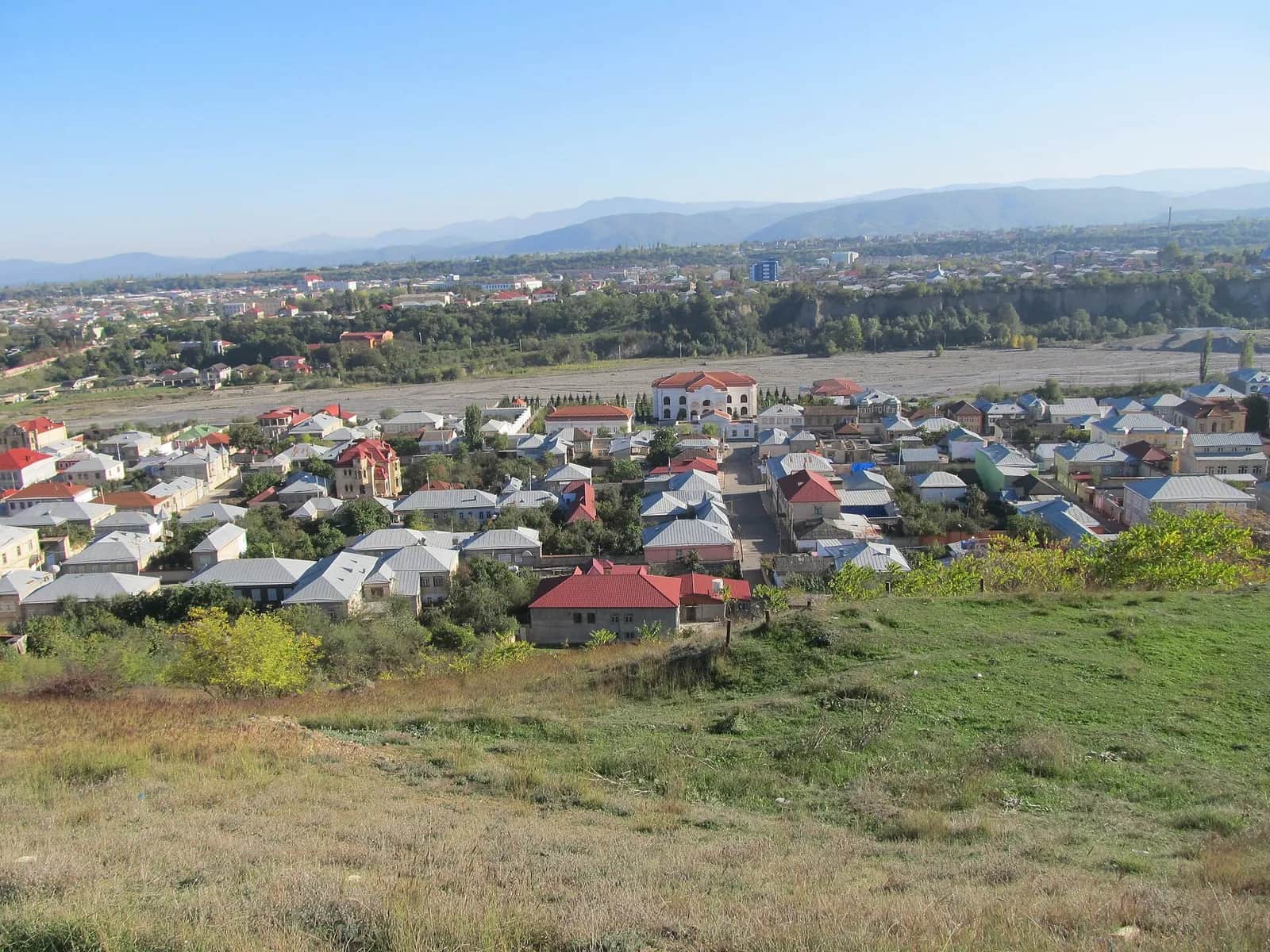
Krasnaya Sloboda, known in Azerbaijani as Qırmızı Qəsəbə, is a town in the Quba district of northern Azerbaijan, separated from Quba itself by the Qudyal river and populated almost entirely by Mountain Jews. It is widely described as the only town outside Israel and the United States whose population is primarily Jewish. Two working synagogues stand there, the Six-Dome of 1888 and the Gilaki of 1896, alongside the Museum of the History of Mountain Jews, which opened in February 2020 and is the only museum of its kind anywhere.

- Region
- Quba
- From Baku
- 170 km · About two hours twenty north of Baku on the M1, longer in winter or in Friday afternoon traffic out of the city
- Best season
- May to early October, when the town is full. December to February the resident population drops to roughly 500 and the Six-Dome runs only intermittently
- Time to spend
- Half a day for the synagogues and the museum. A full day with a family lunch, which is what most groups come for
- Entry
- The town itself is a working town, not a ticketed site, and costs nothing to walk. The Museum of the History of Mountain Jews charges admission and its published rate has moved more than once since it opened. Confirm the current figure with the museum or your ground operator in the week before you travel rather than budgeting from a printed page.
- Hours
- The synagogues are houses of worship, not visitor attractions, and they do not keep posted hours. Access runs through the gabbai and is arranged in advance. The museum keeps daytime hours and closes at least one day a week; the day has changed since 2020, so verify locally.
- The Six-Dome Synagogue of 1888 on Isaac Khanukov street, seating about sixty, with an Aron Kodesh roughly seven metres tall
- The Gilaki Synagogue of 1896, small enough to suit an intimate ceremony where the Six-Dome is the wrong scale
- The Museum of the History of Mountain Jews, opened February 2020 in the restored Karchog synagogue
- The historic Jewish cemetery, which reads the community's last two centuries in stone
- Juhuri, the Judeo-Tat language still spoken in the town, and the food that goes with it
Krasnaya Sloboda is a town of about 3,500 registered residents in the Quba district of northern Azerbaijan, roughly 170 km and two hours twenty from Baku. The Qudyal river separates it from Quba proper. Almost everyone who lives there is a Mountain Jew, which makes it, with one qualification, the only place outside Israel and the United States where that is true of a whole town.
The qualification is worth getting right, because the audience for this page tends to already know it. The American exception is Kiryas Joel in New York State. Write "the last all-Jewish town outside Israel" and a well-read guest will correct you in front of the group. Write "outside Israel and the United States" and the claim stands up.
The season decides what the town is
This is the single fact that most trip plans get wrong, and it is not a detail.
Around 3,500 people are registered in Krasnaya Sloboda, and the 2010 census counted 3,598. The number actually present at any given moment is a different number. Roughly 500 people live there through the winter. In summer the town fills back past 3,000 as families return from Moscow and Israel, open the shuttered houses, and hold the weddings and the memorials they have been saving up.
So a July visit and a January visit are two different products wearing the same name. In July you can build a programme around the community: a family lunch with three generations at the table, a service with a real congregation in it, a conversation in Juhuri that is happening because it always happens and not because a coach pulled up. In January you can see the buildings.
Neither is wrong. Selling the second as the first is.
For what it is worth, the Soviet-era population was closer to 18,000. The emptying is not new and it is not a tourism problem; it is the ordinary arithmetic of a small community with relatives in two larger countries.
The two working synagogues
The Six-Dome Synagogue, Altı Günbəz, stands on Isaac Khanukov street and dates to 1888. It seats about sixty. That number matters more than any other on this page if you are moving a group: sixty is the point at which a visit stops being a visit and becomes a procession, so above it you split the group and run two passes rather than filling the room.
Its Aron Kodesh is roughly seven metres tall, which the state's own register describes as the tallest in Europe. The building closed under Soviet rule, reopened as a synagogue in 1991, and has been restored in stages since; published sources put the main works variously at 1995, 2000 and 2005, so we give the range rather than pick one. In practice it runs through the warm months, when there are enough people in town to hold a service reliably.
The Gilaki Synagogue dates to 1896, though a plaque on the building reads 1857 and both dates circulate. It is named for the Gileki quarter, settled by families who came north from Gilan. It is smaller, and that is exactly why it is the better room for a bar or bat mitzvah: the Six-Dome swallows a family of thirty, the Gilaki holds them.
A third and newer building, Bet Knesset, was put up with money sent by residents' relatives in Israel.
None of these are museums. They are houses of worship with a congregation that is small enough to notice you. Access runs through the gabbai and is arranged before you travel, which is a sentence that sounds like an obstacle and is actually the whole value: with the arrangement you get a private visit and a conversation, without it you get the outside of a building.
The museum
The Museum of the History of Mountain Jews opened in February 2020, in the restored Karchog synagogue, funded by three Mountain Jewish businessmen. It is the only museum anywhere devoted to this community.
It covers the Juhuri language, the migration north out of Persia through Gilan, dress, the Soviet decades, and the community as it lives now. The curator is worth having in the room. Groups that come in outside public hours get that; groups that come in at midday get a queue.
We are not printing the admission price or the closing day here on purpose. Both have changed since 2020 and a number on a page like this outlives its accuracy. Check in the week before you travel.
Getting there, and where to sleep
There is no train and no scheduled tourist transport. Groups come by private coach or car, about two hours twenty from Baku on the M1, longer in winter and longer again on a Friday afternoon leaving the city.
For one traveller the return day out of Baku runs about $195, covering the car, an English-speaking guide and museum entry. Per head it falls as the group grows, because the same car and the same guide carry two people or twenty. Hebrew guiding is confirmed per booking rather than assumed, for the reasons on the Hebrew guide page.
The hotels are in Quba, across the bridge, not in Krasnaya Sloboda itself. That is a five-minute drive rather than a logistical problem, but it does mean a same-day round trip from Baku involves four hours forty in a vehicle to buy about four hours on the ground. It works. It also flattens the part of the trip people remember. One night in Quba changes the shape of the visit more than any other single decision.
If the group keeps Shabbat or eats kosher
The Six-Dome can carry a Friday night in season, and out of season the sensible move is to hold Shabbat in Baku and treat Krasnaya Sloboda as a weekday. Kosher supply is a Baku matter rather than a Quba one, and supervised transport up the M1 needs about two weeks of notice to arrange properly. We wrote that all out separately: see kosher and Shabbat in Baku and Quba.
What it is not
It is not a heritage park, and there is no visitor centre orchestrating your afternoon. It is a town where people are getting on with things and have agreed, through their own institutions, to let visitors in on terms they set. Groups that arrive understanding that get a great deal more out of it than groups that arrive expecting an attraction.
The Quba Genocide Memorial Complex is twenty minutes away and belongs in most itineraries that come this far, for reasons that have nothing to do with Jewish heritage and everything to do with the twentieth century in this district.
- Where is Krasnaya Sloboda and how do you get there?
- It sits directly across the Qudyal river from Quba, in northern Azerbaijan, about 170 km and two hours twenty from Baku on the M1. There is no rail connection and no scheduled tourist transport, so groups arrive by private coach or car. A bridge over the Qudyal connects the town to Quba, which is where the hotels are.
- How many people actually live in Krasnaya Sloboda?
- Around 3,500 are registered, and the 2010 census counted 3,598. The number who are physically there swings hard with the season: roughly 500 through the winter, and back past 3,000 in summer as families return from Moscow and Israel. In the Soviet period the figure was closer to 18,000. Plan a community-facing programme around the summer number, not the registered one.
- Is it really the last all-Jewish town outside Israel?
- Close, with one qualification worth making to your guests before somebody else does. It is widely described as the only population centre outside Israel and the United States that is primarily Jewish. The American exception is Kiryas Joel in New York State. Say it that way and the claim holds; say it without the qualification and a well-read traveller will correct you.
- Can you visit the synagogues?
- Yes, by arrangement. They are working houses of worship with a small congregation, not sites with a ticket window, so access runs through the gabbai and is booked ahead. Turning up unannounced gets you a look at the outside. The Six-Dome seats about sixty, which is the number that decides whether a group visits whole or in two waves.
- Who are the Mountain Jews?
- A Jewish community of the eastern Caucasus with more than a thousand years of continuous presence there, descended from Persian-speaking Jews who moved north through Gilan. They speak Juhuri, a Judeo-Tat language, and keep a liturgical and culinary tradition distinct from both Ashkenazi and Sephardi practice. Krasnaya Sloboda is the place where that community still lives as a community rather than as a diaspora.
- When did the town start?
- In the 18th century, when the Khan of Quba chartered the land across the river as a refuge for Jews from the surrounding region. That charter is the reason the settlement is concentrated and Jewish rather than scattered, and it is the reason the community talks about Quba in the terms it does.
- What is there besides the synagogues?
- The Museum of the History of Mountain Jews, opened in February 2020 in the restored Karchog synagogue and funded by three Mountain Jewish businessmen, covering the Juhuri language, the migration from Persia and Gilan, dress, the Soviet decades and the community today. The historic cemetery. And the houses themselves, which were built by families who made money elsewhere and came home to build.