Quba: the apple and carpet town where heritage groups actually sleep
Quba · About two hours twenty north of Baku on the M1, longer in winter from Baku
Quba is a town of about 47,000 in north-eastern Azerbaijan, 600 metres up on the right bank of the Qudyal river, roughly 170 km from Baku. It was the seat of a khanate under Fatali Khan between 1758 and 1789, it is a centre of Azerbaijani carpet weaving, and it is where the hotels are for anyone visiting Krasnaya Sloboda, which sits directly across the river. The Quba Genocide Memorial Complex, built on a mass grave found in April 2007 and opened in 2013, is here.
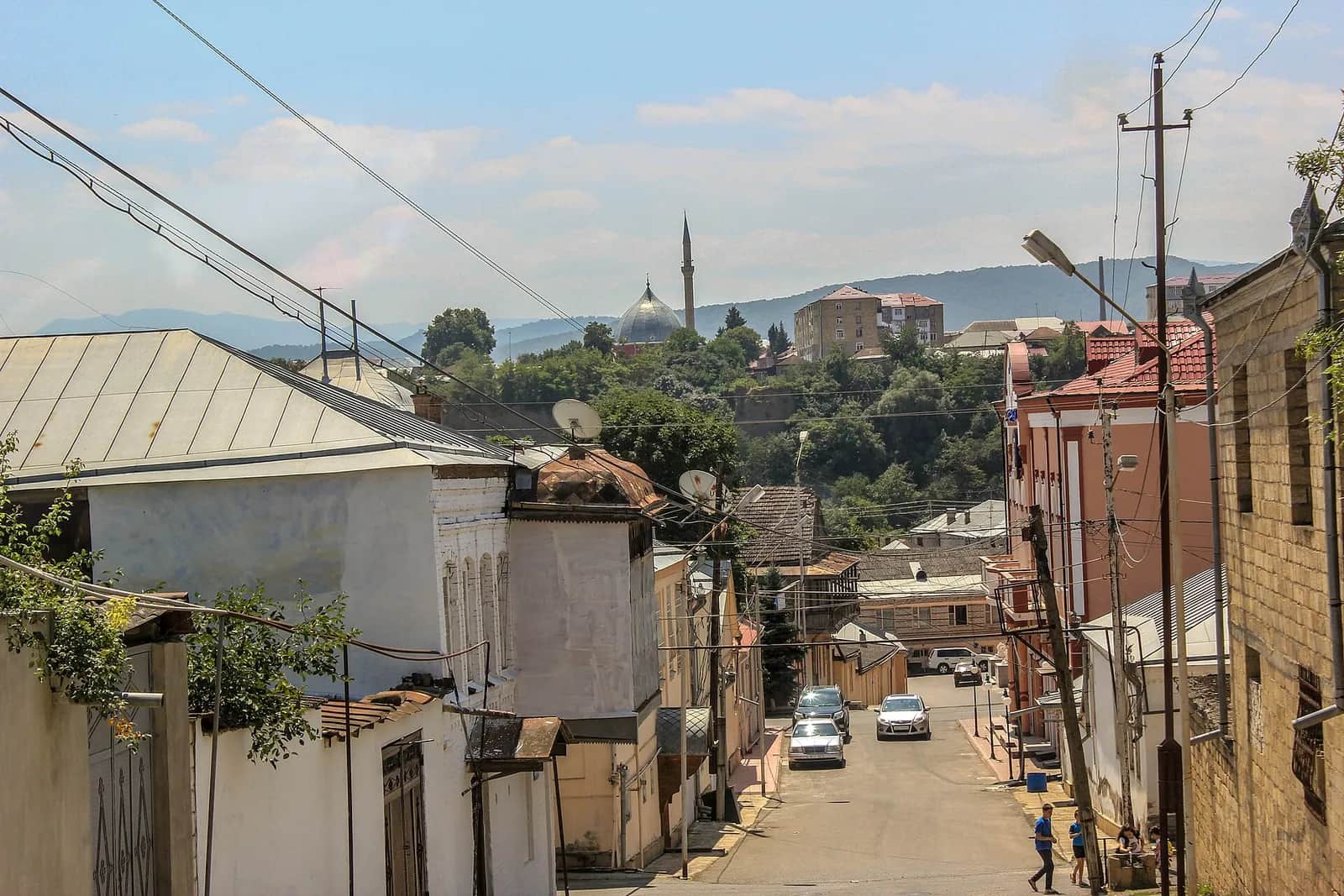

- Region
- Quba
- From Baku
- 170 km · About two hours twenty north of Baku on the M1, longer in winter
- Best season
- May to October for the town and the mountains behind it. Apple harvest runs late summer into autumn
- Time to spend
- A night, as the base for Krasnaya Sloboda. Two if you are going on to Khinalig
- Entry
- The town costs nothing. The Genocide Memorial Complex and the local museum charge separately and modestly; confirm current rates locally rather than budgeting from a page.
- Hours
- Not applicable to the town. The Genocide Memorial Complex keeps daytime hours and closes at least one day a week.
- The Qudyal river and the bridge across to Krasnaya Sloboda, which is the whole geography of the place in one view
- Quba Genocide Memorial Complex, opened 2013 on a mass grave discovered in April 2007
- Carpet weaving, the craft the town is known for nationally; a Quba carpet woven in 1712 hangs in the Metropolitan Museum in New York
- The apple orchards, which are what most Azerbaijanis actually associate with the name Quba
- The road up to Khinalig, one of the highest continuously inhabited villages in the Caucasus
Quba is the town everybody drives through and almost nobody writes about, because the two things next to it are more famous: Krasnaya Sloboda across the river, and the road up to Khinalig behind it.
That is a mistake if you are planning a programme, because Quba is where your group sleeps, eats and starts its mornings, and those three facts shape the trip more than any single sight does.
The place
About 47,200 people as of 2023, up from 38,150 in 2010, grown on tourism and construction. Six hundred metres up, on the right bank of the Qudyal river, with the Greater Caucasus behind it. Roughly 170 km and two hours twenty from Baku on the M1, longer in winter.
The town grew out of a riverside village called Gudial. In the mid-eighteenth century Hussein Ali Khan established himself as ruler and put walls around it, and the Quba Khanate reached its height under his son Fatali Khan between 1758 and 1789. Russian occupation followed in the early nineteenth century and formal annexation came under the 1813 agreement.
That khanate is not background colour. It is the reason Krasnaya Sloboda exists: the charter that made the land across the river a Jewish refuge came from this seat, in this period.
The geography is the story
Stand on the bridge. Quba on one bank, Krasnaya Sloboda on the other, the Qudyal between them.
Two towns, one river, and a size relationship most visitors get backwards. Quba is roughly ninety times the winter population of the town across the water. The Jewish settlement is the famous one and the small one.
Everything about how a heritage programme runs follows from that view: the hotels are on this side, the community is on that side, and the five-minute drive over the bridge is the least significant part of the day.
Why the overnight matters
A same-day round trip from Baku spends about five hours in a vehicle to buy four hours on the ground, and it forces the community part of the visit into the middle of a working day.
Staying in Quba changes what is possible rather than just what is comfortable. It buys the after-hours slot at the Museum of the History of Mountain Jews with the curator. It lets a family lunch run past its scheduled end, which is when those lunches get good. And in season it makes a Friday evening in Krasnaya Sloboda feasible at all.
The five-day heritage shape is built around exactly one night here. Two, if the group is going on to Khinalig.
The Genocide Memorial Complex
In April 2007, construction work uncovered a mass grave. The Quba Genocide Memorial Complex was built on the site and opened in 2013, commemorating people killed in 1918.
It is a serious place and not a scenic one. It belongs in an itinerary that has already spent two days on one community's twentieth century, because a group that does that and skips the district's own has learned half of something. Morning of the last day is where it usually sits, before the drive back.
Apples and carpets
Ask an Azerbaijani about Quba and you will hear about apples before you hear about anything on this page. The orchards run through the district and the harvest is late summer into autumn.
The other thing the town is known for nationally is carpet weaving. A Quba carpet woven in 1712, the Golu Chichi, is in the collection of the Metropolitan Museum of Art in New York. Buying one here is a real transaction rather than a souvenir stop, which cuts both ways: the quality is real and so is the price.
Weather, and what it does to plans
Roughly -3°C on a January low and 30°C on a July high, with about 460 mm of rain a year. Six hundred metres of elevation makes it noticeably cooler than Baku in summer, which is why Azerbaijanis come here in August.
Winter is the constraint that matters. The M1 drive lengthens, the mountain roads behind the town become a different proposition, and across the river Krasnaya Sloboda drops to roughly 500 residents. A December programme based in Quba works; it is just a buildings-and-museum trip rather than a community one, and it should be sold that way.
If you have a second night
Khinalig. One of the highest continuously inhabited villages in the Caucasus, up a road that is the reason most people make the drive. It is a different day in every practical sense, vehicles and weather included, and it wants its own planning rather than being bolted onto a heritage morning.
- Where is Quba and how far is it from Baku?
- North-eastern Azerbaijan, about 170 km and two hours twenty from Baku on the M1, longer in winter. The town sits at roughly 600 metres on the right bank of the Qudyal river, with the Greater Caucasus rising behind it.
- Why do heritage groups stay in Quba rather than Krasnaya Sloboda?
- Because the hotels are here. Krasnaya Sloboda is a residential town across the river, not a place with a hotel strip, and a five-minute drive over the bridge is not a logistical problem. Staying the night is what turns a Krasnaya Sloboda visit from a rushed midday stop into a programme with an after-hours museum slot and a lunch that can run long.
- What is the Quba Genocide Memorial Complex?
- A memorial opened in 2013 on the site of a mass grave discovered in April 2007 during construction work, commemorating people killed in 1918. It is a serious site rather than a scenic one and it belongs in any itinerary that spends two days on this district's twentieth century.
- What is Quba known for in Azerbaijan?
- Apples and carpets. The orchards are what most Azerbaijanis think of first, and the town is one of the country's carpet-weaving centres. A Quba carpet woven in 1712, the Golu Chichi, is in the collection of the Metropolitan Museum of Art in New York.
- How big is Quba?
- About 47,200 people as of 2023, up from 38,150 in 2010. It has grown on tourism and construction. For scale, it is roughly ninety times the winter population of Krasnaya Sloboda across the river, which is the size relationship most visitors get backwards.
- Can you combine Quba with Khinalig?
- Yes, and it is the natural second night. Khinalig is one of the highest continuously inhabited villages in the Caucasus and the road up from Quba is the reason people come. Note that it is a different kind of day from the heritage programme, in vehicle terms and in weather terms, and it needs its own planning.