Is Azerbaijan safe to travel? Current advisories, tourist routes and no-go areas
explainer · 5 min read
A route-by-route reading of the current US and UK Azerbaijan travel advice: the nationwide US Level 3 advisory, named border and landmine exclusions, how the usual Baku–Gobustan–Gabala–Sheki route differs, and what to re-check before booking.
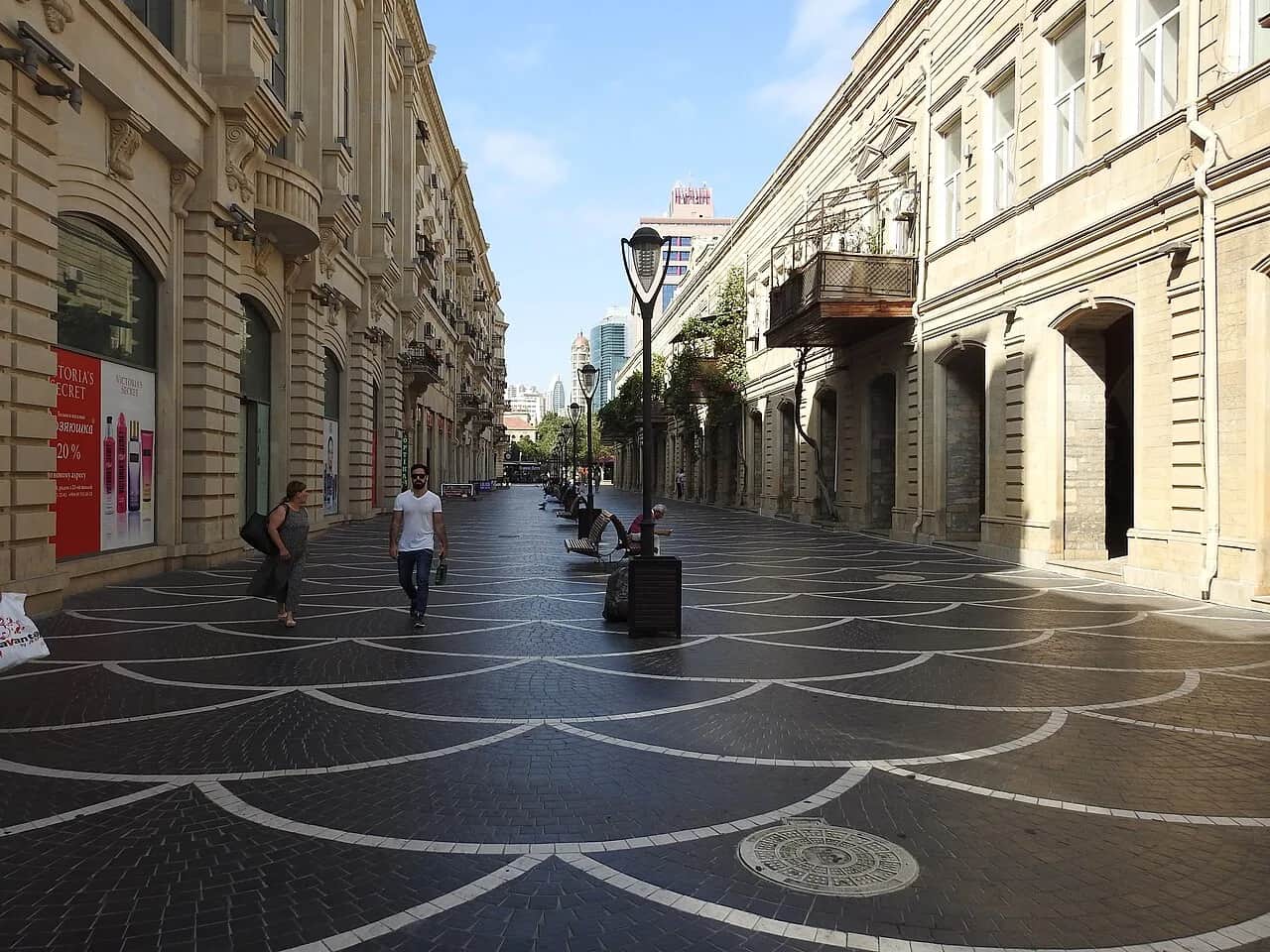
Photo: shankar s., CC BY 2.0, via Wikimedia Commons
The current official answer is more specific than “safe” or “unsafe”. The US Department of State places Azerbaijan at Level 3: Reconsider Travel and says not to travel to the southern border region, the Armenia border and named landmine-contaminated districts. Its page was last updated on 10 September 2026. The UK Foreign, Commonwealth & Development Office applies route-specific exclusions, including all travel within 5 km of the Armenia border and all but essential travel to named south-western districts; the page was current on 21 September 2026.
This guide does not overrule either advisory. It helps you compare the places in a normal visitor itinerary with the areas the advisories name, so you can ask for an exact route before paying for it.
What does the US Level 3 advisory mean for Baku?
It applies countrywide. Baku is not carved out of the Level 3 rating, even though it is not one of the named Level 4 landmine districts. The US advisory cites terrorism, armed conflict and landmines at national level, then gives stronger “Do Not Travel” instructions for particular areas.
That distinction matters. A seller should not turn “Baku is outside the named mine districts” into “the official advice says Baku is safe”. It does not. A traveller can decide to proceed after reading the advice, checking insurance and making a contingency plan, but the decision should remain visible and informed.
Which areas are explicitly named as no-go or restricted?
The US page says Do Not Travel to:
- the southern border region because of armed-conflict risk;
- the border with Armenia because of landmines;
- Aghdam, Aghdara, Fuzuli, Gubadli, Jabrayil, Kalbajar, Khankendi, Khojaly, Khojavend, Lachin, Shusha and Zangilan because of landmines and unexploded ordnance.
The UK page advises against all travel within 5 km of the Armenia border. It advises against all but essential travel to named south-western districts affected by the 2020 and 2023 conflicts. The UK wording also says its 5 km Armenia-border exclusion does not include Nakhchivan’s border with Armenia. That exception belongs to UK advice; do not apply it to another country’s advisory.
Names and boundaries can change. Follow the map and district list on the source page instead of copying an old travel-blog summary into a new itinerary.
How does the usual first-time tourist route compare?
The table below is a geographic comparison, not a safety clearance.
| Common stop | Named in the current US Level 4 landmine list? | Planning action |
|---|---|---|
| Baku and Absheron | No | Countrywide US Level 3 still applies; check city conditions and flight operations |
| Gobustan visitor route | No | Confirm the exact road and off-road segment rather than accepting “Gobustan” as a complete route |
| Shamakhi and Gabala | No | Check weather, road and any date-specific disruption before departure |
| Sheki and Kish | No | Confirm the overnight and return route; do not add border detours without a new check |
| Quba and Khinalig | No | Check road, weather and any permit or controlled-zone requirement for the exact village route |
| Named southern-border or landmine districts | Yes, depending on district | Remove from an ordinary leisure itinerary unless the traveller’s official advice, access status and specialist risk process support it |
The practical result is that a classic Baku–Gobustan–Gabala–Sheki proposal can be shown separately from the named Level 4 areas. It cannot be marketed as exempt from the national advisory.
What should I check before I book?
- Read the government advisory issued for every passport in the party.
- Ask for every overnight city and long road leg, not only the tour name.
- Check whether travel against advice changes the validity of your insurance.
- Re-check flights, airspace notices and the advisory before each non-refundable payment and again before departure.
- Save your embassy or consular contact, insurer assistance and local emergency numbers.
- Avoid improvised border detours, unmarked tracks and areas where local authorities restrict access.
The US country information lists 102 for police and 103 for ambulance. It also recommends insurance that covers medical care, evacuation and cancellation, and a departure plan that does not depend on US government assistance.
What can a local operator confirm?
A local operator can provide the proposed hotels, named stops, road sequence, vehicle and date-specific supplier status. It can remove a stop, offer a mainstream alternative and flag when a route approaches a controlled or unsuitable area. It cannot issue government travel advice, guarantee that conditions will not change or decide whether an insurer will cover the trip.
For a route that stays with the main visitor corridor, start with the seven-day Baku, Gobustan, Gabala and Sheki itinerary. If you want a different length, compare what fits in 3, 5, 7 and 10 days. Then send your dates, passport nationalities and must-see stops through the Azerbaijan private tours page so the proposal names every overnight and long road leg.
Review date: 22 September 2026. Re-open the linked official advisories before relying on this page.
- Is Azerbaijan safe to travel in 2026?
- There is no single yes-or-no answer. The US Department of State currently places Azerbaijan at Level 3, Reconsider Travel, and identifies Level 4 areas including the southern border region, the Armenia border and named landmine-contaminated districts. UK advice applies route-specific exclusions. Read the advisory issued for your nationality and check every region in your itinerary before booking and departure.
- Is Baku included in the US Level 3 Azerbaijan advisory?
- Yes. The US Level 3 rating is countrywide, so Baku is not exempt from it. Baku is not among the named Level 4 landmine districts, but that does not cancel the national terrorism and armed-conflict warning.
- Which parts of Azerbaijan does the US advise against visiting?
- The US advisory says Do Not Travel to the southern border region, the border with Armenia and the named landmine-contaminated territories of Aghdam, Aghdara, Fuzuli, Gubadli, Jabrayil, Kalbajar, Khankendi, Khojaly, Khojavend, Lachin, Shusha and Zangilan. Use the official page for the current spelling, scope and any later changes.
- Can I still plan Baku, Gobustan, Gabala and Sheki?
- Those common visitor stops are not in the US list of named Level 4 landmine districts, and they are outside the UK exclusion for within 5 km of the Armenia border. The US Level 3 advice still applies nationally. Ask for the exact overnight and road route, then re-check official advice before payment and departure.
- What emergency numbers should travellers save in Azerbaijan?
- The US Department of State country information lists 102 for police and 103 for ambulance. Save your own embassy or consular contact, insurer assistance number and hotel contact as well.
- Does Birtour decide whether it is safe for me to travel?
- No. Birtour can show the proposed route and remove stops that fall inside a restricted or unsuitable area. The travel decision belongs to the traveller, employer or insurer and should use the latest government advice for the traveller's nationality.