Azerbaijan Itinerary: What Fits in 3, 5, 7 and 10 Days
explainer · 8 min read
Choose an Azerbaijan itinerary by travel time rather than a list of attractions: three days for Baku and nearby sites, five for a western overnight, seven for a balanced first trip, and ten for a deeper regional route.
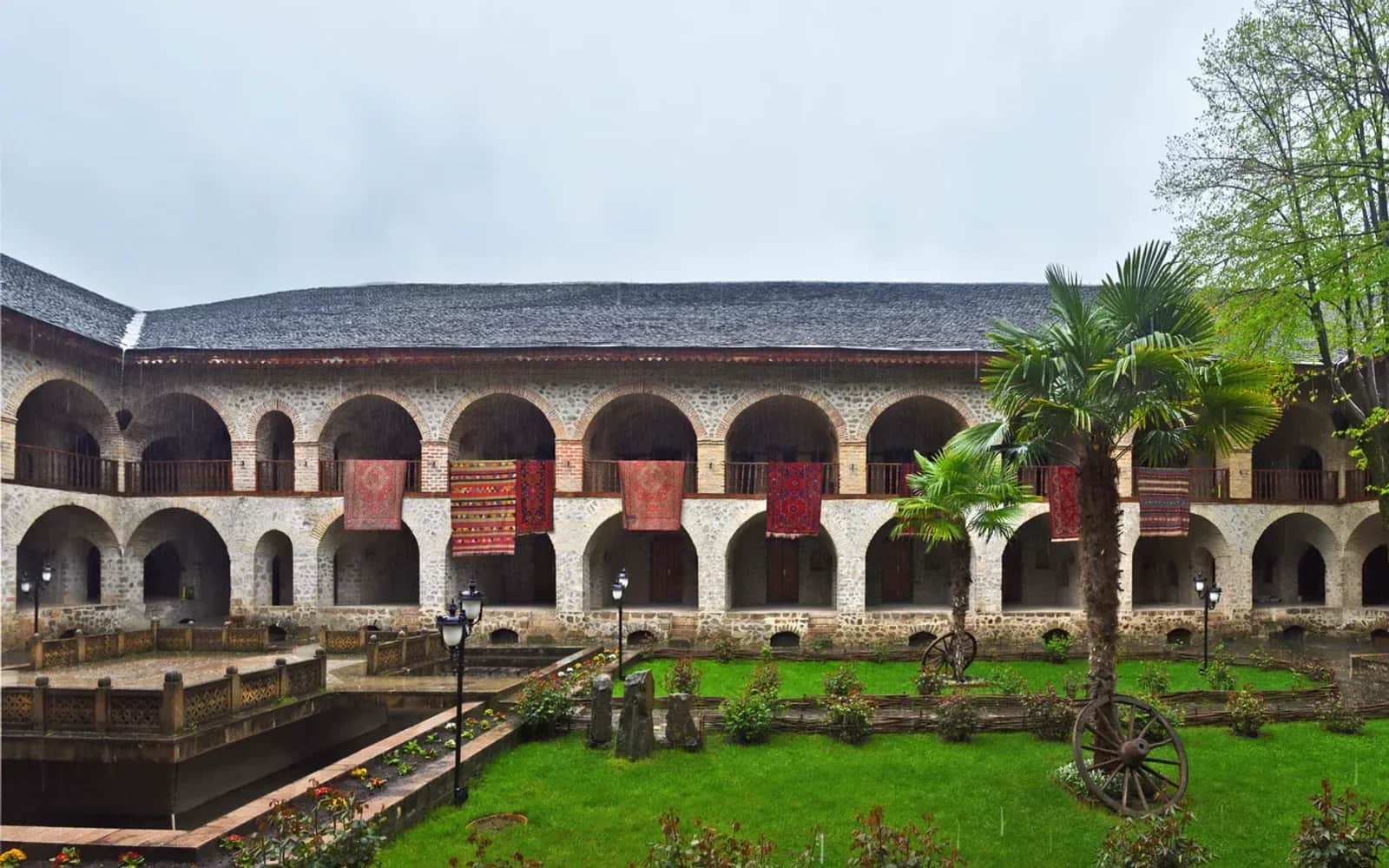

Seven days is the best starting point for a first Azerbaijan itinerary. It gives you Baku, one nearby excursion and a westbound route to Sheki with enough time to sleep outside the capital. Three days works for Baku and its day-trip radius. Five days works if you choose one regional direction. Ten days gives you room for a second geographic arm or a flight to Nakhchivan.
If the open question is whether the capital itself justifies the stop, start with who Baku suits, what two or three nights cover and which costs can be checked publicly. This page owns the wider country route and does not duplicate that city-value decision.
If you have not yet chosen which regions matter, compare places to visit in Azerbaijan by interest and route first; then return here to allocate the days and hotel nights.
The central planning fact is simple: Azerbaijan's main visitor routes do not form one neat loop. Sheki and Gabala lie west of Baku, while Quba and Khinalig lie north. Nakhchivan is a separate flight sector. A good itinerary chooses which direction matters most before adding nights.
Azerbaijan itinerary by trip length
| Time in Azerbaijan | Practical scope | Hotel changes | Best for |
|---|---|---|---|
| 3 calendar days / 2 nights | Baku and a selected nearby excursion; the usable sightseeing time depends on your flights | 0 | Stopovers and short first visits |
| 5 days / 4 nights | Baku plus Gabala, Sheki or Quba; choose one regional focus | 1–2 | Travellers with one regional priority |
| 7 days / 6 nights | Baku, Gobustan or Absheron, Shamakhi/Gabala and Sheki | 2–3 | Balanced first trip |
| 10 days / 9 nights | Seven-day route plus Quba-Khinalig, Ganja-Goygol or Nakhchivan | 3–5 | Deeper regional travel |
The table counts calendar days from arrival to departure: normally one fewer hotel night than days. A late arrival, overnight flight or early departure can reduce sightseeing time. Treat these as route shapes rather than fixed packages; season, walking pace and hotel changes also affect what fits.
Three days: Baku, Gobustan and Absheron
Keep one Baku hotel. A three-calendar-day visit normally uses two hotel nights and includes arrival and departure within those days. The fuller three-day sightseeing plan below needs three usable sightseeing days, with arrival before the first morning and departure after the final night; it is not the same flight window. Use the city itself for the Old City, the Boulevard and contemporary architecture, then choose excursions to match the time available.
A workable structure is:
- Baku Old City and waterfront. Walk Icherisheher, the Palace of the Shirvanshahs area and the Boulevard at a pace that fits your arrival time.
- Gobustan and mud volcanoes. Put the rock-art landscape and access road into one southbound excursion rather than combining them with a westbound transfer.
- Absheron or a second Baku day. Choose Ateshgah and Yanar Dag, or spend the day on museums, markets and neighbourhoods in the city.
Three days is enough for an introduction. It is not enough for Sheki: the road journey and the value of staying overnight make a same-day return a poor use of the trip. If your international flight arrives late or leaves early, count those as travel days rather than pretending they are full sightseeing days.
For a day-by-day plan, see three full days in Baku with Old City, Absheron and Gobustan. It distinguishes three sightseeing days from a three-calendar-day flight window. For a ready product, compare the five-day Baku highlights route and remove the regional day rather than compressing every stop.
Five days: choose the west or the north
Five days becomes useful when you accept one trade-off: choose one regional arm.
Option A: Baku and one western overnight
For a four-night trip, keep the first two and final nights in Baku and use the remaining night for either Gabala or Sheki. Gabala gives more mountain time with less road travel. Sheki gives you its historic centre, but both the outbound and return days become long transfers; choose only short stops en route.
The five-day Baku and Gabala itinerary shows the four-night version day by day, including what it leaves out.
A Baku–Gabala–Sheki route with separate nights in both regional towns needs at least five hotel nights if you also keep two Baku nights before leaving and a final Baku night before an early flight. That is a six-day trip, not five days. If you have five days and still want both towns, treat Gabala as a short stop on a Sheki transfer, and accept less time for Baku or Sheki. The seven-day Baku, Gabala and Sheki itinerary is the better-paced version.
Option B: Baku, Quba and the mountain region
Choose the northern route when mountain landscapes and village access matter more than Gabala or Sheki. Quba is the base; Khinalig or another mountain stop depends on road and weather conditions. In winter, keep a replacement plan because mountain access can change.
Do not combine the western and northern arms in five days. Both return through Baku, so the map creates repeated road time rather than an efficient loop.
Seven days: the balanced first Azerbaijan itinerary
One week lets the Baku-Sheki route work without turning each night into a new hotel. A useful template is:
| Day | Route idea | Overnight |
|---|---|---|
| 1 | Arrive in Baku; light city programme | Baku |
| 2 | Old City, Boulevard and central Baku | Baku |
| 3 | Gobustan and mud volcanoes, or Absheron fire sites | Baku |
| 4 | Baku to Shamakhi and Gabala | Gabala or Shamakhi area |
| 5 | Gabala to Sheki via Kish or another selected stop | Sheki |
| 6 | Sheki historic centre, then the long return to Baku | Baku |
| 7 | Depart Baku; add a city stop only if flight timing allows | — |
This is a template, not a promise that every attraction opens on every date. A current itinerary should name the actual hotels, guide language, vehicle, admissions and any long transfer placed before a flight.
Start with the day-by-day seven-day Baku, Gabala and Sheki itinerary. Solo travellers can also compare the published seven-day private Azerbaijan programme. Couples, families and friends can use the same geographic route with a different room split, pace and vehicle; request the total party price as well as the per-person amount.
Ten days: add one deeper extension
Ten days should add depth, not every available region. Start with the seven-day core and choose one extension.
Add Quba and Khinalig
Use two nights for the northern arm when mountain access is central to the trip. Confirm the vehicle and road conditions for the travel date. A regular city itinerary should not assume that every mountain road suits every vehicle or season.
Add Ganja and Goygol
Continue west from Sheki when western Azerbaijan, Nizami heritage or Lake Goygol matters. This avoids treating Ganja as a very long out-and-back from Baku. The return to the capital still needs its own realistic travel day.
Add Nakhchivan
Nakhchivan requires domestic flights from Baku and therefore works as a separate two-night module. Keep flight availability and schedule changes visible in the proposal. It is not a road extension of the mainland route.
For a ten-day private trip, send us the core route and one preferred extension through the private Azerbaijan tour planner. We will check the resulting travel legs, guide days, hotels and any domestic flight for your dates before pricing it.
Which route suits families, couples and solo travellers?
The map can stay the same while the operating plan changes.
- Families: reduce consecutive hotel changes, send children's ages, confirm child seats and choose a vehicle after luggage is counted.
- Couples: protect unscheduled time in Baku or Sheki instead of filling every evening with another transfer or dinner programme.
- Solo travellers: compare a driver-only day with a driver-plus-guide day; the same person does not automatically provide both services.
- Older or mobility-limited travellers: state walking, stair, bathroom and room-access needs before the hotel and daily route are selected.
- Friends and private groups: ask for the whole-party price, room split and luggage plan so the per-person quote can be checked.
These details belong in the initial brief because they change the vehicle, hotel rooms and daily pace.
When should you travel?
Spring and autumn are the easiest seasons for a mixed city-and-region route. Summer favours mountain extensions and evening city time but can make exposed midday visits uncomfortable. Winter can work well for Baku and ski-resort plans, while high mountain village access needs a fallback.
Event weeks and public holidays can change hotel availability and traffic. Before buying non-refundable flights around a fixed route, ask for the hotels and key transport sectors to be checked for those dates.
How to turn this into a private trip quote
Send six facts:
- Arrival and departure dates and flight times.
- Adults and children's ages.
- The places you would be disappointed to miss.
- Preferred hotel level and room split.
- Guide language and any walking or mobility conditions.
- Whether you want a fully guided trip, selected guide days or transport only.
Birtour can then adapt the route, check the services and issue a current quotation. The enquiry form takes no payment and does not confirm a booking. Start with the Azerbaijan private tours and tailor-made trips page, or compare the published tour package collection before sending your changes.
Frequently asked
- How many days do you need in Azerbaijan?
- Seven days is the most balanced first trip: enough time for Baku, Gobustan or Absheron, and a western route through Shamakhi or Gabala to Sheki without making every day a long transfer. Three days stays around Baku; five adds one regional overnight; ten allows a deeper second arm or Nakhchivan.
- Is five days enough for Azerbaijan?
- Yes, if you count five calendar days as four hotel nights and choose one regional priority. A Baku–Gabala overnight is less road-heavy; reaching Sheki as well means two long transfer days and less time at each stop. Quba is a separate northern choice. Keep the final night in Baku before an early flight.
- What is a good seven-day Azerbaijan itinerary?
- A practical seven-day, six-night route uses three Baku nights, one Gabala night, one Sheki night and a final Baku night, with Gobustan or the Absheron fire sites placed on a Baku day. Two Sheki nights require a seventh hotel night or one fewer Baku night. The exact order should follow flight times, opening days and hotel availability.
- Can I visit Baku, Gabala and Sheki in one week?
- Yes. They form the clearest westbound route from Baku. Gabala works as an overnight or en-route stop and Sheki deserves at least one night; returning from Sheki directly to Baku is a long final road day, so do not place it against an early flight.
- When does a ten-day Azerbaijan itinerary make sense?
- Choose ten days when you want more than the standard Baku-Sheki route: add Quba and Khinalig, Ganja and Goygol, or a flight sector to Nakhchivan. Select one extension first; putting all three into ten days creates a transport-heavy trip.
- Can Birtour customise these Azerbaijan itineraries?
- Yes. These routes are planning templates. Send your dates, party size, hotel level, interests and any mobility or guide-language requirements for a private itinerary and current quotation. An enquiry does not confirm services or take payment.
Related
Itinerary
3 Days in Baku: Old City, Absheron and Gobustan
Itinerary
5-Day Azerbaijan Itinerary: Baku and Gabala
Itinerary
7-Day Azerbaijan Itinerary: Baku, Gabala and Sheki
Tour package
Baku City Highlights: 5 Days with a Gabala Day Trip
Tour package
Azerbaijan Solo Private Tour: Baku and Sheki in 7 Days
Guide
Best time to visit Azerbaijan: month-by-month weather, routes and busy dates
Guide
Is Baku worth visiting? Who it suits, costs and how many nights
Guide
Driving in Azerbaijan: licence checks, fuel, borders and route choice
Destination
Things to do in Sheki: the UNESCO old town, fortress and caravanserais